History is full of convenient explanations. A queen becomes a legend. An empress becomes a footnote. A woman caught between powerful families becomes a pawn. A defeated lord and his mother die, and the victors write the final chapter.
At four sites, we compare chronicles, contemporary testimony and archaeology, separate what we know from what we suspect, and ask why some explanations became official while others disappeared.
The goal is not to replace one unquestioned story with another. It is to examine the evidence and understand why the mysteries remain.
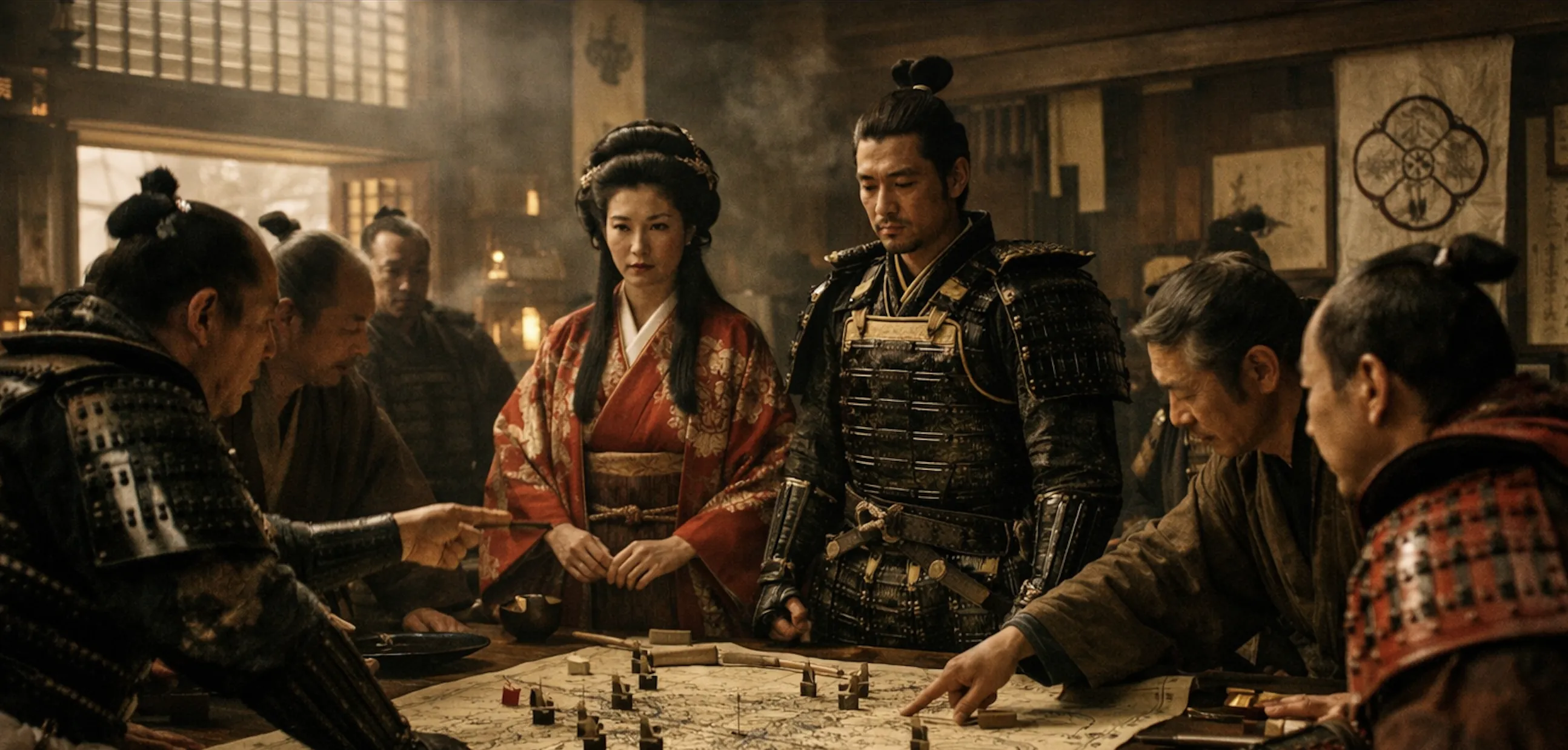
Ideal for: True-crime fans, historical detectives, history podcast listeners, fans of political dramas such as Shōgun, and anyone who enjoys questioning a familiar story.
Travelling with children? Families are welcome. Youth aged 12–17 join at ¥5,000, and children aged 0–12 walk free with a paying adult. This is a serious 2.5-hour history walk rather than a children's attraction, especially suitable for families with older children and teenagers curious about Japan's history. See the Osaka Castle with kids page for practical guidance.
What’s Included
Guided walk through key historical sites across Osaka Castle Park, personally led by Edward Iftody
Historical GPS-enabled maps and visual overlays reconstructing vanished castle layers
Exclusive Digital Archive — a personalised post-tour summary with historical reconstructions and candid photography of your experience
Clear explanations of the Winter and Summer Sieges and how they reshaped the fortress
Historical sources and evidence discussed in context, including contemporary European accounts
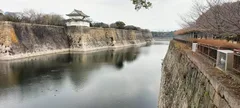
Opportunities for seasonal photography along the southern moat
Four Mysteries. Four Locations. Centuries of Evidence.
From the uncertain identity of an ancient queen to the final hours of Osaka Castle's last Toyotomi lord, each stop raises a question the surviving evidence helps us investigate. Select a stop to explore the stories.
The four stops
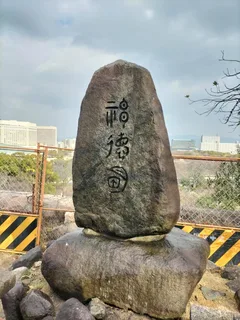
Hōenzaka Warehouse District — unearthed 1987
Naniwa Palace — first excavated 1954
Ishiyama Hongan-ji — high-confidence general area
Toyotomi Castle Walls — rediscovered 1959
Featured Stories
Four locations, four investigations, and a trail of questions connecting the origins of early Japan to the fall of the Toyotomi dynasty.
Stop 1
Was Empress Jingū real — or a story the court told about itself?
Hōenzaka Warehouse District
c. AD 200: a conqueror of legend.
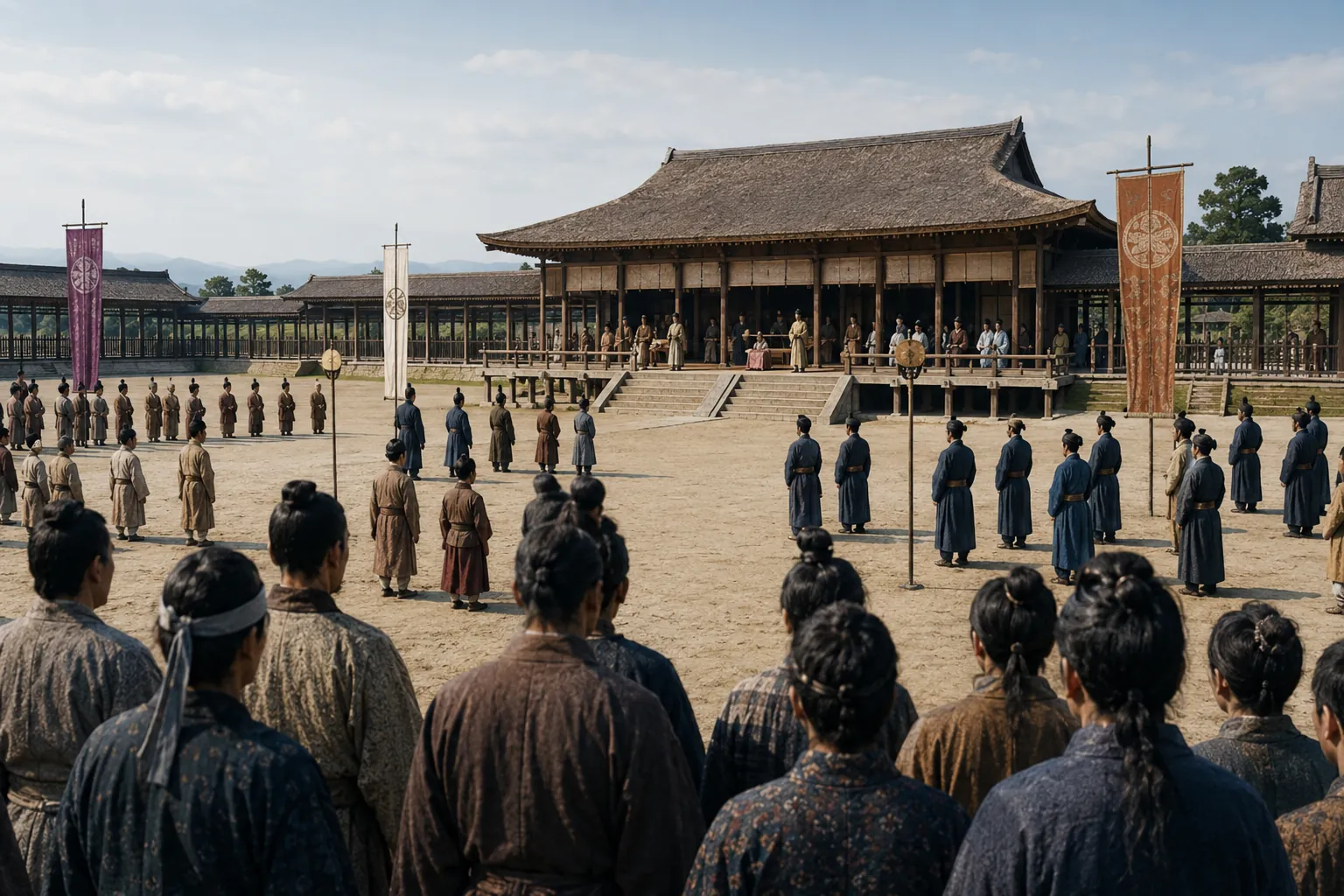
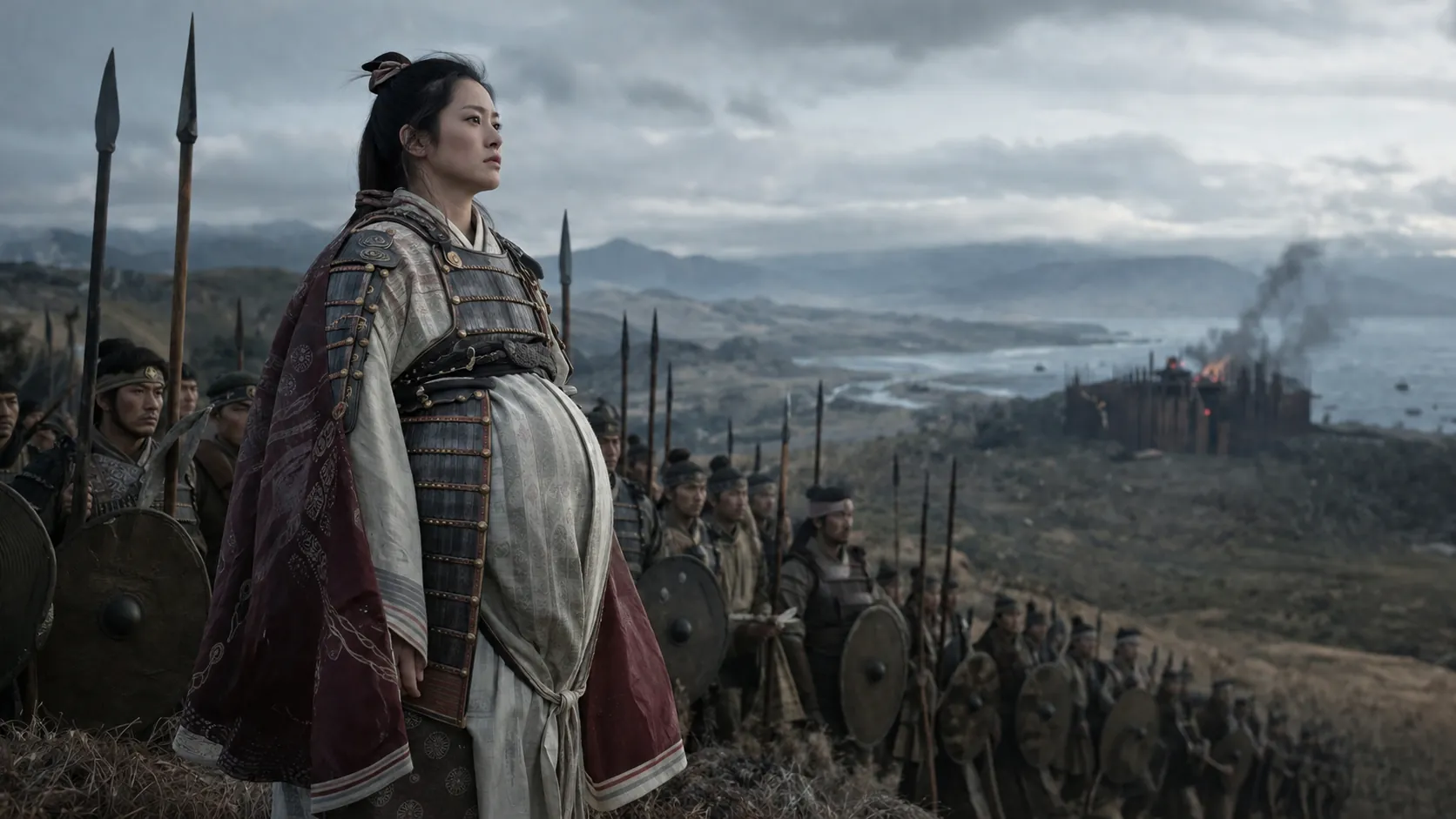
Later chronicles cast Empress Jingū as a regent who led a military expedition across the sea and returned victorious — a conquest tale that later generations folded into the imperial origin story.
The records disagree with themselves. The conquest narrative was written down generations after it was supposed to have happened, and parts of the chronology do not survive scrutiny. Historians still argue over how much of Jingū is memory, how much is propaganda, and whether there is a historical queen beneath either.
At Hōenzaka we stand on the landscape her legend claims, and ask what the archaeology of the period can and cannot confirm.
Empress Jingū — conqueror-legend of the imperial chronicles, whose historicity remains contested.
On the day
Climb the Uemachi PlateauRead the ancient geography of water, routes and resources.
Explore ancient HōenzakaThe excavated port and warehouses: what made this place worth controlling?
A conqueror of legend. Now an empress standing over a killing in open court.
Stop 2
Was Empress Kōgyoku an innocent bystander?
Naniwa Palace
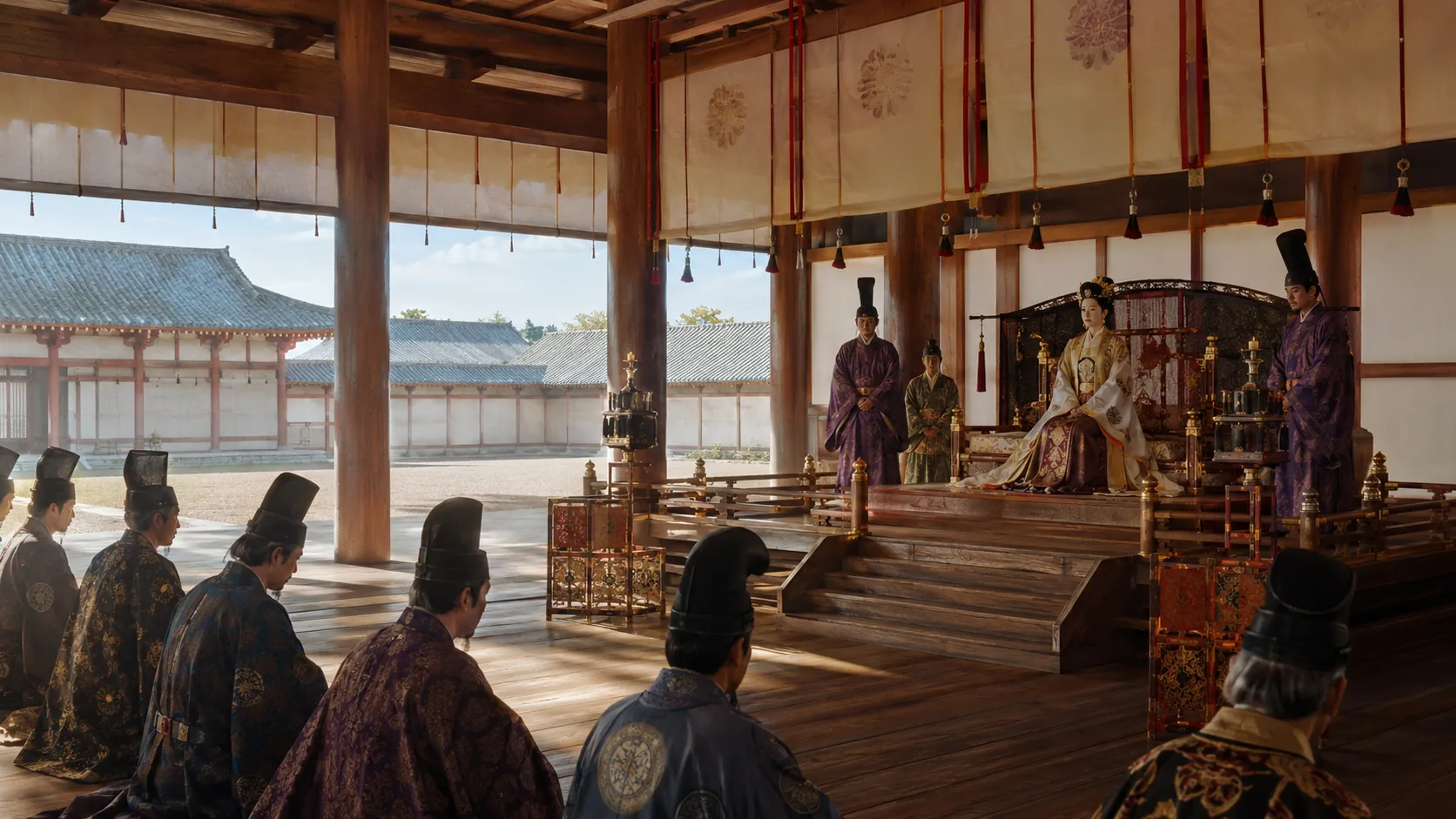
645 AD: the assassination in the imperial court.
In 645, Soga no Iruka was assassinated at court, in front of Empress Kōgyoku. The attackers were her son, the future Emperor Tenji, and Nakatomi no Kamatari. She abdicated afterward.
Was she a ruler overtaken by events, or did she know more than the chronicles reveal? The accounts don't say she directed the killing. They do give us reason to examine her position, her family's ambitions, and who gained.
At Naniwa Palace, we separate what the sources record from what later interpretation assumes.
Empress Kōgyoku, later known as Saimei — sovereign at a turning point in the politics of the imperial court.
On the day
Walk the Naniwa Palace siteStand on the seventh-century capital where imperial power took physical form.
An empress at the centre of a coup. Now a sister, married into a rival house.
Stop 3
Did Oichi marry for love or as a pawn, and who really destroyed the fortress?
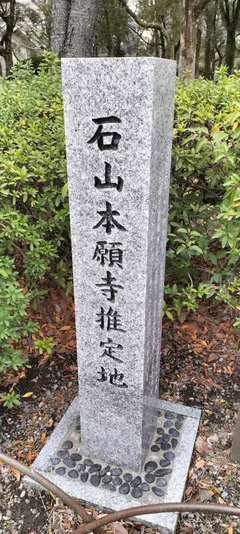
Ishiyama Hongan-ji
1496–1580: Oichi, Nobunaga, and the fortress that fell.
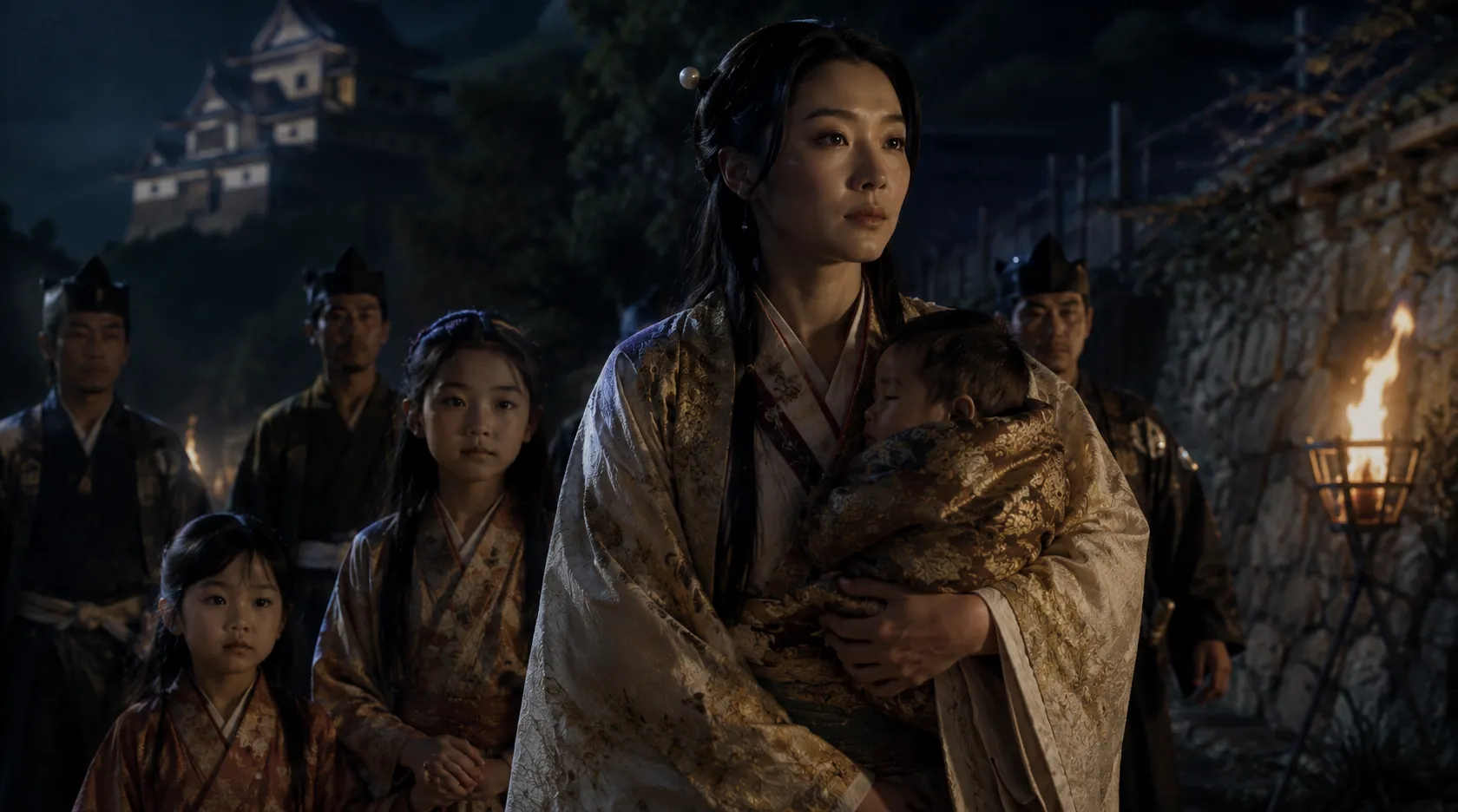
Oichi, sister of Oda Nobunaga, married Asai Nagamasa. The alliance linked two powerful houses, then collapsed under Nobunaga's campaigns. The fall of the Asai at Odani shaped the lives of Oichi and her daughters, including Chacha, the future Yodo-dono. How much choice did Oichi have? The sources won't give a simple answer. They show what elite marriage was for, and what it cost when alliances failed.
The site holds a second mystery. Ishiyama Hongan-ji resisted Nobunaga for years, surrendered in 1580, and burned. Was it the final confrontation, an evacuation, or a deliberate act tied to the handover? We weigh what the evidence can and can't establish.
Oichi and her daughters — a family caught between powerful houses in a period of political upheaval.
On the day
Rediscover a warrior-monk fortressA religious institution that became a military power, on the ground where Osaka Castle would rise.
Oichi's daughter inherits the wreckage. And the final chapter is written by the winners.
Stop 4
What really happened to Hideyori and his mother?
Osaka Castle
1614–1615: Hideyori, Yodo-dono, and the Shogun's account.
Chacha's father fell to her uncle Nobunaga. Her mother, Oichi, died after another defeat. Chacha became Hideyoshi's consort and the mother of his heir, Hideyori.
After Hideyoshi's death, Tokugawa Ieyasu closed in. The Winter Siege of 1614 ended in a settlement that left the castle vulnerable. The Summer Siege of 1615 destroyed the Toyotomi, and Hideyori and Yodo-dono died as the castle fell.
The outcome is clear. The final hours are not. The Tokugawa had every reason to present their victory as legitimate and final. That doesn't make the official account false, and it doesn't prove anyone escaped. It means we check it.
We reconstruct the vanished fortress, walk the surviving walls, and read the account of Richard Cocks. The question is not simply whether the Shogun lied. It is which parts of the story we can verify, and why the victors had so much power over how the defeat was remembered.
Yodo-dono and Hideyori at the centre of the Toyotomi's final struggle. How much freedom did they have to choose their fate?
On the day
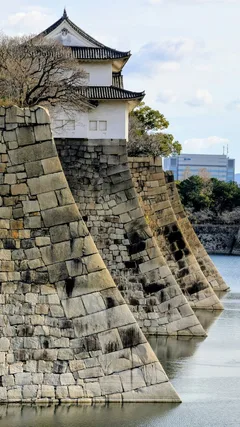
Uncover the buried fortressRead the castle beneath the castle: Toyotomi layers under the Tokugawa rebuild.
Meet the woman behind the legendWas Yodo-dono the architect of her own downfall?
Examine the historical crime sceneReconstruct the final siege and compare the ground with the written accounts.
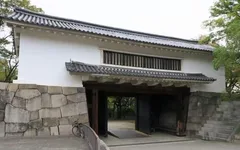
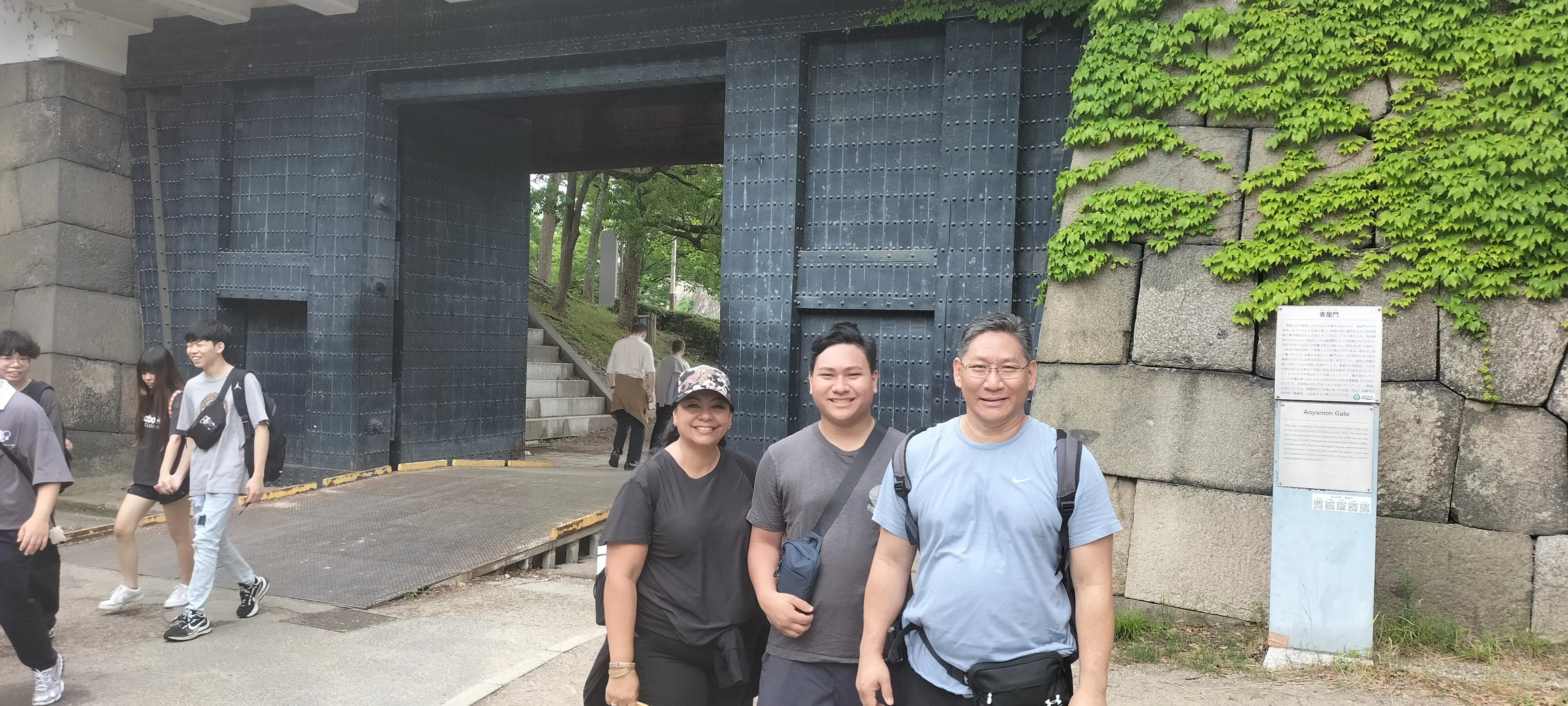
Stand at the Aoyamon GateRead Richard Cocks's testimony beside the evidence.
This is not a standard castle tour. It is a reckoning with a 400-year-old mystery.
Walk with a historian who lives beside it. Small groups. Osaka Castle every day • 2.5 Hours • English • ¥9,500/person
Book Instantly
Choose an available departure and receive immediate confirmation.
What are Osaka's greatest unsolved historical mysteries?
Osaka's history leaves real questions open — from the vanished Toyotomi fortress buried beneath the Tokugawa castle to the contested accounts of how Osaka Castle fell in 1615. This tour, led by Edward Iftody, Osaka Castle's Resident Historian, takes four such mysteries to the ground itself, comparing chronicles, contemporary testimony, and archaeology to separate what we know from what we still suspect.
Why do guests consider this one of the best Osaka Castle political history tours?
This tour explores Osaka Castle as more than a military monument. It investigates the struggle between the Toyotomi and Tokugawa houses, the political consequences of the sieges, and the ways victorious regimes shape the historical record. Along the route, we also examine earlier mysteries involving Empress Jingū, Empress Kōgyoku, Oichi, and the fall of Ishiyama Hongan-ji. The emphasis is on evidence, historical context, and the questions that remain open — not simply memorising dates and names.
Why is this tour ideal for fans of historical dramas such as Shōgun?
Historical dramas draw audiences into a world of alliances, betrayals, succession struggles, and political survival. This walk explores those same themes in the real historical landscape of Osaka. Rather than treating familiar stories as settled, we examine the people, places, and records behind them. It's an opportunity to move beyond the screen and investigate how political power worked — and how later generations explained its victories and defeats.
What is the "lie" in A Lord, a Concubine, and a Shogun's Lie?
The title invites you to investigate how the victorious Tokugawa regime presented the defeat of the Toyotomi house and the deaths of Hideyori and Yodo-dono. The Tokugawa had strong political reasons to establish the legitimacy of their rule and the finality of their victory. That context makes the surviving accounts worth examining critically. It does not, by itself, prove that every part of the official story was false. During the tour, we compare the written record, contemporary testimony, and the physical landscape, distinguishing what is established from what remains a matter of interpretation.
What happened during the Winter and Summer Sieges of Osaka?
The Winter Siege of 1614 brought Tokugawa forces against Osaka Castle but ended in a settlement rather than the destruction of the Toyotomi house. The subsequent peace arrangements weakened the castle's defences, and renewed conflict followed in 1615. During the Summer Siege, Tokugawa forces defeated the Toyotomi and Osaka Castle was destroyed by fire. We examine the strategic consequences of the settlement, the terrain around the fortress, and the decisions that led to the final defeat.
What really happened when Osaka Castle fell in 1615?
The standard account holds that Toyotomi Hideyori and his mother Yodo-dono died as the castle fell in the Summer Campaign of 1615. Surviving testimonies — including European observers — and the political interests of the victorious Tokugawa make the final hours worth examining rather than accepting at face value. This tour walks you through what the evidence can and cannot establish, without pretending the mystery has a simple solution.
Is anything left of the original Toyotomi castle?
Yes. Although much of the original Toyotomi fortress was destroyed or buried beneath later construction, archaeological research has revealed substantial evidence of its earlier form. The Tokugawa rebuilt and transformed the site, leaving a complex landscape in which different historical layers overlap. During the tour, GPS-enabled maps and historical reconstructions help you visualise the earlier fortress and understand what the surviving walls, earthworks, and terrain can reveal. Not every feature can be attributed to a single act of deliberate concealment, but the physical transformation of the site is an important part of the story.
Can historical evidence challenge the official story of the Siege of Osaka?
It can test it, but not automatically overturn it. Contemporaneous accounts, archaeological findings, and the surviving fortifications each constrain the story, and none of them alone proves a cover-up. Edward Iftody, Osaka Castle's Resident Historian, shows you how historians weigh those sources — and why the victors' version of 1615 deserves scrutiny.
Is this tour suitable for children?
Yes. Families with children and teenagers are welcome. The walk lasts about 2.5 hours and focuses on political intrigue, sieges, and historical mysteries, so it is best suited to children who are comfortable walking and curious about Japanese history. Youth aged 12–17 join at ¥5,000, and children aged 0–12 walk free with a paying adult. For more guidance, see the Osaka Castle with kids page.
What happens in bad weather?
We walk in ordinary rain, with umbrellas provided. If a severe-weather alert is issued, Edward contacts you directly to make alternative arrangements, and you can cancel or reschedule for a full refund up to 24 hours before the start time.
Do we enter the castle keep?
No — the route stays outdoors, across the castle grounds, the moat landscape, and the Aoyamon Gate area, so a keep ticket is not needed. Entry to the museum inside the reconstructed keep is not included; buy that separately if you wish to visit afterward.
Where do we meet?
The meeting point is 2-3-6 Tanimachi, Chuo-ku, about 90 seconds from Tanimachi 4-chome Station Exit 1A. Edward Iftody, Osaka Castle's Resident Historian, meets you there and leads the 2.5-hour walk at a relaxed pace.
Can I book a private tour?
Scheduled walks are small-group tours led in English and capped at six guests. You can request a private tour for a group of four or more — contact Edward directly — and groups larger than six can be arranged with special pricing.
Research and interpretation by Edward Iftody, Osaka-based historian and resident historian at Osaka Castle.
This tour draws on historical chronicles, contemporary accounts, archaeological research, and the surviving physical landscape. The aim is to examine the evidence, identify its limitations, and investigate the questions that remain.
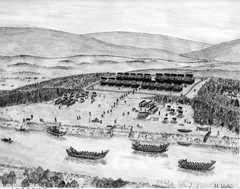 Climb the Uemachi Plateau Read the ancient geography of water, routes and resources.
 Explore ancient Hōenzaka The excavated port and warehouses: what made this place worth controlling?