Osaka Castle Walks with Edward - History Beyond the Postcard
Osaka Castle: Warrior Monks, a Peasant, and a Shogun
An Osaka Castle Park tour for fans of Shōgun, political intrigue, and the history behind the drama.
Warrior monks fortified it. A peasant rebuilt it. A shogun buried it. Walk the remains of three fortresses with a Resident Historian — this is the story of how Osaka Castle was born.
Discover the stops ↓
This is not a standard castle tour. It is an investigation into the betrayals that shaped Osaka.
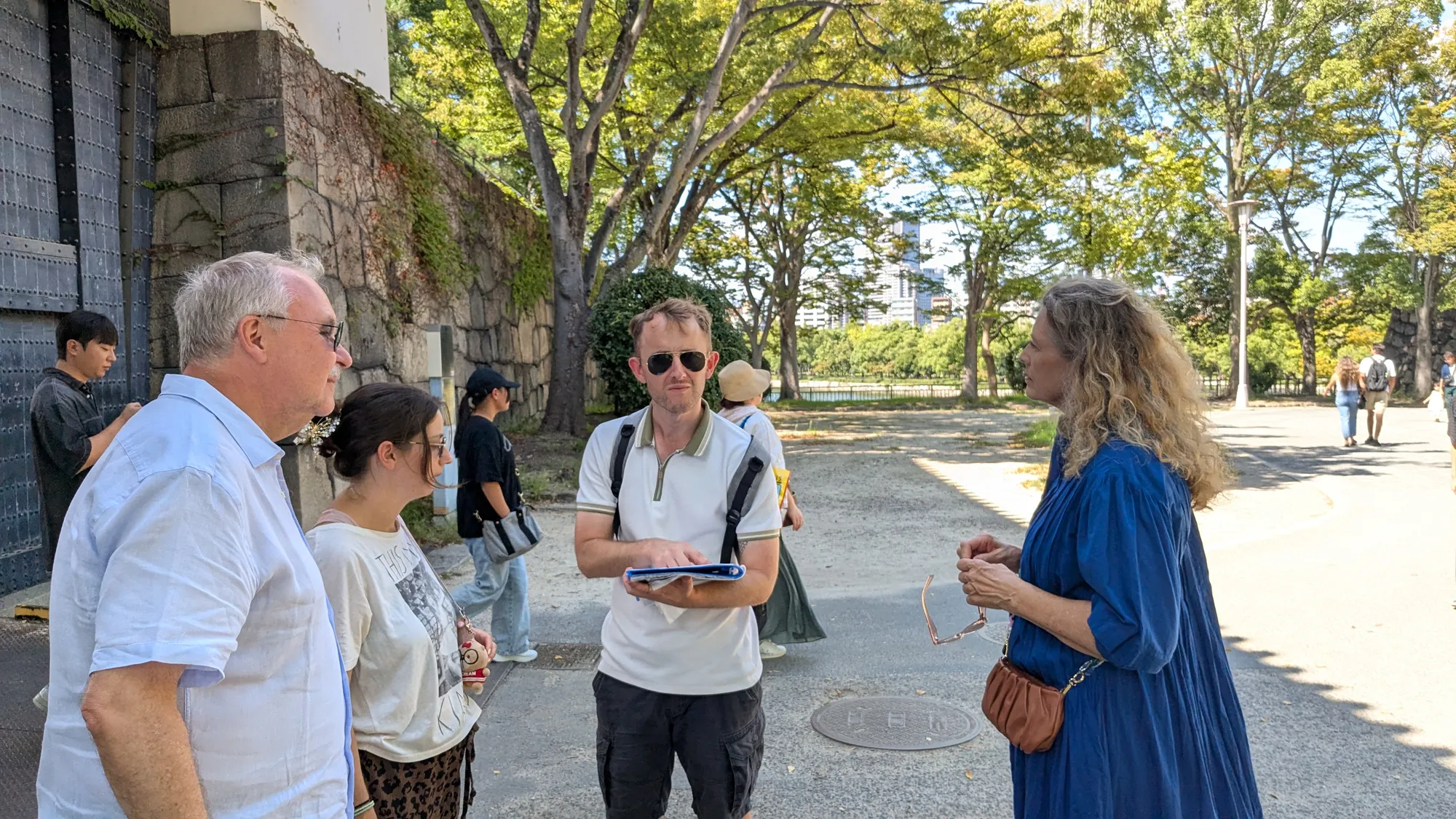
Walk with a historian who lives beside it. Small groups. Osaka Castle every day • 2.5 Hours • English • ¥9,500/person
Book Instantly
Choose an available departure and receive immediate confirmation.
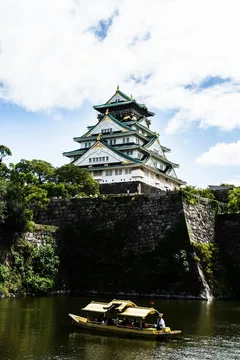
The castle you see today is not one fortress with one story. It is layers. A warrior-monk stronghold burned. Hideyoshi built over the ashes. The Tokugawa Shogunate buried the destroyed Toyotomi castle and built a new castle over the ruins of the old.
Across four sites, one pattern repeats: power creates enemies, loyalty has limits, and victors rewrite the past.
With historical maps, GPS-enabled overlays and the surviving landscape, we ask at every stop what the evidence supports, and whose interests the official story served.
The walk ends at Aoyamon Gate, where the traditional account of the Toyotomi family's last hours meets the ground itself. The two don't fit neatly. You decide what you make of it.
Ideal for: Fans of Shōgun, political intrigue, samurai and military history, and historical mysteries; first-time visitors to Osaka Castle, and repeat visitors who want to look beyond the familiar landmarks.
Travelling with children? Families are welcome, particularly those with older children and teenagers who enjoy asking questions. Youth aged 12–17 join at ¥5,000, and children aged 0–12 walk free with a paying adult. This is a serious 2.5-hour history walk rather than a children's attraction. See the Osaka Castle with kids page for practical guidance.
The Ground
Four sites. Centuries of betrayal. One landscape.
All within 800 metres. Three fortresses rose on this ridge — each built over what the last one left behind. The buildings changed; the struggle for the ground did not. Click on the stops to learn more.
The four stops
Hōenzaka Warehouse District — the ancient settlement, port and the politics of succession
Naniwa Palace — imperial power, assassination and political transformation
Ishiyama Hongan-ji — the warrior-monk fortress and the conflict within its own leadership
Toyotomi Castle Walls — Hideyoshi's rise, Chacha's struggle and the Tokugawa victory
Featured Stories
Four places, four turning points. Each story begins with a question: who stood to gain, who was betrayed, and what happened next?
Stop 1
Hōenzaka Warehouse District
The family that couldn't agree on an heir
c. 450 AD: before the samurai, succession could be a matter of life and death.
The struggle for this ground began long before the castle. A ridge above an ancient shoreline, a busy port, warehouses full of wealth, and rulers who wanted to command them.
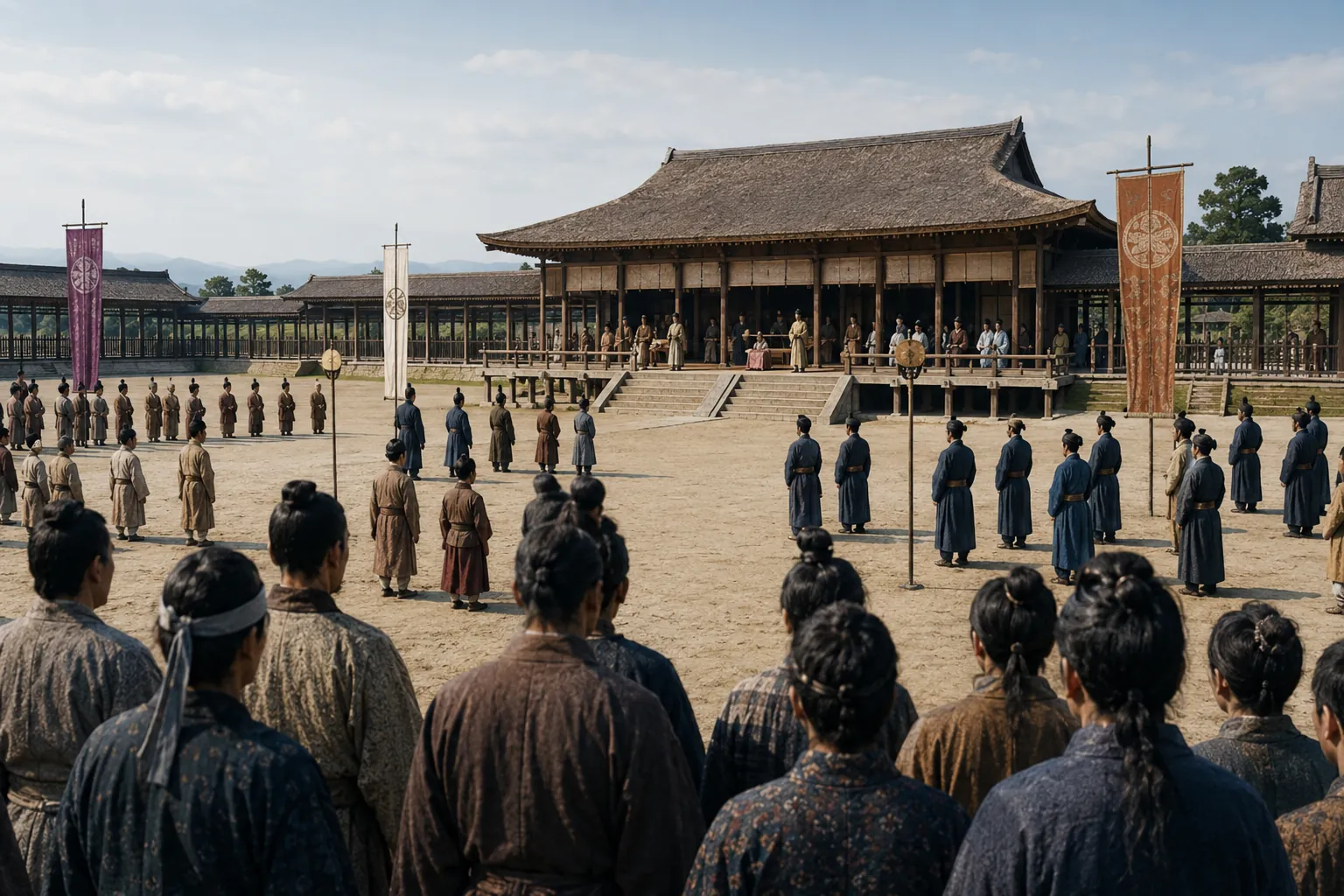
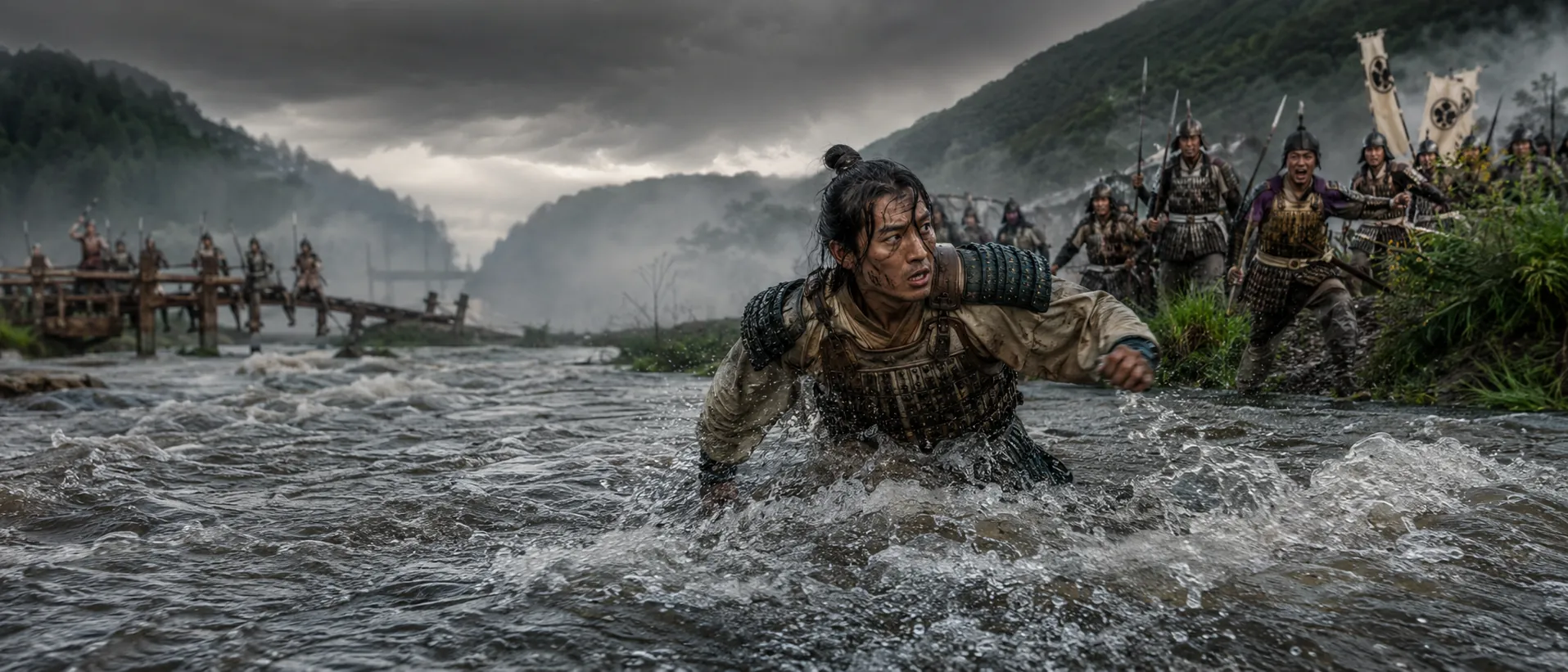
But wealth couldn't settle who ruled. The early chronicles tell of Prince Ōyamamori, who plotted against his brother Uji no Wakiiratsuko, the favoured heir after Emperor Ōjin. The plot failed. The throne passed to Ōsazaki, later Emperor Nintoku.
The story reaches us through later tradition, so we don't treat it as verified fact. But the theme is unmistakable: a succession could tear a ruling family apart.
Prince Ōyamamori escaping across the Uji River, c. 410 AD.
On the day
Climb the Uemachi PlateauWalk the ridge settled thousands of years before the first samurai.
Meet the people before Japan had a nameSettled communities and early pottery, before the state.
Trace the arrival of the rice farmersWet rice, metal tools and a new social order.
Uncover the ancient portExcavated warehouses and the wealth worth fighting over.
A family divided over a throne. What happens when the prize is an entire state?
Stop 2
Naniwa Palace
The assassination that changed the court
592 and 645: the most dangerous enemies of a ruler stand beside the throne.
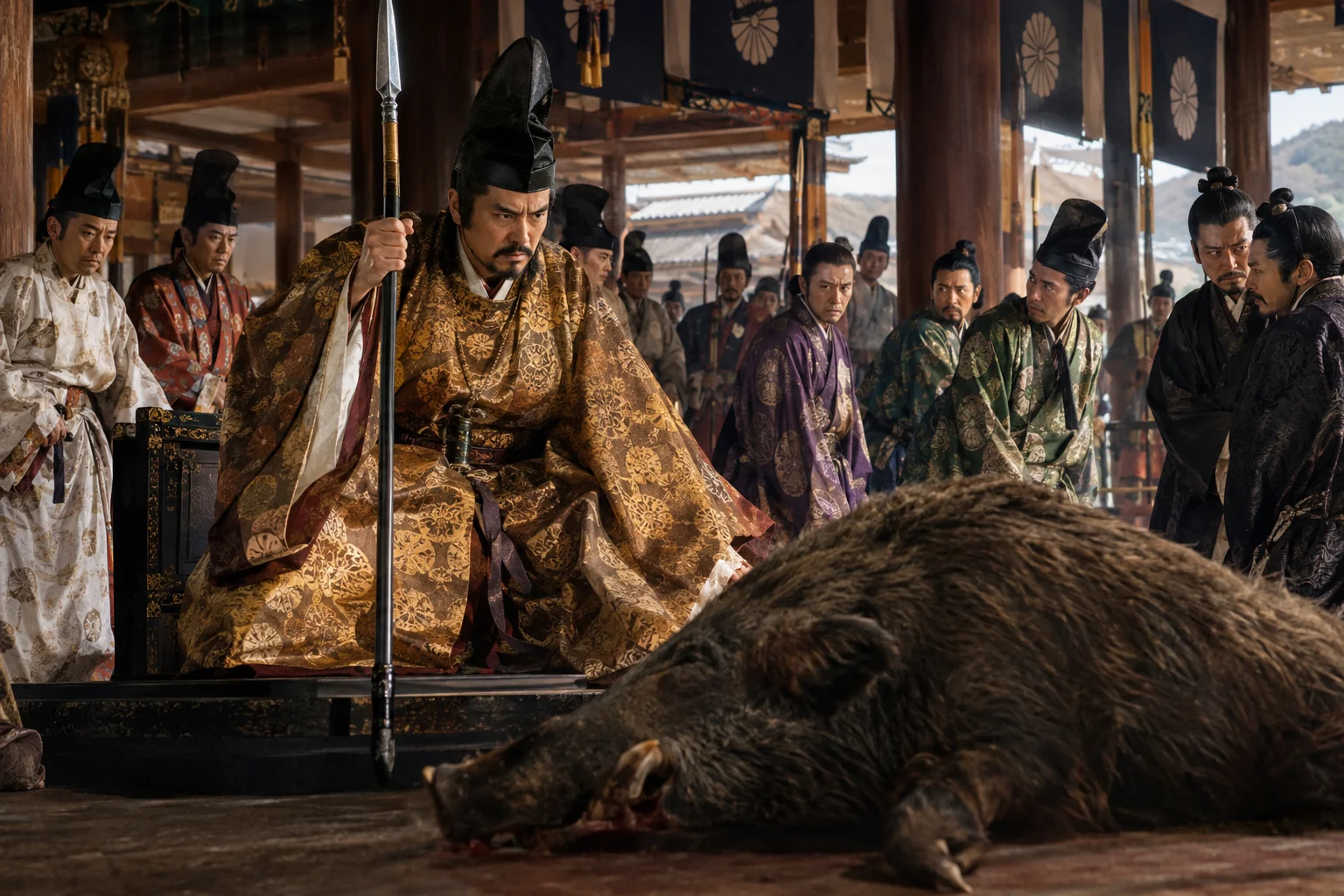
In 592, tradition says, Soga no Umako arranged the assassination of Emperor Sushun. The Soga were that powerful: they could kill a sovereign.
Decades later, their own leader was cut down. In 645, Prince Naka no Ōe and Nakatomi no Kamatari killed Soga no Iruka during a court ceremony. The Isshi Incident set off the Taika Reforms, and Naniwa became the stage for a new, more centralised order.
Standing on the palace foundations, we ask the question the court asked for generations: who controls the state, and by what right?
Emperor Sushun and Soga no Umako — the assassination of an emperor, 592.
On the day
Walk the Naniwa Palace siteStand on the seventh-century capital where a court ruled by clans became a state.
Clan leaders weren't the only power that could defy a ruler. What happens when a religious institution does?
Stop 3
Ishiyama Hongan-ji
The fortress divided by loyalty
1496–1580: the enemy outside the walls was not the only threat.
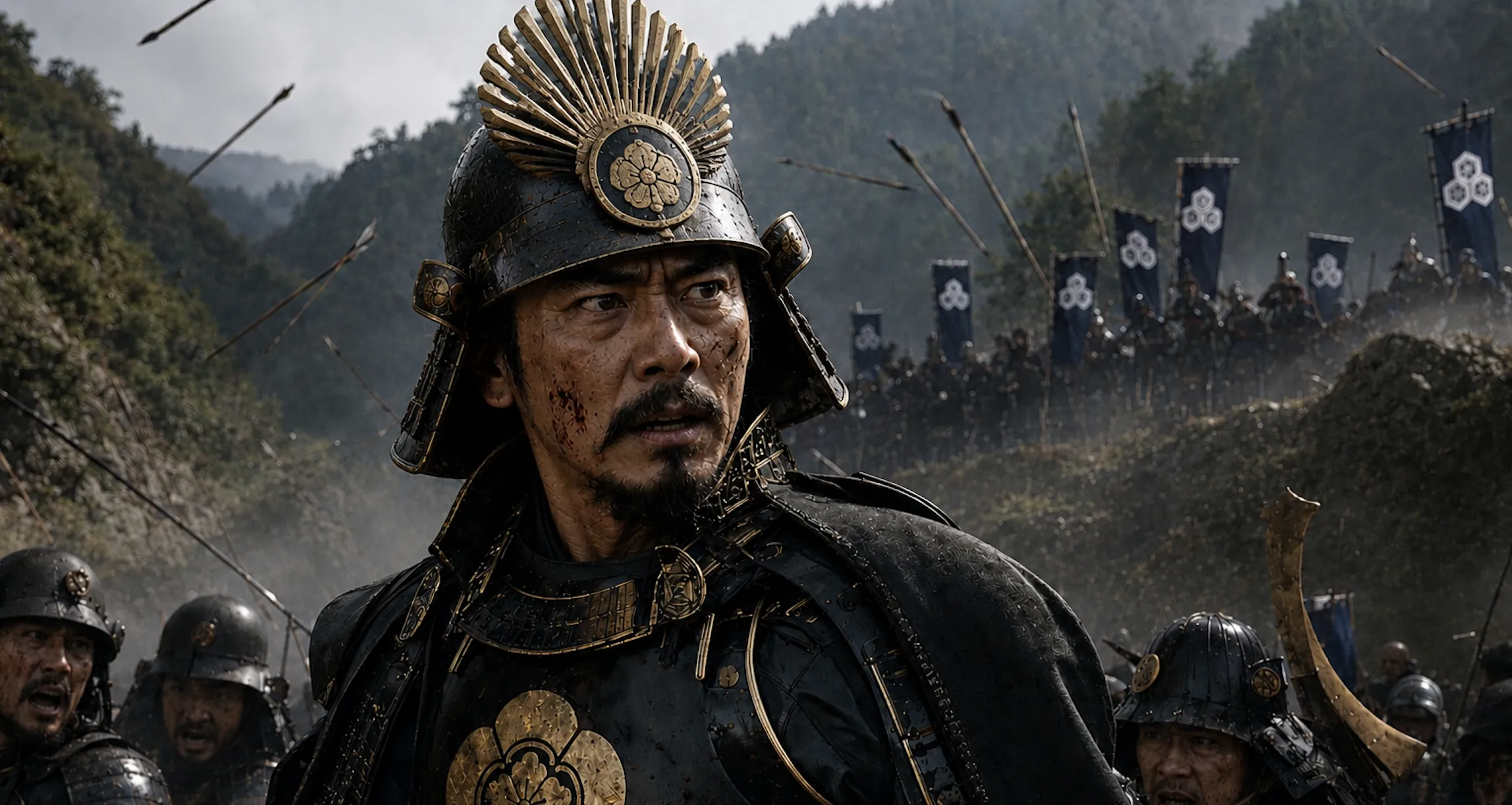
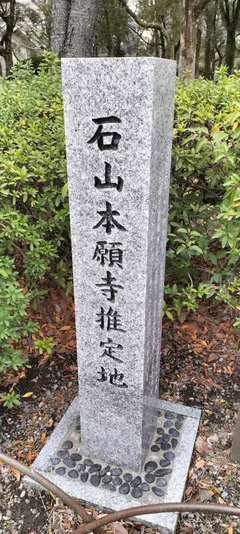
By the late fifteenth century, Ishiyama Hongan-ji was a Buddhist centre with the political, economic and military weight to resist warlords. Oda Nobunaga spent a decade trying to break it.
Geography, defences and devoted supporters kept him out. The sharpest conflict was inside. The abbot Kennyo was ready to settle. His son Kyōnyo refused to give up the fortress. Was compromise a betrayal of the faithful, or was fighting on a betrayal of everyone who depended on the leadership?
In 1580 the fortress burned. Its location did not. Three years later, Hideyoshi began building on the same ground.
Oda Nobunaga's army in a desperate retreat after the betrayal of Lord Azai. Omi Province – summer 1570.
On the day
Rediscover a warrior-monk fortressReconstruct the stronghold that held Nobunaga off for a decade.
A new ruler built on the ashes. Could he build an order that would outlive him?
Stop 4
Osaka Castle
Chacha: the woman who lived through one betrayal after another
1583–1615: she lost her family to political violence, then became the mother of an heir.
Chacha lost her father when the Azai fell and her mother, Oichi, at Kitanosho. She survived, became Hideyoshi's consort, and bore his heir, Hideyori.
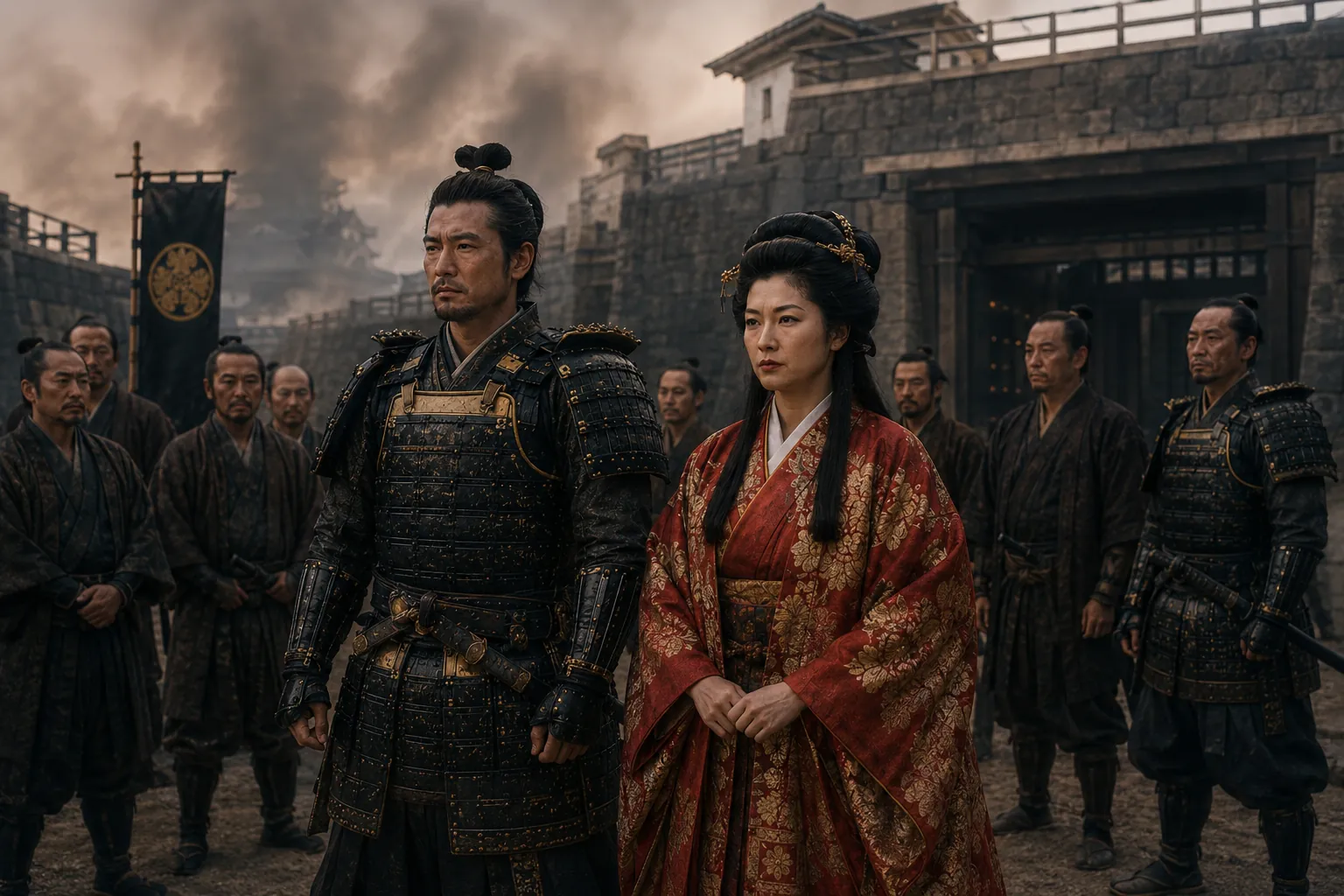
When Hideyoshi died, Tokugawa Ieyasu was rising, and her son was both a legacy and an obstacle. The Winter Campaign of 1614 ended in a settlement. The Summer Campaign of 1615 ended the Toyotomi. Yodo-dono and Hideyori died as the castle fell.
Victim or schemer? Neither label fits. Then the Tokugawa buried Hideyoshi's castle and built over it, and the question changes from who won to who controlled the story afterward.
We finish at the Yamazatomaru and Aoyamon Gate, where the traditional account meets the landscape. We separate evidence from inference from speculation.
Summer siege – 1615. Lady Yodo and Hideyori waiting for an answer that will never come.
On the day
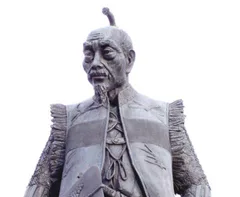
Trace Hideyoshi's rise from sandal-bearer to rulerHow did he win the loyalty to build a new order?
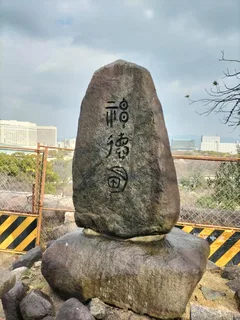
Uncover the buried baileys and Black KeepGPS-enabled maps reconstruct the lost Toyotomi castle.
Investigate the Yamazatomaru and Aoyamon GateCompare the accepted account with the ground.
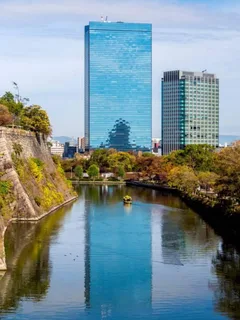
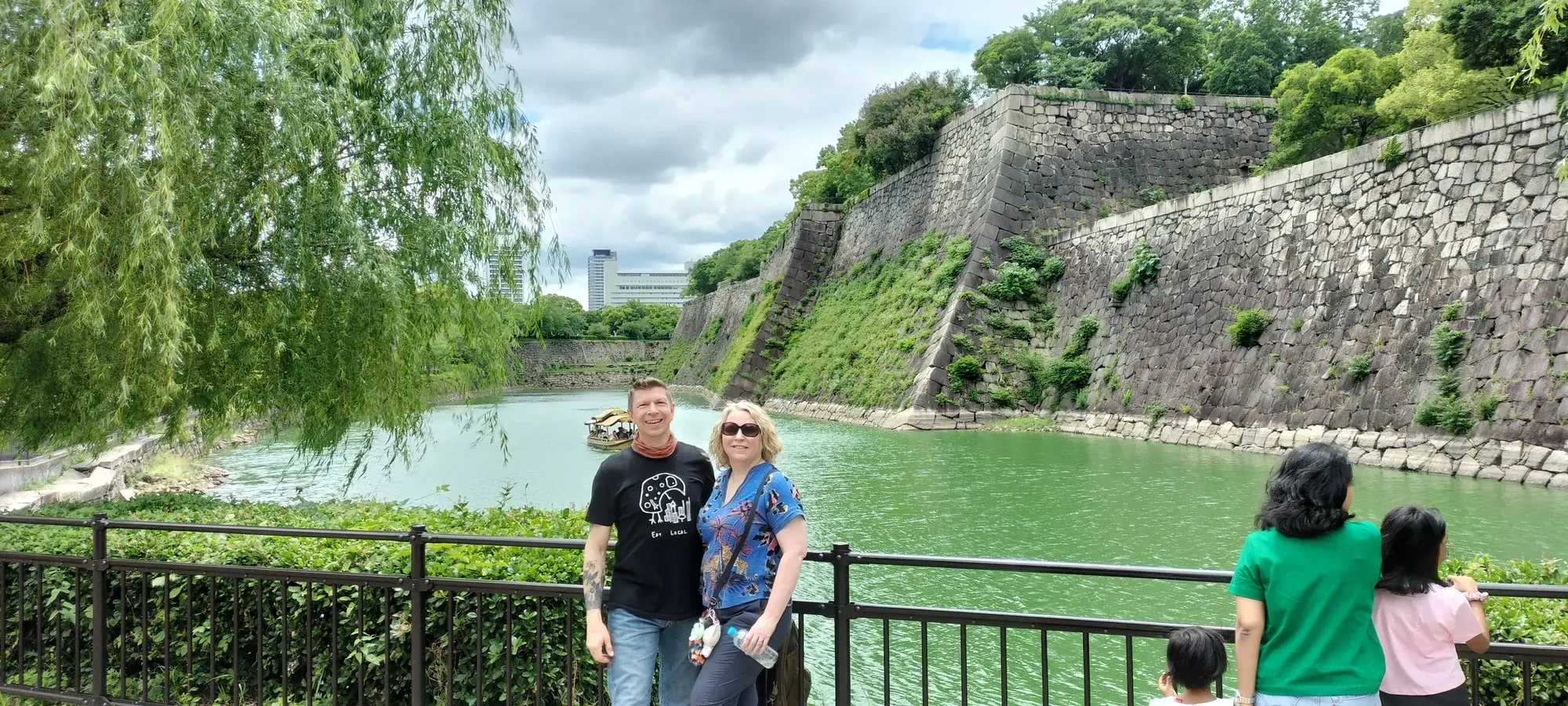
Compare three fortresses in one reflectionThe moat that links every phase of the castle, with seasonal photos along the water.
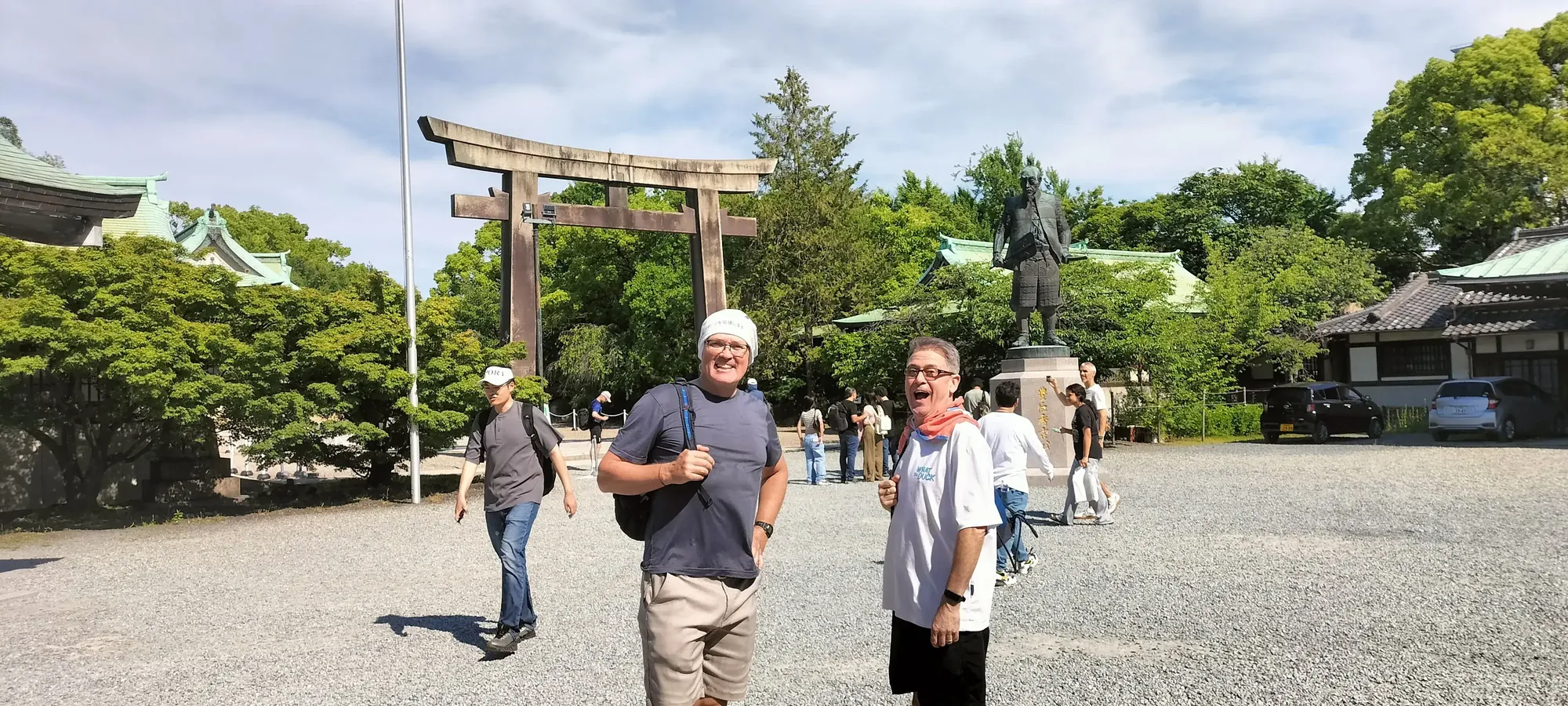
Share final reflections and receive your digital summaryTake away a personalised summary with historical references, visual reconstructions and candid photographs from the walk.
When the victor rebuilds the fortress and the defeated disappear from power, how much of the old story survives?
What’s Included
Historical GPS-enabled maps and visual overlays tracing the successive fortresses and the older landscape beneath Osaka Castle
Exclusive Digital Archive — a personalised post-tour summary with lost-castle reconstructions, historical references and candid photography
Guided walk through the archaeological landscape of Osaka Castle Park, personally led by Edward Iftody
Stories of the warrior monks, Oda Nobunaga, Toyotomi Hideyoshi, Tokugawa Ieyasu, Chacha and Hideyori
Examination of the surviving landscape, buried fortifications and historical accounts
Seasonal photography moments along the southern moat and ridge
Exclusions
Food and drinks
Transportation to and from the meeting point
Personal expenses
Practicals
Meeting point: 2-3-6 Tanimachi, Chuo-ku, Osaka — approximately 90 seconds from Tanimachi 4-chome Station Exit 1A.
Duration: Approximately 2.5 hours on foot, at a relaxed pace.
Why do guests consider this the best Osaka Castle tour for samurai lore and military history enthusiasts?
This walk connects military history with the political intrigue behind it. Explore the resistance of the warrior monks at Ishiyama Hongan-ji, Hideyoshi's rise to power, the struggle between the Toyotomi and Tokugawa houses, and the rebuilding that transformed the castle after 1615. Historical maps, archaeological features and the surviving landscape help you look beyond the reconstructed keep and investigate the evidence for yourself.
Why do guests consider this the best Osaka Castle tour for the Toyotomi vs Tokugawa conflict?
This tour places that conflict at the heart of the story. Follow Hideyoshi's rise, the succession crisis after his death, the position of Chacha and her son Hideyori, the Winter and Summer Campaigns, and the Tokugawa rebuilding of Osaka Castle. Rather than treating the conflict as a simple victory by one great ruler over another, we examine how alliances, promises, military pressure and control of the historical landscape shaped the outcome.
Who were the warrior monks, and what was Ishiyama Hongan-ji?
Ishiyama Hongan-ji was a major Buddhist institution and fortified centre associated with the Ikko-ikki movement. Its followers could mobilise religious devotion, economic resources and military resistance against powerful warlords. Oda Nobunaga spent a decade trying to overcome the stronghold. The story also contains a conflict within the Hongan-ji leadership, as Kennyo and his son Kyōnyo disagreed over whether to continue resisting or accept surrender.
How did a peasant rise to build the original Osaka Castle?
Toyotomi Hideyoshi rose from humble origins to become the dominant military ruler of Japan. His career challenged assumptions about who could attain the highest positions in a society shaped by status and inherited privilege. Osaka Castle became a statement of his power and ambition. We explore how he used military success, political alliances, wealth and monumental building to establish his authority — and why the future of that authority became uncertain after his death.
What happened to Chacha and Hideyori?
Chacha, later known as Yodo-dono, survived the destruction of her birth family and became the mother of Toyotomi Hideyori, Hideyoshi's heir. After Hideyoshi died, the Toyotomi family's position came into conflict with the growing power of Tokugawa Ieyasu. Negotiations and temporary settlements failed to secure the dynasty's future. In 1615, Osaka Castle fell during the Summer Campaign, and Yodo-dono and Hideyori died. The tour examines their story through the political context, historical accounts and surviving landscape rather than reducing it to a simple tale of individual blame.
What physical evidence of the earlier fortresses survives today?
The present castle is not the original Toyotomi structure. The Tokugawa rebuilt Osaka Castle after defeating the Toyotomi, and the modern keep is a concrete reconstruction completed in 1931. Earlier defensive features, buried fortifications, surviving earthworks and changes in the landscape help reconstruct the successive phases of the site. We use historical maps and visual overlays to explore how the castle changed — and what the surviving evidence can tell us about those changes.
How did betrayal and political ambition shape the struggle for power in Japan?
Japan's unification was achieved as much through shifting alliances and broken promises as through battle. On this walk, Edward Iftody, Osaka Castle's Resident Historian, follows how warrior monks, rival houses and the Tokugawa used — and discarded — partnerships to consolidate power, and how those decisions left their mark on the Osaka landscape.
How does Warrior Monks, a Peasant, and a Shogun differ from a standard Osaka Castle tour?
A standard tour often concentrates on Hideyoshi, the samurai era and the modern keep. This walk uses four archaeological sites to connect a much longer story: early succession struggles, assassination at court, the warrior monks' resistance, Hideyoshi's rise and the destruction of the Toyotomi house. It is an investigative history walk focused on political conflict, betrayal and the evidence left in the landscape.
Is Warrior Monks, a Peasant, and a Shogun suitable for children?
Yes. Families with children and teenagers are welcome. The walk lasts about 2.5 hours and covers military history, political intrigue and the changing landscape of Osaka Castle Park. It suits children who are comfortable walking and interested in history. Youth aged 12–17 join at ¥5,000, and children aged 0–12 walk free with a paying adult. More guidance is available on the Osaka Castle with kids page.
Do you walk in bad weather?
Yes — we walk in ordinary rain, and umbrellas are provided. Severe-weather alerts are the only exception; if one is issued, Edward contacts you to arrange an alternative, and you can cancel or reschedule for a full refund up to 24 hours before the start.
Is Osaka Castle museum entry included?
No — the keep and its museum are not part of this walk, and entry tickets are purchased separately if you want to go inside afterward. The tour covers the outdoor grounds and the buried-fortress landscape, using GPS maps to reconstruct what is no longer visible.
Where does the walk begin?
We meet at 2-3-6 Tanimachi, Chuo-ku — roughly 90 seconds from Tanimachi 4-chome Station Exit 1A — and finish at Aoyamon Gate. Edward Iftody, Osaka Castle's Resident Historian, leads the group on foot at a relaxed pace for about 2.5 hours.
Is this a private tour?
Scheduled departures are small-group walks led in English and capped at six guests, not private tours. You can, however, request a private tour for a group of four or more — contact Edward directly. For groups larger than six, he can arrange special pricing.
Research by Edward Iftody, Osaka-based historian and resident historian at Osaka Castle.
This reconstruction draws on contemporary European accounts, Japanese historical chronicles, archaeological research, historical geography and the surviving physical landscape.
 Climb the Uemachi PlateauWalk the ridge settled thousands of years before the first samurai.
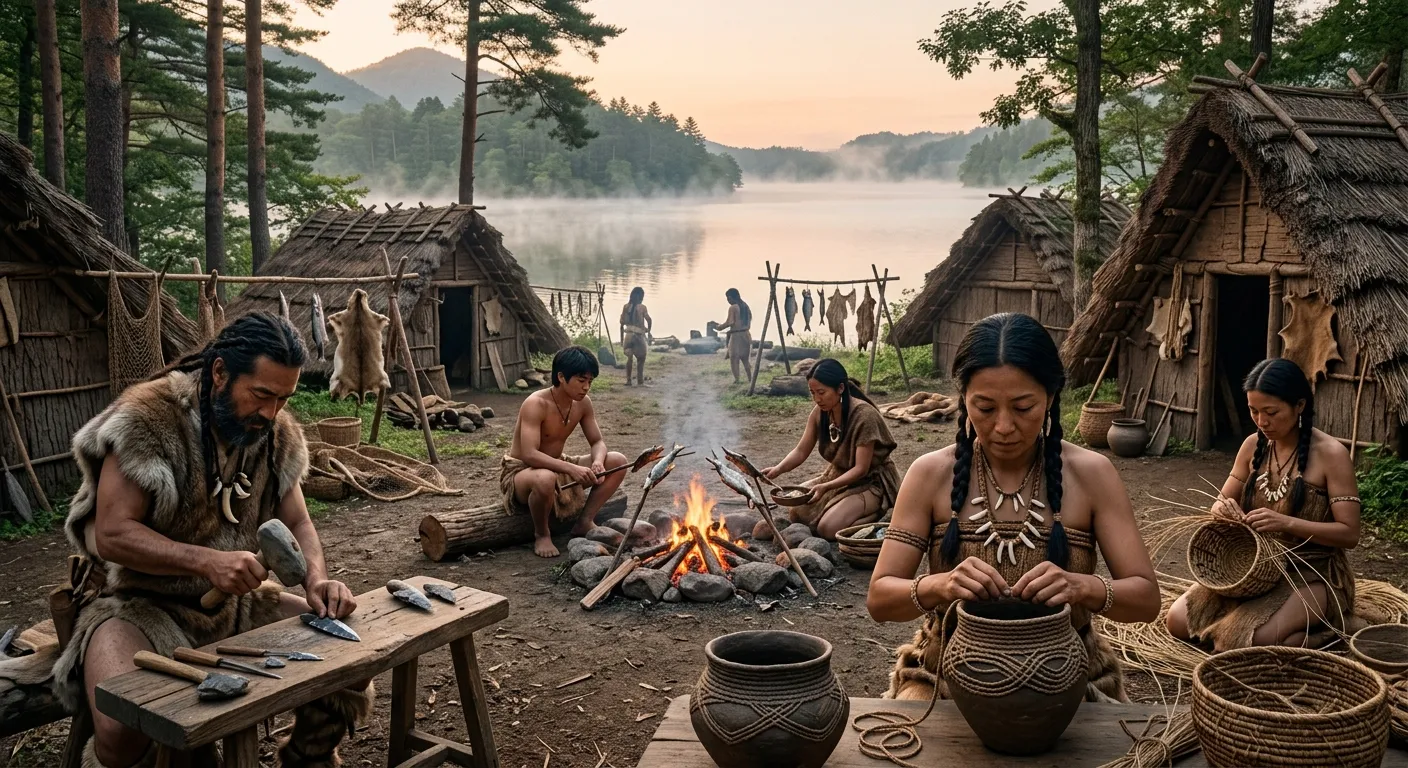 Meet the people before Japan had a nameSettled communities and early pottery, before the state.
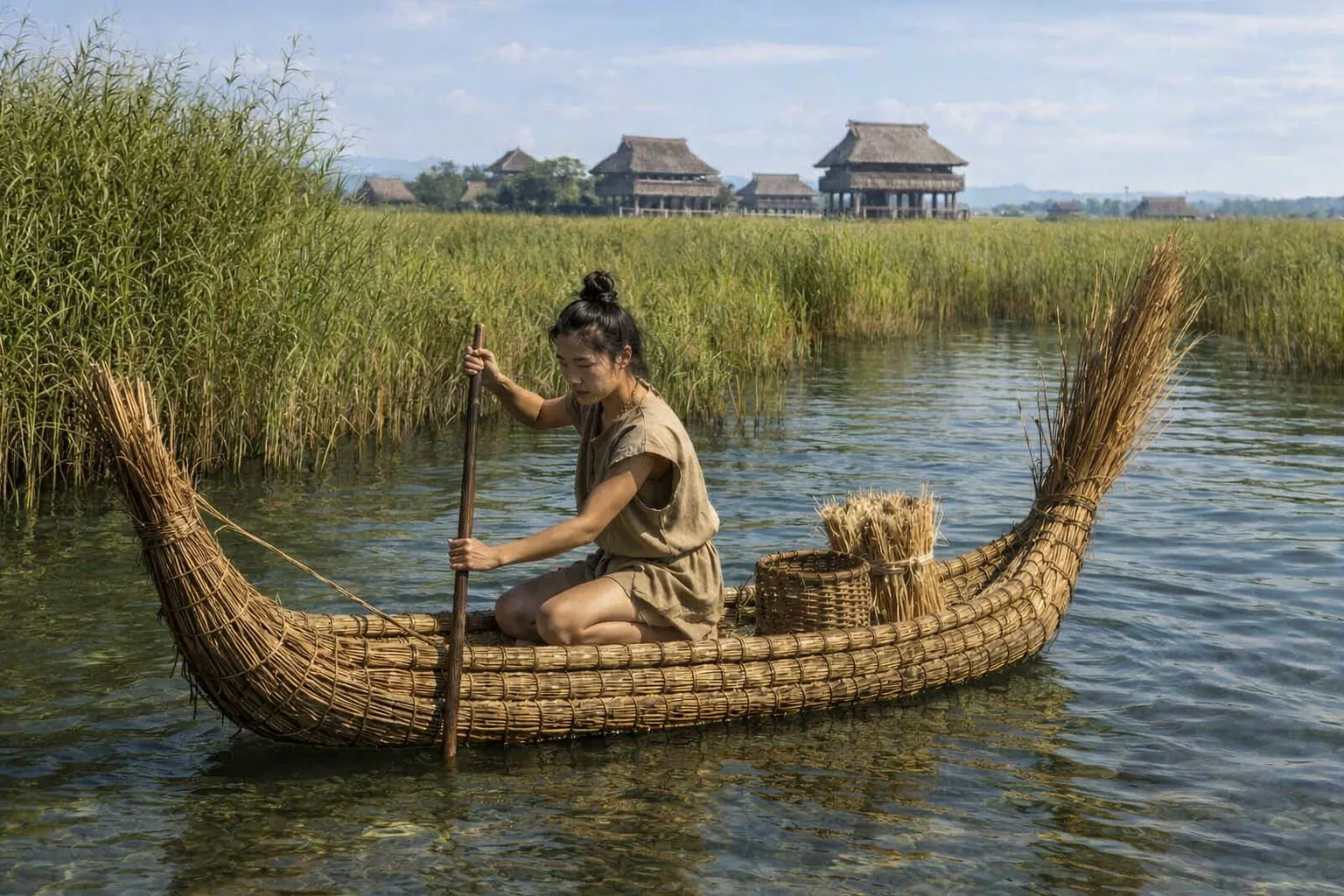 Trace the arrival of the rice farmersWet rice, metal tools and a new social order.
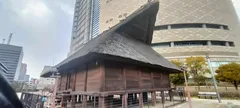 Uncover the ancient portExcavated warehouses and the wealth worth fighting over.