Shitenno-ji
Osaka Castle Walks with Edward • Historical Reference Series

shitenno-ji History

1,400 Years of Power, Faith, and Survival in Osaka

Founded593 CE
FounderPrince Shōtoku
LocationNaniwa (Modern Osaka)
TraditionOne of Japan’s Oldest Official Temples
StatusContinuously Rebuilt Over 1,400 Years
Why Shitenno-ji Was Built
A Temple of Statecraft and Continental Power
Shitenno-ji was founded in a period when real political power in Japan rested not only with the emperor, but with powerful regent clans—especially the Soga clan.

The Soga were deeply connected to immigrant lineages from the Korean kingdoms and played a central role in introducing continental systems of governance, literacy, medicine, astronomy, and diplomacy.

Prince Shōtoku, born into this lineage through his mother, inherited this worldview. His support for Buddhism was not only religious but political: it was a way to align Japan with the broader East Asian world system.

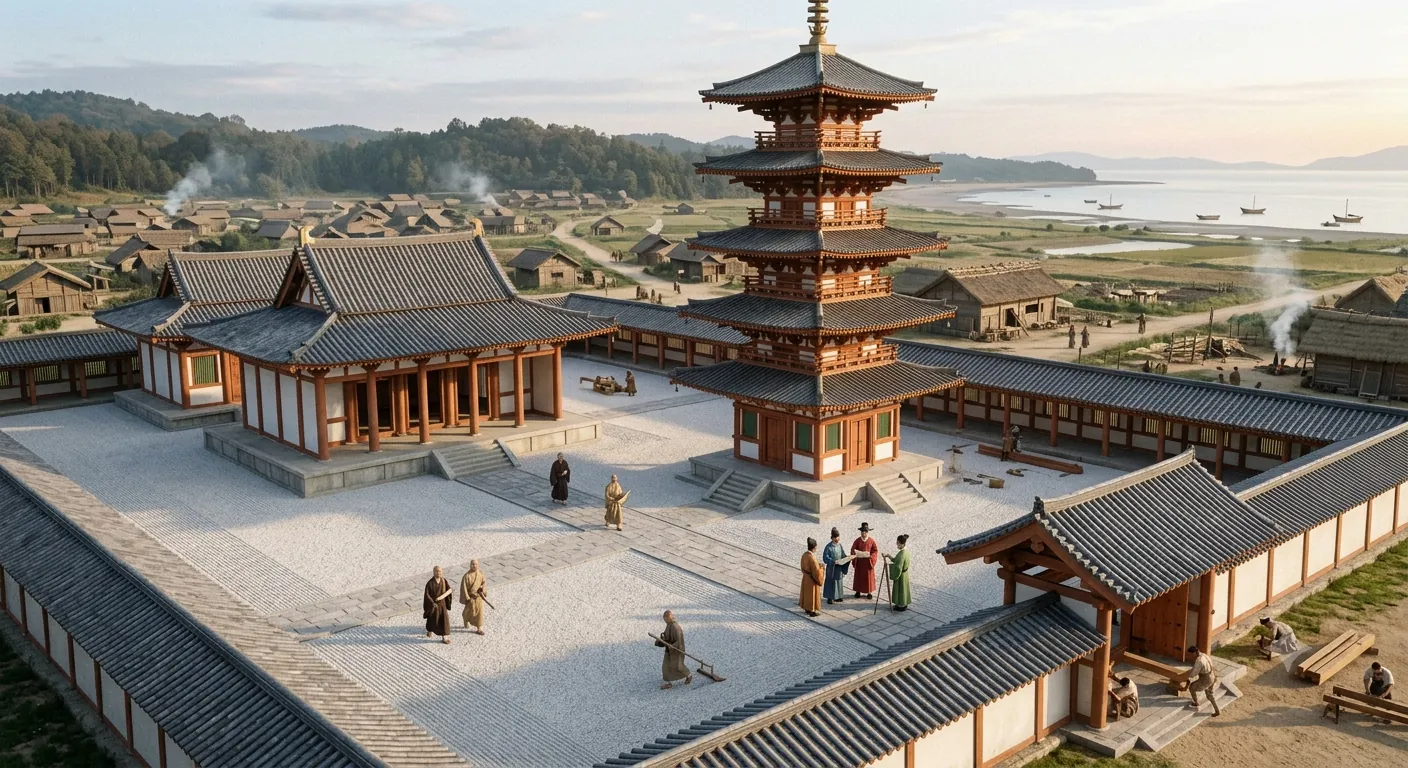
By establishing Shitenno-ji in Naniwa—Japan’s key international port—he created an institution that anchored imperial authority in a city directly connected to continental trade and ideas.
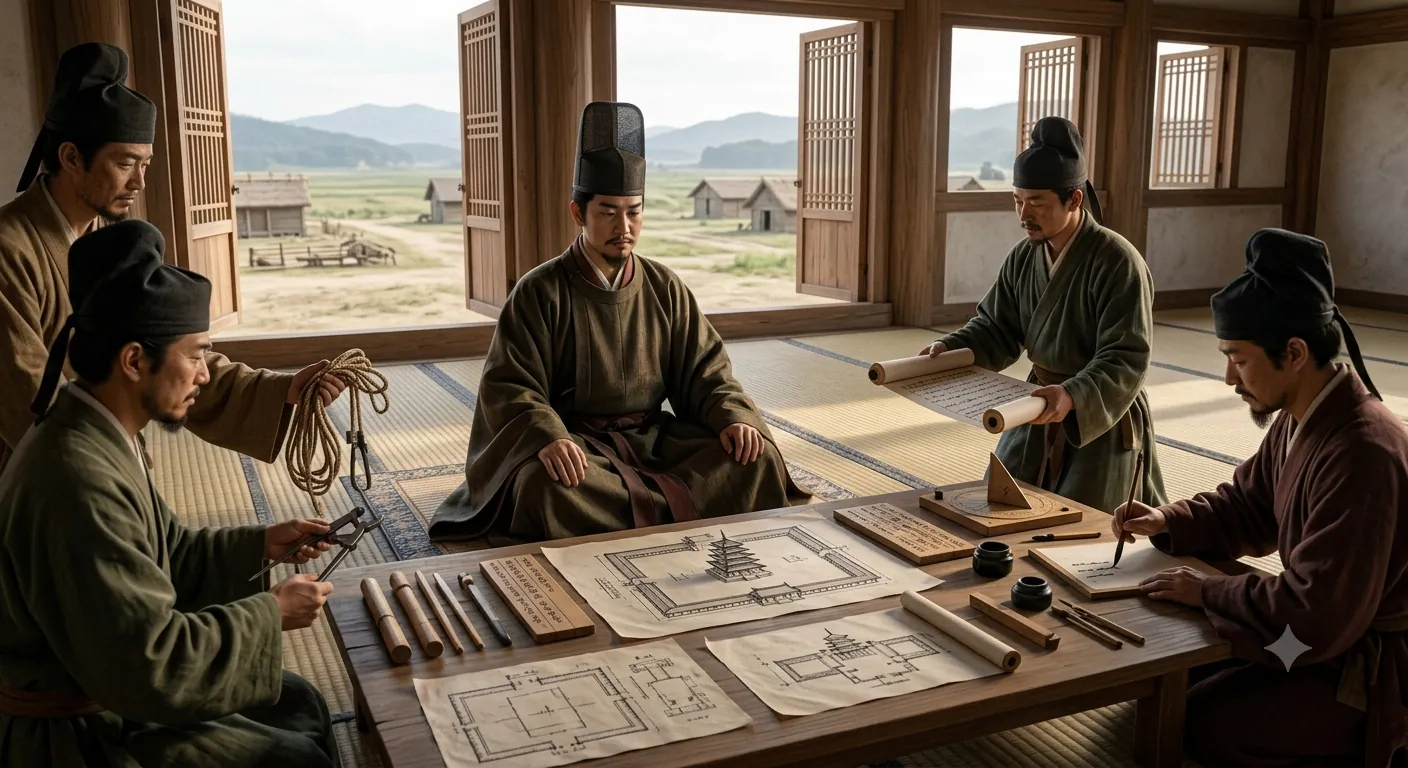
Prince Shotoku planning Shitenoji

Prince Shotoku planning Shitenno-ji.
Early State Formation
Religion, Authority, and the Mandate of Heaven
Buddhism arrived in Japan alongside continental political concepts, including ideas similar to the Mandate of Heaven: the belief that legitimacy is tied to cosmic order rather than clan lineage.

This required a new model of governance in which authority was centralized under the emperor, supported by institutions like Shitenno-ji.

Ironically, this process also destabilized the Soga clan, who had helped introduce the very system that later reduced their political dominance.

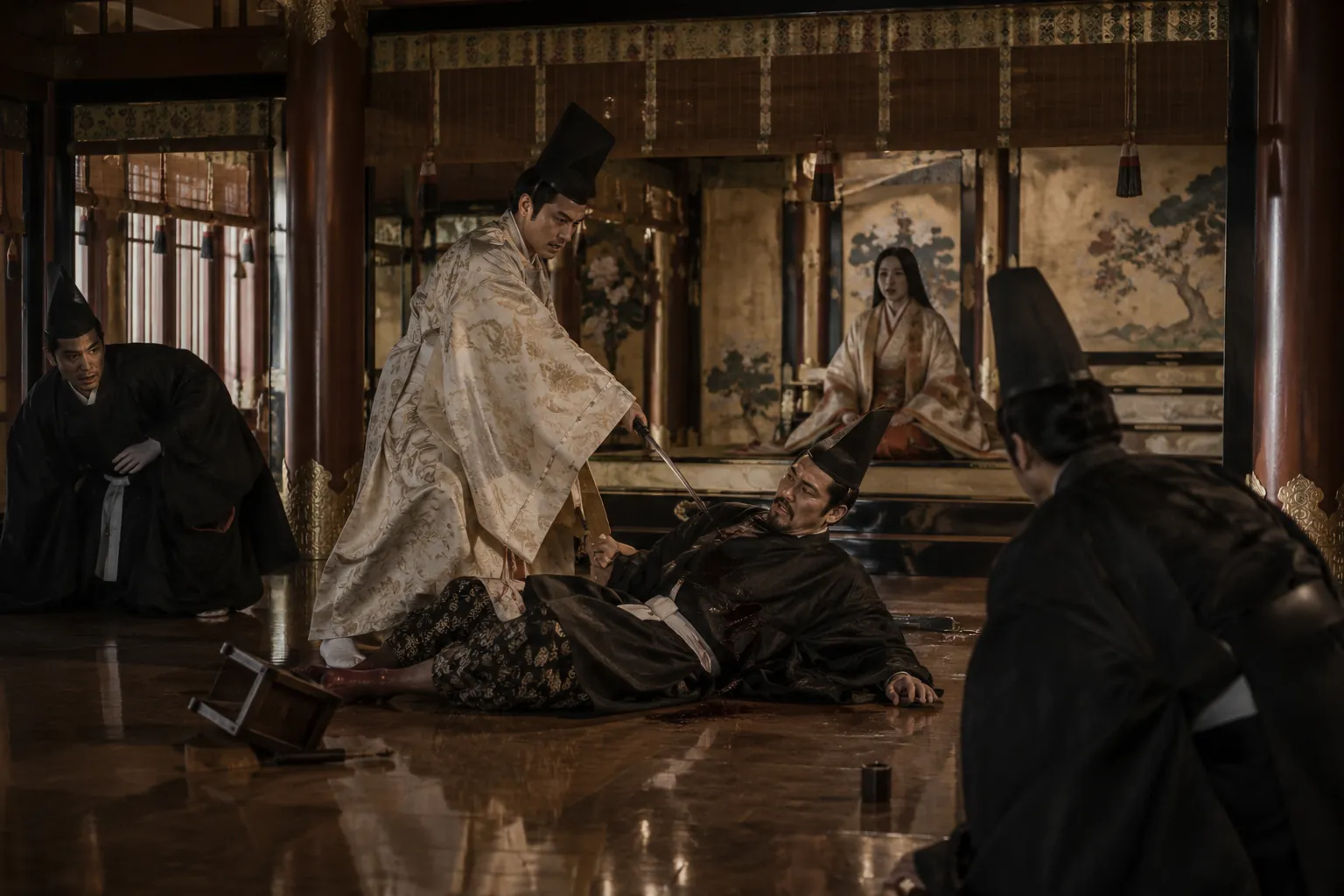
Assassination of the Soga clan leader - July 10th, 645

Assassination of the Soga clan leader - July 10th, 645.

Fires, Rebuilding, and Imperial Patronage
A Temple Too Important to Lose
Over centuries, Shitenno-ji was repeatedly destroyed by fire and rebuilt by imperial order.

Each reconstruction reaffirmed its importance: it functioned as a diplomatic gateway, a training center for state-affiliated monks, and a visible symbol of imperial legitimacy. Even as capitals shifted from Asuka to Nara and then Heian-kyō, Shitenno-ji remained in Osaka, anchoring the city within the evolving structure of the Japanese state.

Medieval Period
Estates, Monks, and Economic Power
During the medieval period, Shitenno-ji controlled estates across the Kinai region, linking it to the same economic networks as major temple complexes such as Enryakuji and Kōfukuji.

These estates provided income, labour, and influence, embedding the temple deeply into Japan’s political economy.

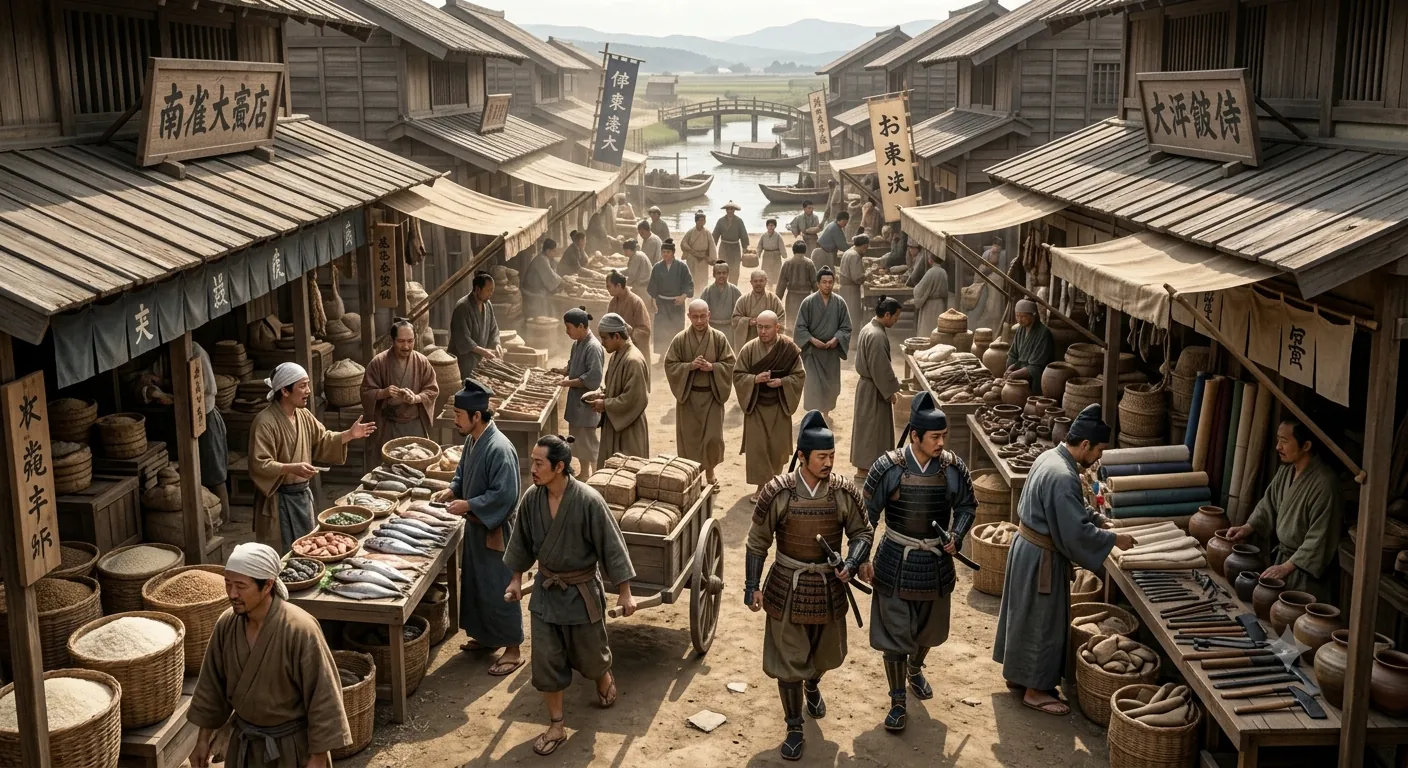
Markets and settlements grew around the temple grounds, helping transform Osaka into a commercial hub long before the rise of Osaka Castle. Each reconstruction reaffirmed its importance: it functioned as a diplomatic gateway, a training center for state-affiliated monks, and a visible symbol of imperial legitimacy.

Osaka - Japan's commercial hub

Osaka - Japan's commercial hub.

Osaka Castle Era
A Thousand-Year Institution in a Samurai City
By the time Toyotomi Hideyoshi began constructing Osaka Castle in 1583, Shitenno-ji had already stood for nearly a millennium.

While Hideyoshi reorganized the city into a castle-centered political system, Shitenno-ji remained a stabilizing presence within a rapidly changing urban landscape.

Even after the fall of the Toyotomi regime in 1615, the temple survived, continuing its role under the Tokugawa shogunate as a spiritual and charitable institution.

Did You Know?

Shitenno‑ji is not just one of Japan’s oldest temples—it is one of the country’s first state‑built institutions.

When Prince Shōtoku founded the temple in 593 CE, he wasn’t simply promoting Buddhism. He was introducing a continental model of governance in which temples acted as administrative centers, diplomatic hubs, and training grounds for literate officials.

Early Shitenno‑ji included: hospital wards (施薬院), orphan care facilities (悲田院), and a guesthouse for foreign envoys (会堂)—all modeled on institutions in the Sui and Tang empires.

In other words, Shitenno‑ji was not only a religious site. It was the blueprint for how Japan’s first centralized state would function.

If this intersection of religion and statecraft interests you, you may enjoy our companion reference: Before Japan Had a Name, which explores how continental ideas shaped early Japanese civilisation.
Modern Era
Survival Through Reform, War, and Reconstruction
In the Meiji period, when many Buddhist institutions were dismantled or reorganized, Shitenno-ji survived due to its historical significance and imperial connections.

During World War II, the temple was damaged by air raids but later rebuilt once again.

Today, it stands as one of Osaka’s most important historical sites—a living record of continuous destruction and renewal over more than 1,400 years.

Shitenno-ji is only one part of Osaka's story

Shitenno-ji stands at the beginning of Japan’s Buddhist history, but it is only one chapter in a much larger transformation that reshaped Osaka over centuries. When Prince Shōtoku founded the temple in 593 CE, he was not simply building a place of worship—he was introducing continental ideas about governance, law, ritual, and urban planning that would ripple across the region.

The temple’s straight avenues, its orderly compound, and its administrative offices formed a blueprint for how early Japanese cities would be organized. Around Shitenno-ji grew markets, workshops, immigrant communities, and the first hints of Osaka’s future identity as a hub of trade and culture.

Seen in this wider context, Shitenno-ji is not an isolated monument. It is the opening move in a long story of innovation—one that leads to the merchant city of Naniwa, the rise of Osaka Castle, the economic power of the Edo‑period port, and the modern city that still carries these layers of history in its streets.

Historical Reference

These historical reference pages explore other defining moments in Osaka's past and support my research.

The Uemachi Plateau - A Deep Time Timeline

Discover 7000 years of Osaka's history.


Explore Osaka with a Resident Historian


Reading about history is one thing. Standing where it happened is another. My small-group walking tours explore the real locations behind these stories, combining archaeology, historical sources, and the surviving landscape to reveal how Osaka shaped the history of Japan.

View Walking Tours

When was Shitenno-ji founded

Shitenno-ji was founded in 593 CE by Prince Shōtoku, making it one of Japan’s earliest state‑supported Buddhist temples.

Why was Shitenno-ji built

It was established to promote Buddhism and continental administrative ideas at a time when Japan was forming its first centralized state.

Is Shitenno-ji original

The temple has been destroyed and rebuilt many times, but its layout, location, and institutional role remain faithful to the 6th‑century design.

What makes Shitenno-ji historically important

Shitenno-ji is the first temple built under direct imperial authority, marking the moment Buddhism became a tool of statecraft in early Japan.

What is the Gokuraku-jōdo Garden

The Gokuraku‑jōdo Garden is the inner garden that guests can only see inside the paid precinct at Shitenno‑ji. It’s worth visiting because it is extremely rare — a physical representation of Amida’s Pure Land paradise, designed according to the cosmology understood by people living in the mid‑6th century. The garden reflects Prince Shōtoku’s vision of Buddhism as both a spiritual path and a political foundation for Japan, and it is one of the oldest surviving examples of a Pure Land garden in the country.

Selected Historical References