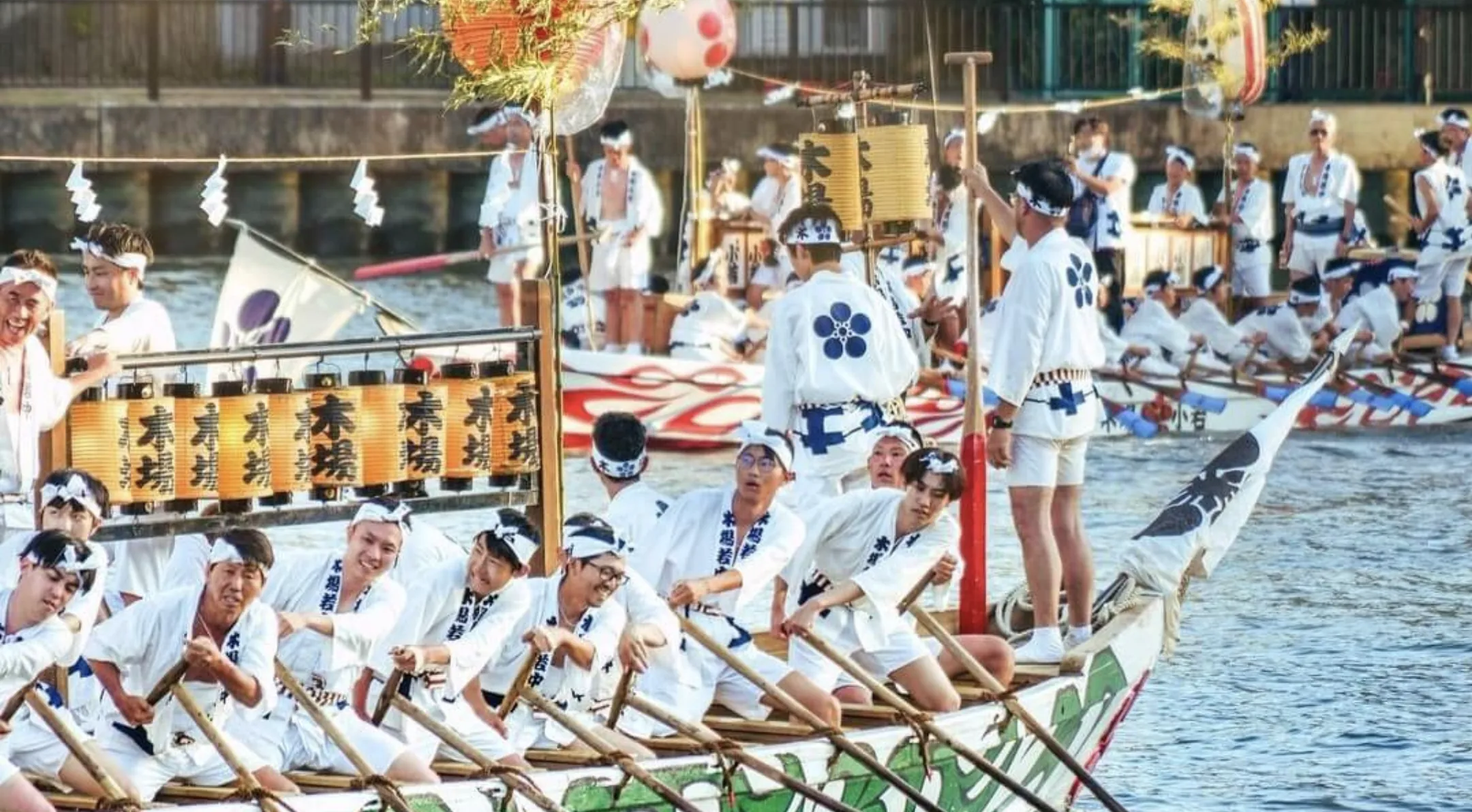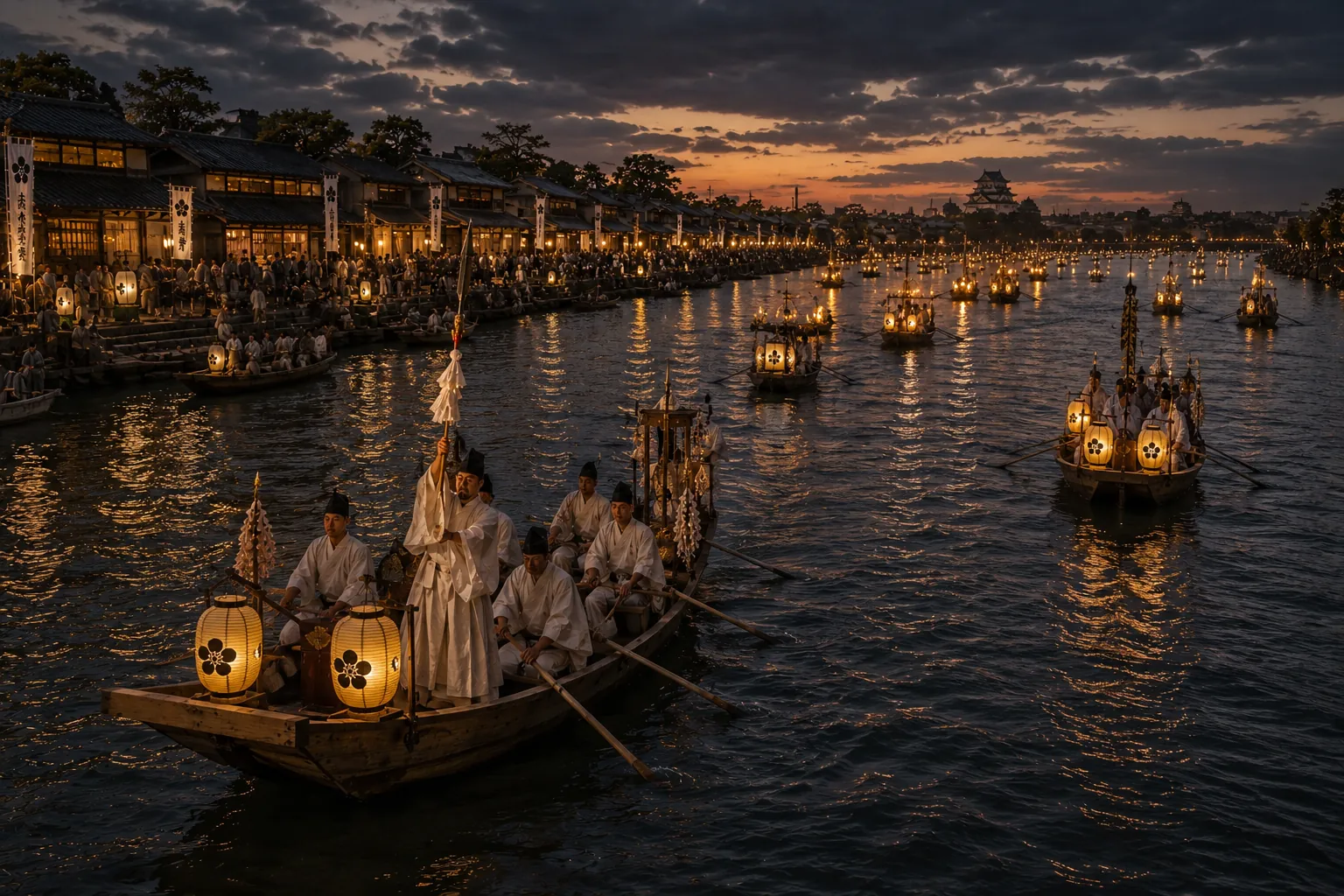
Tenjin Matsuri boat procession on the Okawa River
Osaka Castle Walks with Edward • Historical Reference Series

Tenjin Matsuri History

Why Osaka Celebrates Japan's Largest Water Festival

First Held951 CE
LocationOsaka Tenmangu & Okawa River
HonoursSugawara no Michizane (Tenjin)
Festival TypeReligious River Festival
VisitorsOver one million annually
Recognised AsOne of Japan's Three Great Festivals
845 CE
A Scholar is Born
Sugawara no Michizane was born into a family of respected court scholars during Japan's Heian period. His ancestors had served the Imperial Court for generations as teachers, poets, and administrators.

From an early age, Michizane displayed extraordinary talent in Chinese literature, poetry, and Confucian philosophy. Unlike many aristocrats whose influence depended upon birth alone, his reputation would be built upon scholarship and ability.

Few could have imagined that this gifted scholar would one day become one of Japan's most widely worshipped deities.
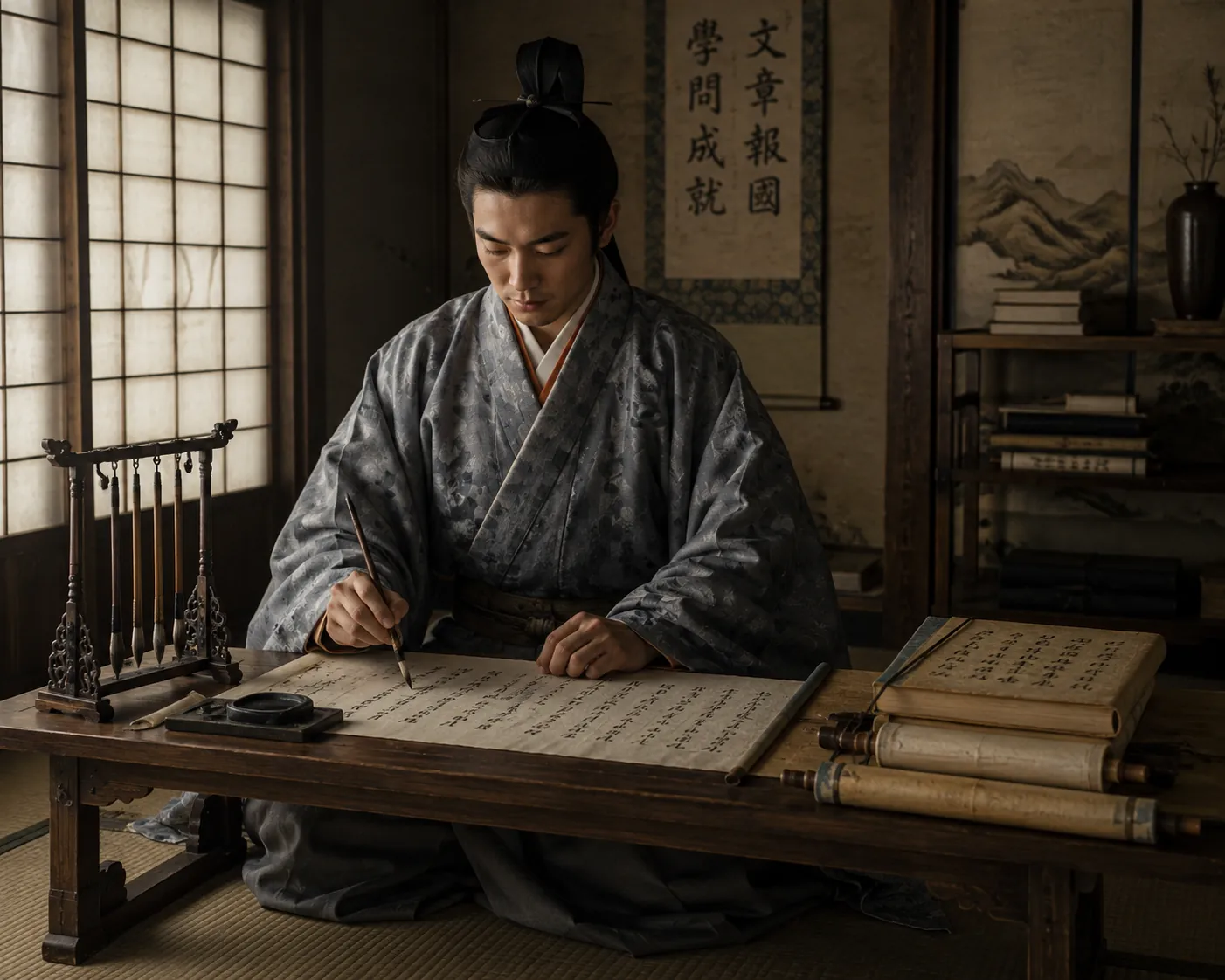
Young Sugawara no Michizane studying classical Chinese texts

Artistic impression of Sugawara no Michizane as a young scholar.
887–897 CE
The Rise of a Brilliant Statesman
Under Emperor Uda, Michizane rose rapidly through the ranks of the Imperial Court.

His promotions were unusual. While most senior positions were dominated by the powerful Fujiwara clan through hereditary influence, Michizane's advancement came largely through merit.

He became a trusted adviser to the Emperor, drafted official documents, represented Japan diplomatically, and gained a reputation as one of the greatest scholars of the age.

His growing influence, however, made him increasingly dangerous to those whose power depended upon controlling the throne.

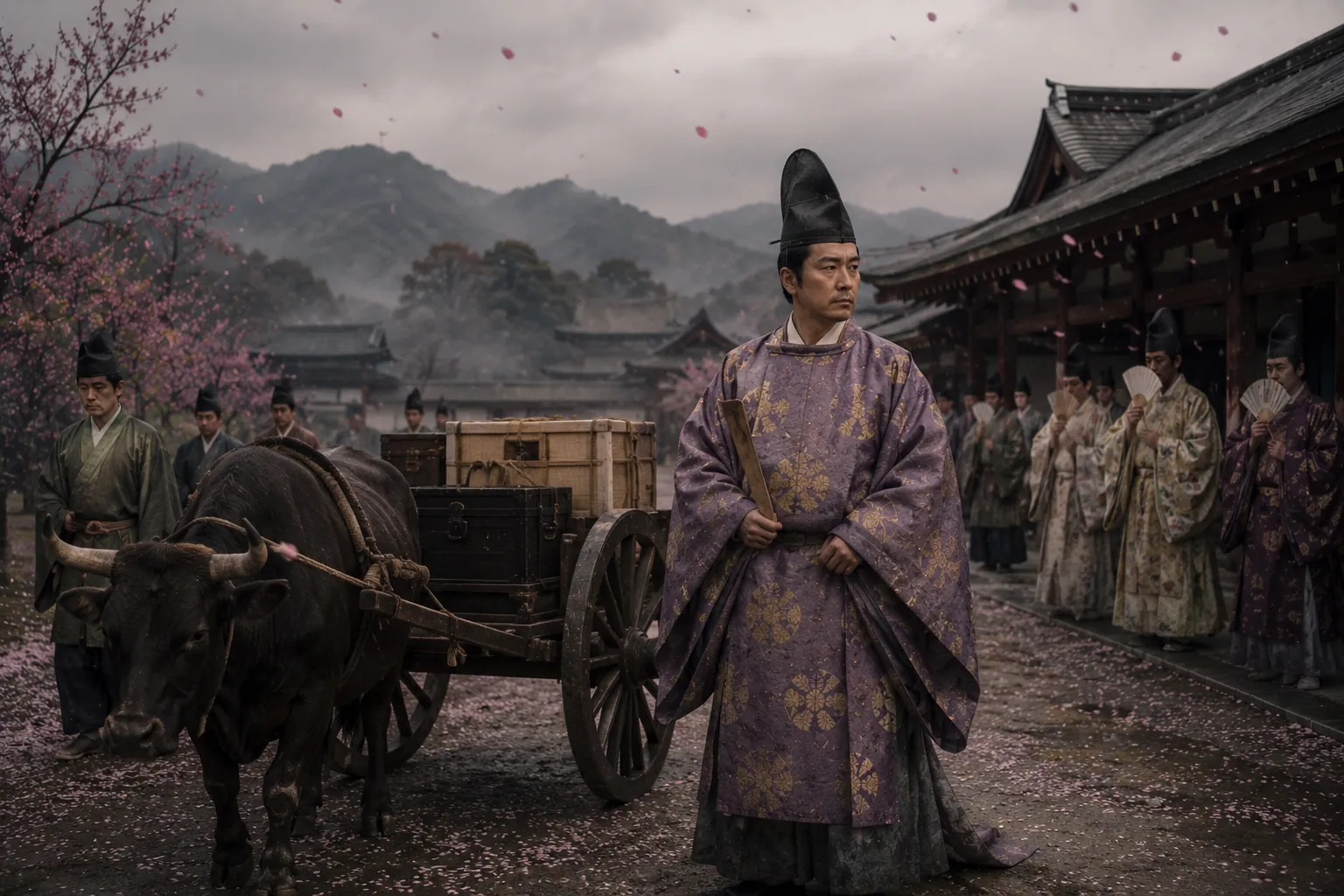
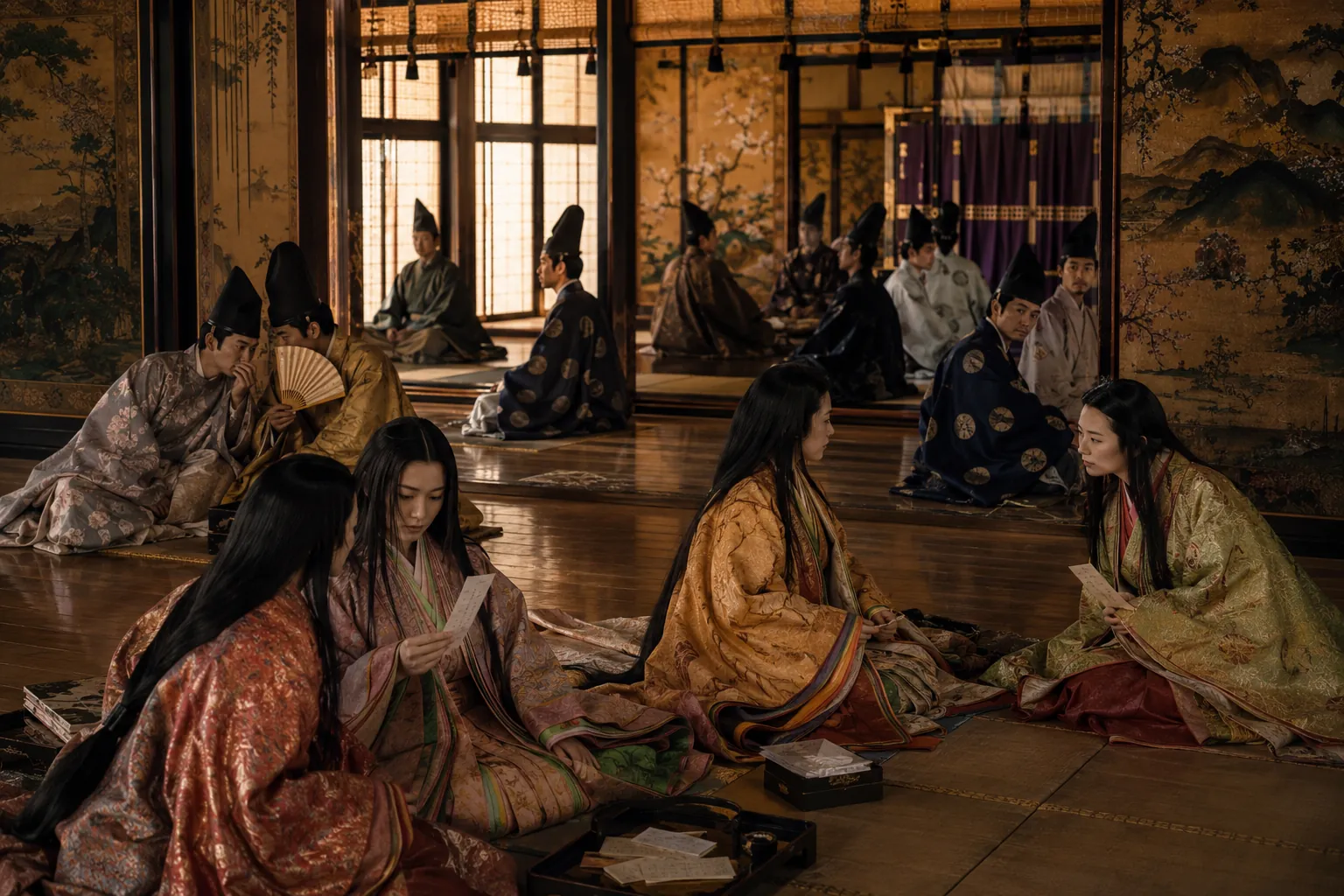
The Imperial Court during the Heian period

The elegant but politically dangerous world of the Heian Imperial Court.

901 CE
Exile to Dazaifu
After Emperor Uda retired, Michizane lost his strongest political protector.

Fujiwara no Tokihira accused him of conspiring to place Prince Tokiyo on the throne. Modern historians generally believe the accusations were politically motivated rather than supported by convincing evidence.

Michizane was stripped of his titles, separated from his family, and sent into exile at Dazaifu in northern Kyushu.

For one of Japan's greatest scholars, the punishment was devastating.

Sugawara no Michizane leaving Kyoto for exile

Michizane leaves Kyoto for what would become his final journey.

903 CE
Death in Exile
Just two years after arriving in Dazaifu, Sugawara no Michizane died far from the capital he had faithfully served.

His political enemies believed the affair was over. They were wrong.

Over the coming decades, a remarkable series of disasters would convince many Japanese that Michizane's spirit had returned seeking revenge.
909–930 CE
An Angry Spirit Returns
Within a generation of Michizane's death, Kyoto suffered an extraordinary sequence of misfortunes.

Fujiwara no Tokihira died unexpectedly at just thirty-eight years of age. Members of the Imperial family died young. Epidemics spread through the capital. Floods damaged the city.

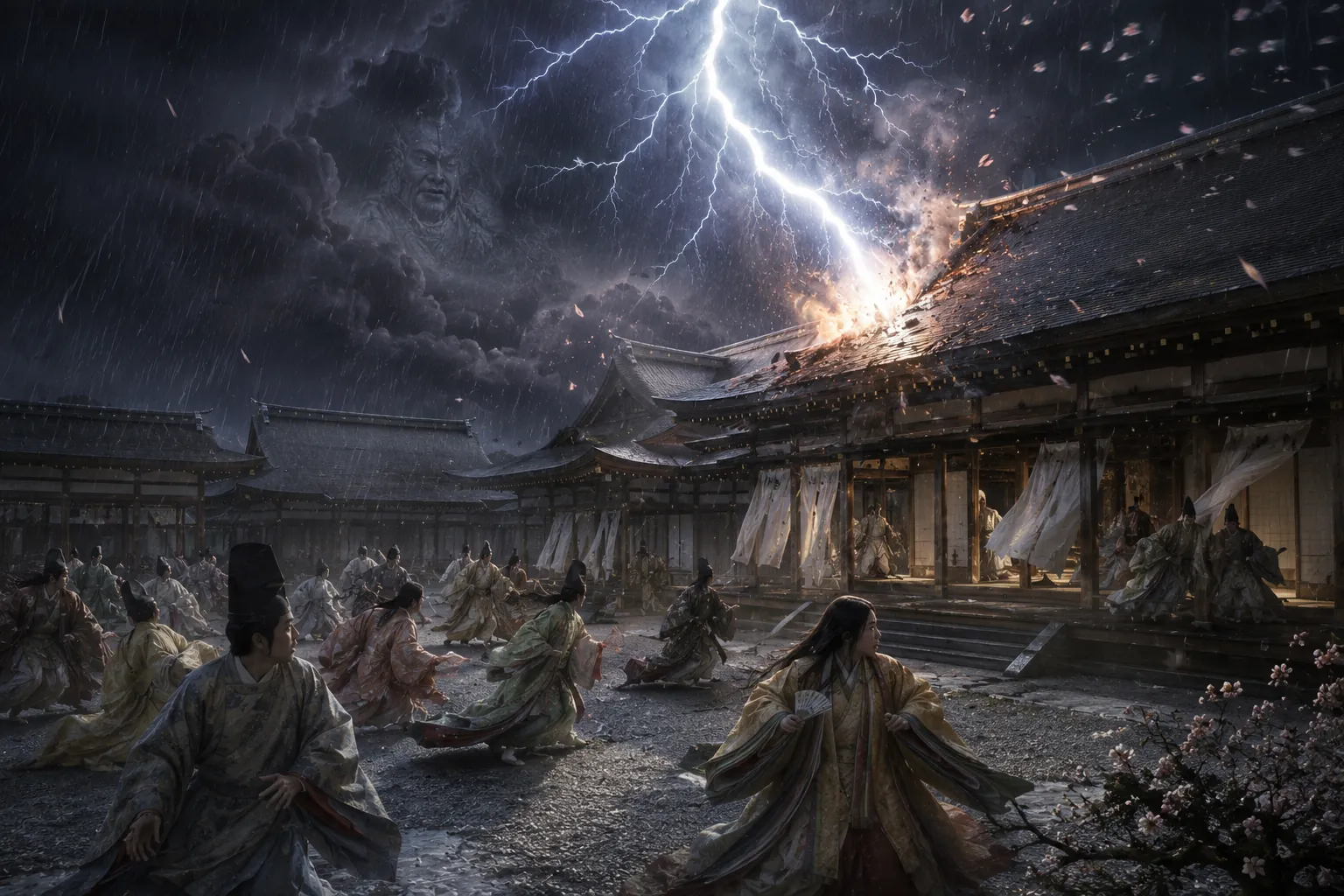
Then, in 930, lightning struck the Seiryōden Hall of the Imperial Palace during an official ceremony, killing several senior courtiers.

To modern readers these events may appear coincidental. To many people living in the Heian period, they were unmistakable signs that Michizane had become an onryō—a powerful and vengeful spirit whose anger threatened the entire nation.

Lightning strikes the Imperial Palace in Kyoto

The lightning strike of 930 became one of the defining moments in the legend of Tenjin.

947 CE
From Political Victim to God
Hoping to calm Michizane's spirit, the Imperial Court gradually restored his titles and honoured his memory.

Shrines dedicated to him appeared throughout Japan. Rather than being remembered as a disgraced court official, he was transformed into Tenjin, the kami of scholarship, learning, poetry, and the arts.

Today, students across Japan still visit Tenmangu Shrines to pray for success in examinations—a tradition that continues more than a thousand years after his death.

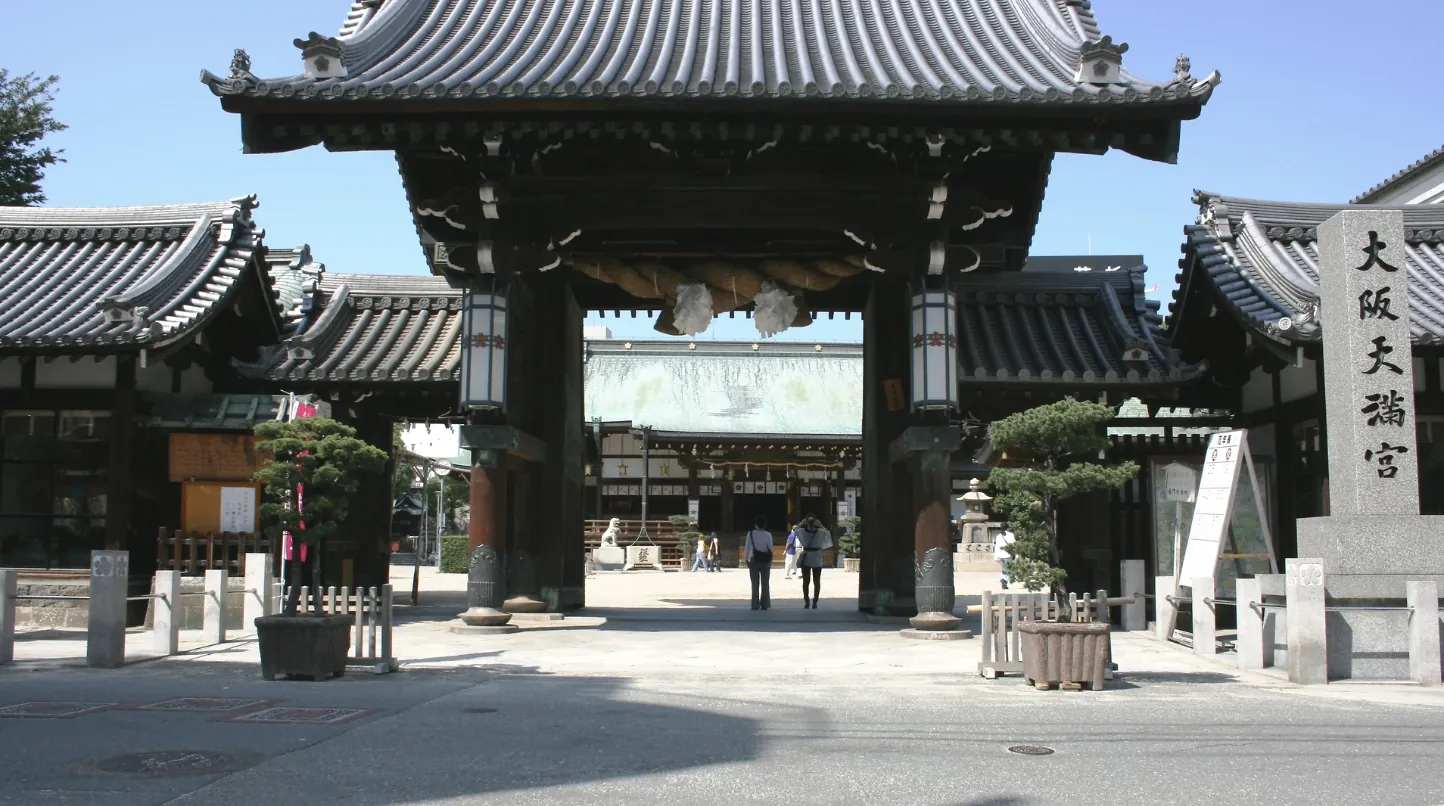
A Tenmangu Shrine dedicated to Sugawara no Michizane

Across Japan, Tenmangu Shrines honour the scholar who became a god.

951 CE
The First Tenjin Matsuri
Osaka Tenmangu Shrine established a ceremony unlike any other.

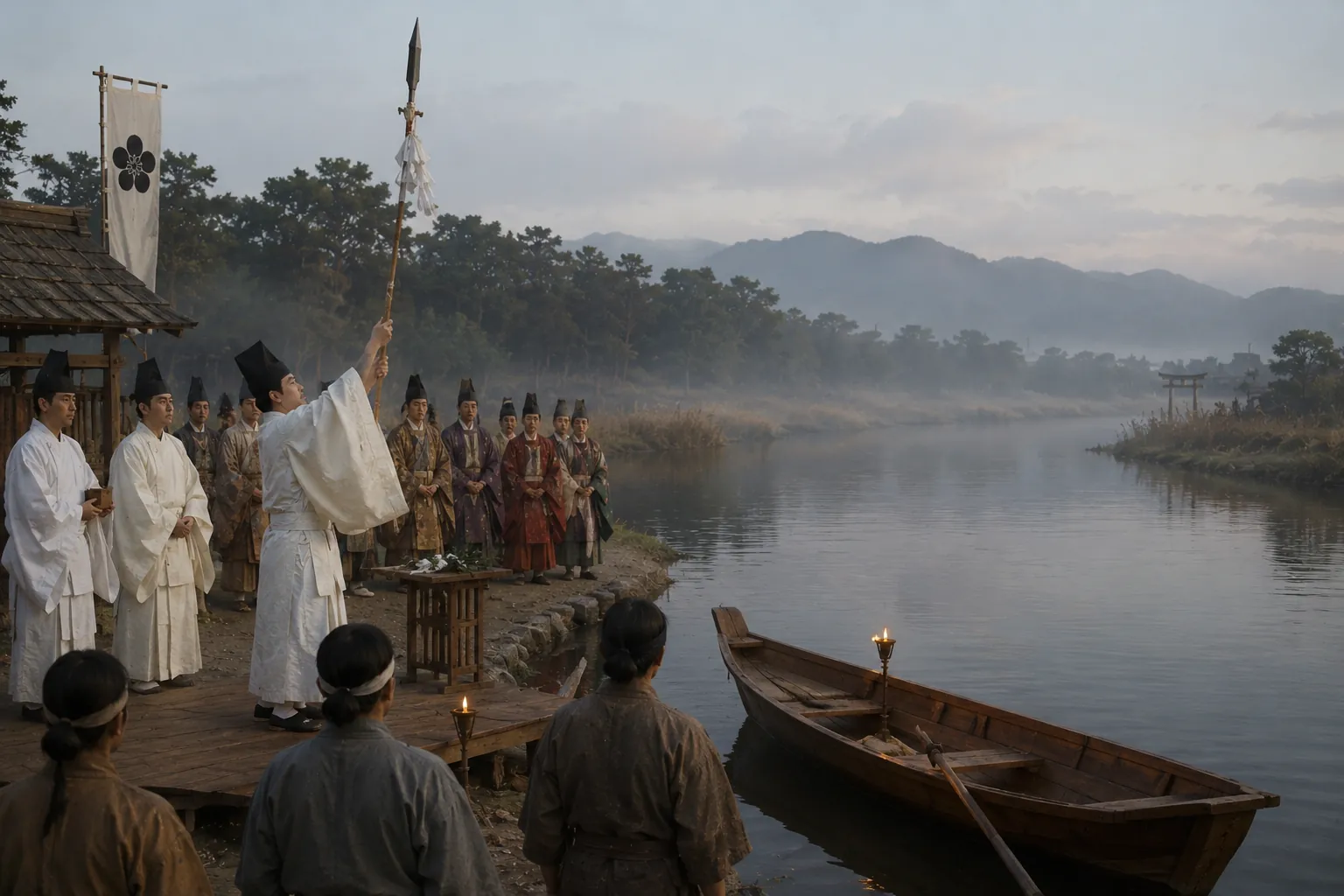
Priests carried a sacred spear to the Okawa River and released it into the current. Wherever the spear came ashore determined where the portable shrine would travel, symbolically extending Tenjin's protection across the surrounding communities.

This ceremony became the origin of Tenjin Matsuri. More than one thousand years later, the same ritual still forms the spiritual heart of one of Japan's largest and most famous festivals.

The sacred spear ceremony on the Okawa River

The sacred spear ceremony established in 951 remains the symbolic beginning of Tenjin Matsuri.

Did You Know?

The Okawa River was not chosen by accident.

Long before Osaka Castle existed—and thousands of years before Tenjin Matsuri—the waterways surrounding today's Osaka Castle formed one of the richest trading landscapes in prehistoric Japan.

The same rivers that carried rice, bronze, iron, merchants, diplomats, and armies into ancient Naniwa eventually carried the sacred spear that began Tenjin Matsuri.

One river. One festival. More than 7,000 years of continuous human history.

If this connection between landscape and history interests you, you'll probably enjoy our companion historical reference: Before Japan Had a Name, which explores how Osaka's geography shaped the earliest chapters of Japanese civilisation.
11th–16th Centuries
A Festival Grows with Osaka
What began as a religious ceremony gradually became one of Japan's great public celebrations.

As Osaka developed into one of Japan's busiest commercial centres, merchants, craftsmen, neighbourhood associations, and guilds began participating in the festival.

Boat processions became increasingly elaborate, musicians accompanied the portable shrines, and communities competed to produce ever more spectacular displays of devotion.

Yet despite its growing scale, the purpose of the festival remained unchanged: to honour Sugawara no Michizane and pray for the protection and prosperity of the city.

1583–1615
The Festival in the Shadow of Osaka Castle
When Toyotomi Hideyoshi constructed Osaka Castle in 1583, Tenjin Matsuri had already been celebrated for more than six centuries.

The enormous castle transformed Osaka into Japan's political and economic centre, yet the festival continued almost uninterrupted beneath its walls.

Samurai, merchants, monks, artisans, and townspeople all took part in the celebrations, demonstrating that Tenjin Matsuri belonged not to one ruler, but to the people of Osaka themselves.

During the Siege of Osaka in 1614–1615, celebrations were inevitably disrupted by war, but the festival quickly returned once peace was restored under the Tokugawa Shogunate.

Tenjin Matsuri during the Toyotomi period

Tenjin Matsuri continued even as Osaka became the political heart of Japan.

Edo Period (1603–1868)
Japan's Great Merchant Festival
Under Tokugawa rule, Osaka became known as "the Nation's Kitchen", supplying rice and goods to much of Japan.

Prosperity allowed Tenjin Matsuri to flourish. Merchant families sponsored increasingly elaborate boats, musicians, decorations, and processions, turning the festival into one of the grandest spectacles in the country.

Many traditions familiar today—including beautifully decorated river boats and neighbourhood participation—owe much to this period of economic prosperity.

Modern Era
Japan's Largest Water Festival
Today, Tenjin Matsuri attracts well over one million visitors each July.

The famous boat procession along the Okawa River, accompanied by thousands of lanterns and a spectacular fireworks display, has become one of Japan's most recognisable summer celebrations.

Yet beneath the fireworks and festivities remains the same religious ceremony first established in 951 CE.

More than a thousand years after his death, Sugawara no Michizane continues to watch over Osaka as Tenjin—the city's scholar, protector, and patron deity.

Modern Tenjin Matsuri boat procession

The modern boat procession continues a tradition that has endured for more than a millennium.

History Doesn't End at the Festival

Tenjin Matsuri is far more than one of Japan's oldest festivals. It is the latest chapter in a story stretching back thousands of years—a story of rivers, politics, religion, memory, trade, and power.

As you watch the boats glide along the Okawa River today, you are looking at the same waterways that carried the sacred spear in 951 CE, supplied Toyotomi Hideyoshi's Osaka Castle, sustained Japan's greatest merchant city, and supported settlements long before Japan even had its modern name.

Understanding those connections transforms Tenjin Matsuri from a beautiful summer festival into a living expression of Osaka's remarkable history.

Historical Reference

These historical reference pages explore other defining moments in Osaka's past and support my research.

The Uemachi Plateau - A Deep Time Timeline

Discover 7000 years of Osaka's history.

Explore Osaka with a Resident Historian

Reading about history is one thing. Standing where it happened is another. My small-group walking tours explore the real locations behind these stories, combining archaeology, historical sources, and the surviving landscape to reveal how Osaka shaped the history of Japan.

View Walking Tours

Frequently Asked Questions About Tenjin Matsuri

When did Tenjin Matsuri begin?

Tenjin Matsuri began in 951 CE when Osaka Tenmangu Shrine established a ceremony in which a sacred spear was floated down the Okawa River to determine the route of a portable shrine.

Who was Sugawara no Michizane?

Sugawara no Michizane (845–903) was a scholar, poet and statesman of the Heian period. After his death he was worshipped as Tenjin, the Shinto kami of scholarship, learning and the arts.

Why was Sugawara no Michizane exiled?

In 901 CE, Fujiwara no Tokihira accused Michizane of plotting to place another prince on the throne. Most historians consider the accusations to have been politically motivated.

Why is Tenjin Matsuri celebrated?

The festival began as a religious ceremony honouring Sugawara no Michizane after he was deified as Tenjin. Today it remains both a major religious observance and one of Japan's most celebrated festivals.

Why is the Okawa River important?

The Okawa River has always been central to the festival. The first sacred spear ceremony took place there in 951 CE, and today's famous boat procession follows the same historic waterway.

Is Tenjin Matsuri one of Japan's Three Great Festivals?

Yes. Alongside Kyoto's Gion Matsuri and Tokyo's Kanda Matsuri, Tenjin Matsuri is traditionally recognised as one of Japan's Three Great Festivals.

Selected Historical References