Osaka Castle Walks with Edward — History Beyond the Postcard
Osaka Castle: Goddess, Queen, Empress, Concubine
An Osaka Castle Park history tour following Japan's most influential women, from the queen Himiko to Chacha, the woman at the heart of the castle's final battle.
Five women. Two thousand years. They ruled through ritual, sat on the imperial throne, shaped religious and political institutions, and negotiated survival in a world of warring houses.
Most castle tours tell the story of the men who won. This tour tells the stories of the women who helped forge this country.
Discover the stops ↓
This is not a standard castle tour. It is a journey through the women who helped shape Japan.
Walk with a historian who lives beside it. Small groups. 2.5 Hours • English • ¥9,500/person
Book Instantly
Choose an available departure and receive immediate confirmation.
Japan's history looks different when you follow the women
They ruled through ritual, sat on the imperial throne, shaped religious and political institutions, and negotiated survival in a world of warring houses.
These are not stories of women excluded from power. They are stories of women who held it, and of the societies that struggled to explain, contain or remember them.
Across four sites, we separate legend from documented history and ask at every stop: who really shaped Japan?
The walk ends with Chacha. Was Yodo-dono an irrational woman who helped bring down her own house, or a determined political actor facing an impossible situation? The evidence deserves more than a convenient answer.
Ideal for: Visitors interested in women's history and female leadership, history enthusiasts, and repeat visitors who want to go beyond the postcard.
Travelling with children? Families are welcome. Youth aged 12–17 join at ¥5,000, and children aged 0–12 walk free with a paying adult. This is a serious history walk rather than a children's attraction, especially suitable for families with older children and teenagers curious about Japan's past. See the Osaka Castle with kids page for practical guidance.
What’s Included
Guided walk personally led by Edward Iftody, Osaka Castle's resident historian
Small-group experience, with a maximum of six guests
GPS-enabled historical maps to reconstruct the lost Toyotomi castle and explore the changing landscape
Curated viewpoints revealing archaeological and historical layers often overlooked by visitors
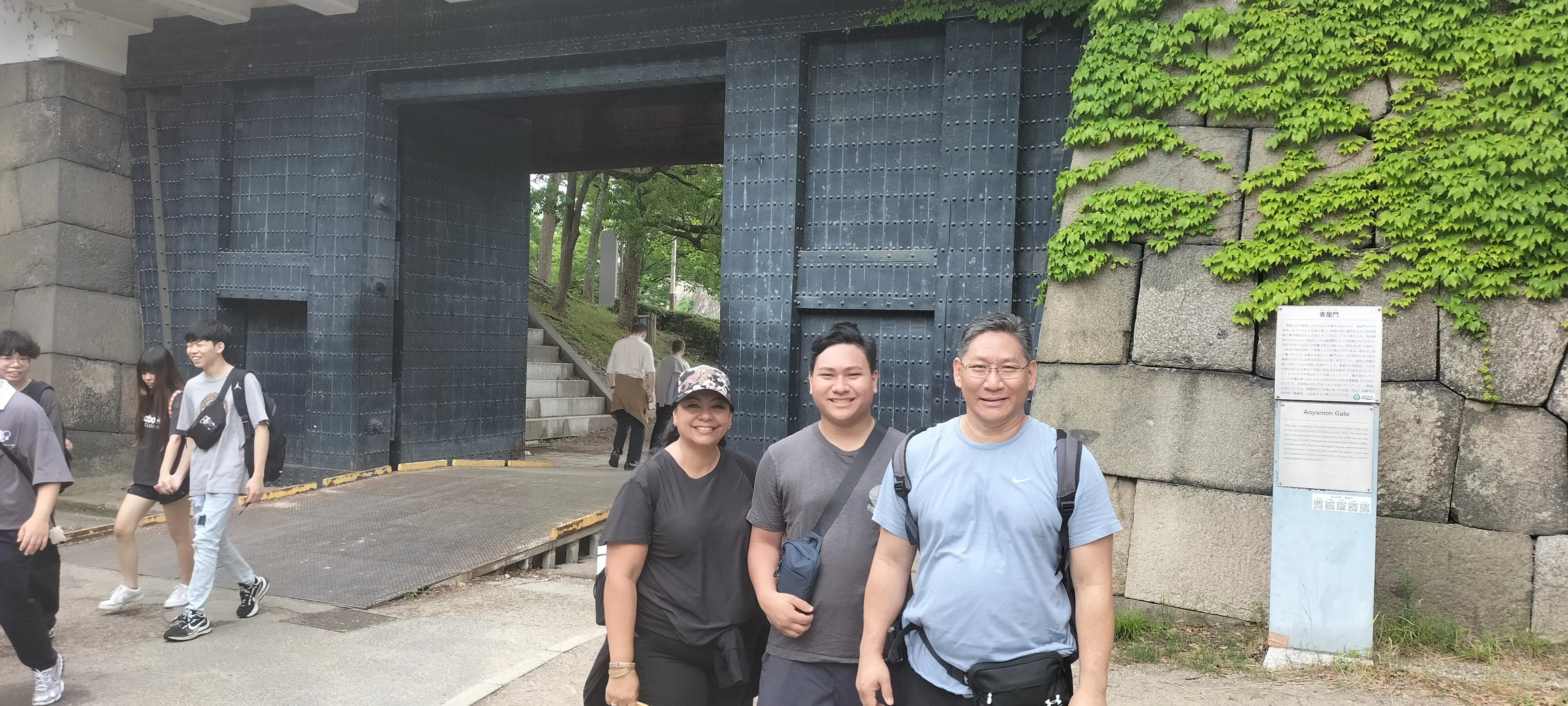
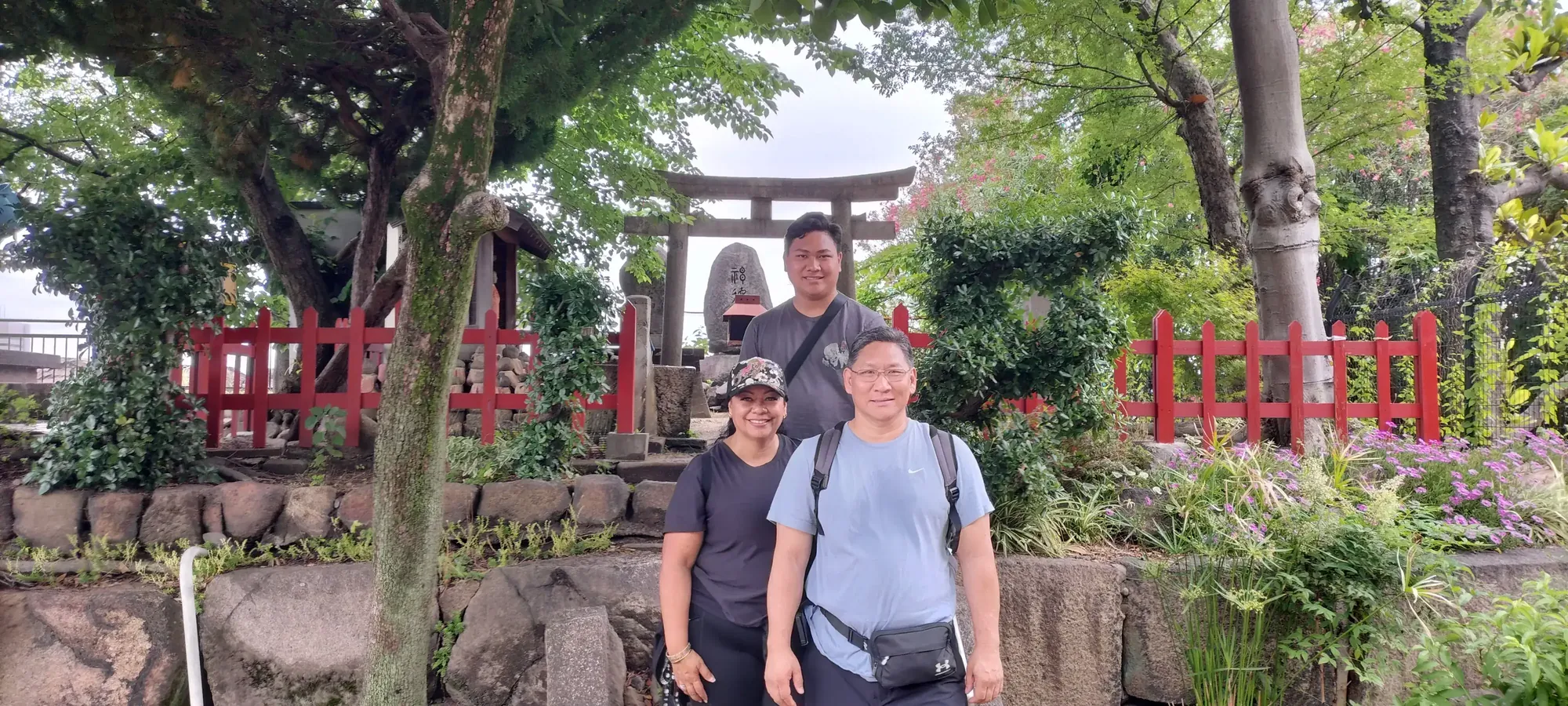
Keepsake — your Exclusive Digital Archive: a personalised post-tour summary with historical reconstructions and candid photography
Exclusions
Food and drinks
Entrance tickets, including the Osaka Castle keep interior and any paid facilities inside the park
Four stops through Osaka's archaeological landscape. Follow the women who exercised power, challenged expectations, and helped shape the country we know today. Select a stop to explore the stories.
The four stops
Hōenzaka Warehouse District
Naniwa Palace & the Imperial Capital
Ishiyama Hongan-ji & Osaka Castle
Toyotomi Castle Walls — rediscovered in 1959
Featured Stories
Four places. Five principal women. From ancient political authority to the final struggle for the Toyotomi dynasty.
Stop 1
Hōenzaka Warehouse District
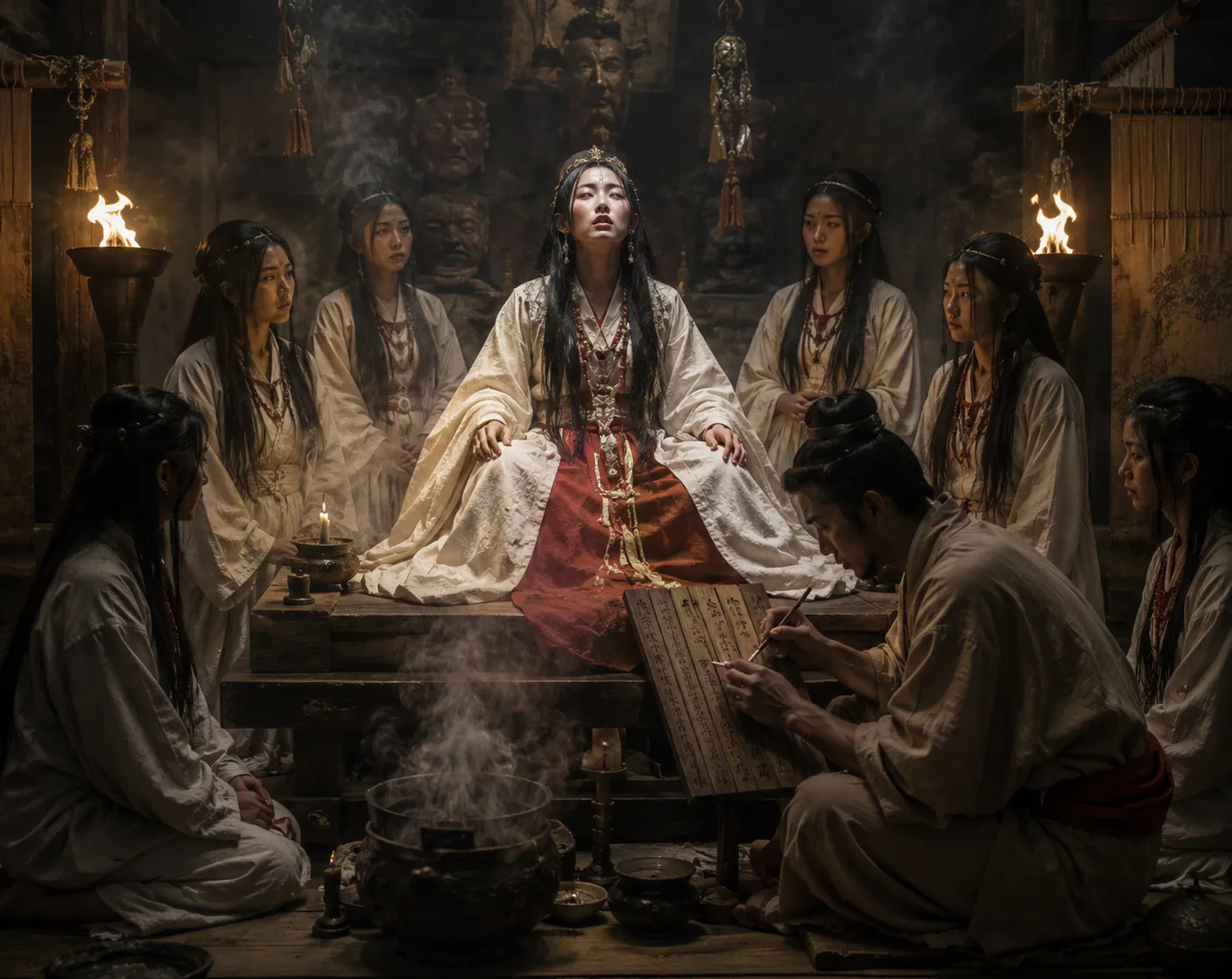
Queen Himiko
c. third century AD: the queen China noticed.
Chinese records describe Himiko as a queen whose religious authority and political leadership drew rival communities into a confederation — enough to attract diplomatic attention from across the sea. In 239 CE, according to the Records of the Three Kingdoms, she sent envoys to the Wei court and was recognised by the Chinese emperor.
The records stop where her life does. Where was Yamatai? How far did her rule reach? Her identity and location remain contested — but the source of her power is not in doubt: ritual command backed by real political control, at a moment when the office of ruler was still open to a woman.
At Hōenzaka we walk the ground behind that power: the settlement, port and storage that made this ridge worth ruling.
Queen Himiko — a ruler recorded across the sea, whose kingdom remains the subject of historical debate.
On the day
Discover Himiko's confederationWhat Chinese accounts tell us of her rule, and the Wa she led.
Explore ancient HōenzakaThe ridge, port and warehouses behind early power.
Queens who ruled through ritual. Then empresses who held the throne. What could they actually control?
Stop 2
Naniwa Palace
Empress Kōgyoku/Saimei and Empress Shōtoku
645 AD and the imperial world.
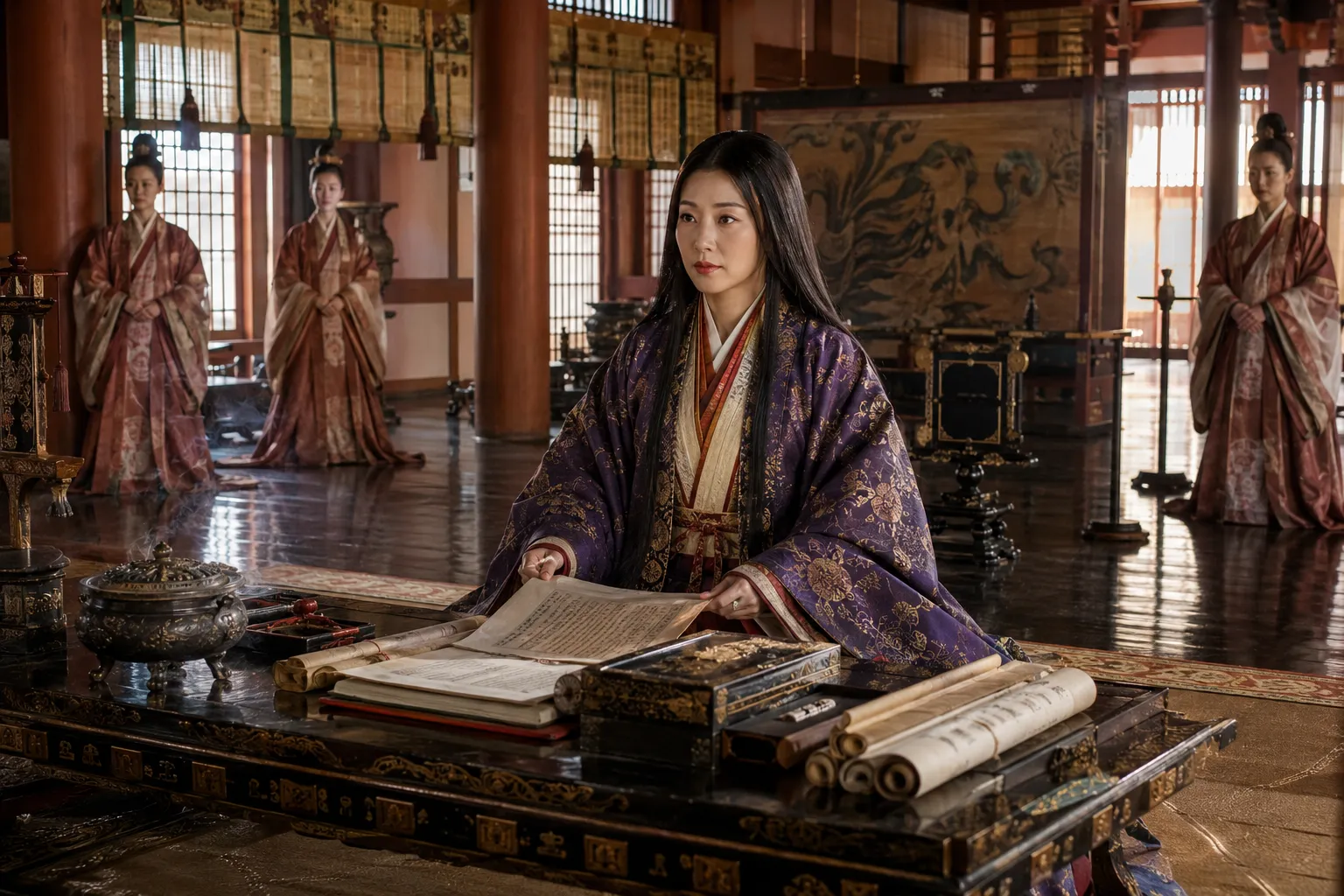
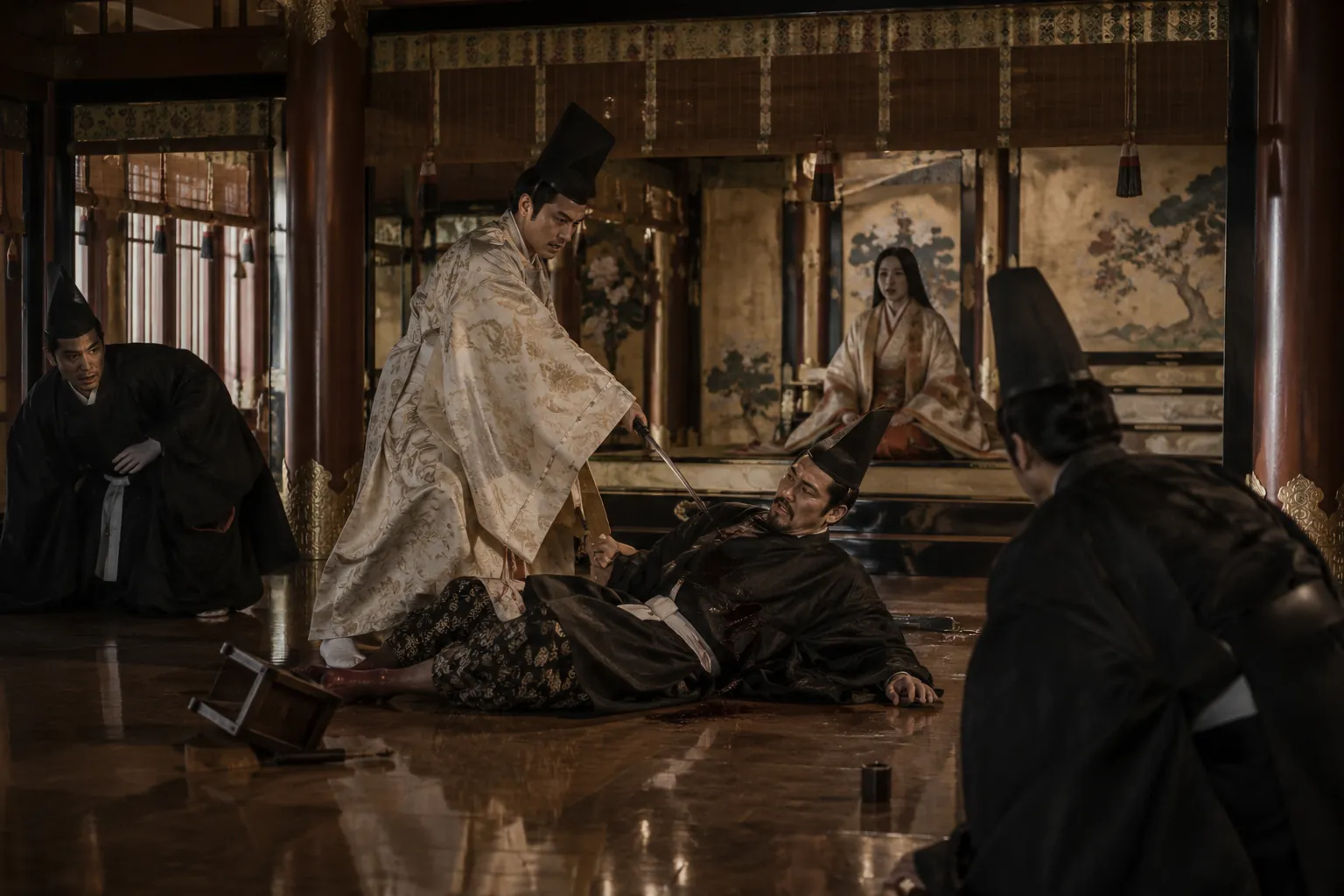
In 645, Empress Kōgyoku was on the throne when Soga no Iruka was assassinated at court. The killing triggered a reordering of power. The question is not only what happened in front of her, but what her position reveals about who held sovereignty.
Later, Empress Shōtoku ruled in her own right. Her relationship with the monk Dōkyō ignited a fierce dispute over religious influence and succession.
Two empresses, two crises, one question: where does legitimate power come from?
Empress Shōtoku and the monk Dōkyō — a struggle over religious influence and the succession.
On the day
Revisit the assassination of 645An empress, a killing in open court, a political order transformed.
Enter Empress Shōtoku's worldA powerful monk and a struggle over the throne's future.
Empresses held the throne. But what did it mean to be born into a family at war?
Stop 3
Ishiyama Hongan-ji
Oichi and Nobunaga
1496–1580: the world that shaped Chacha.
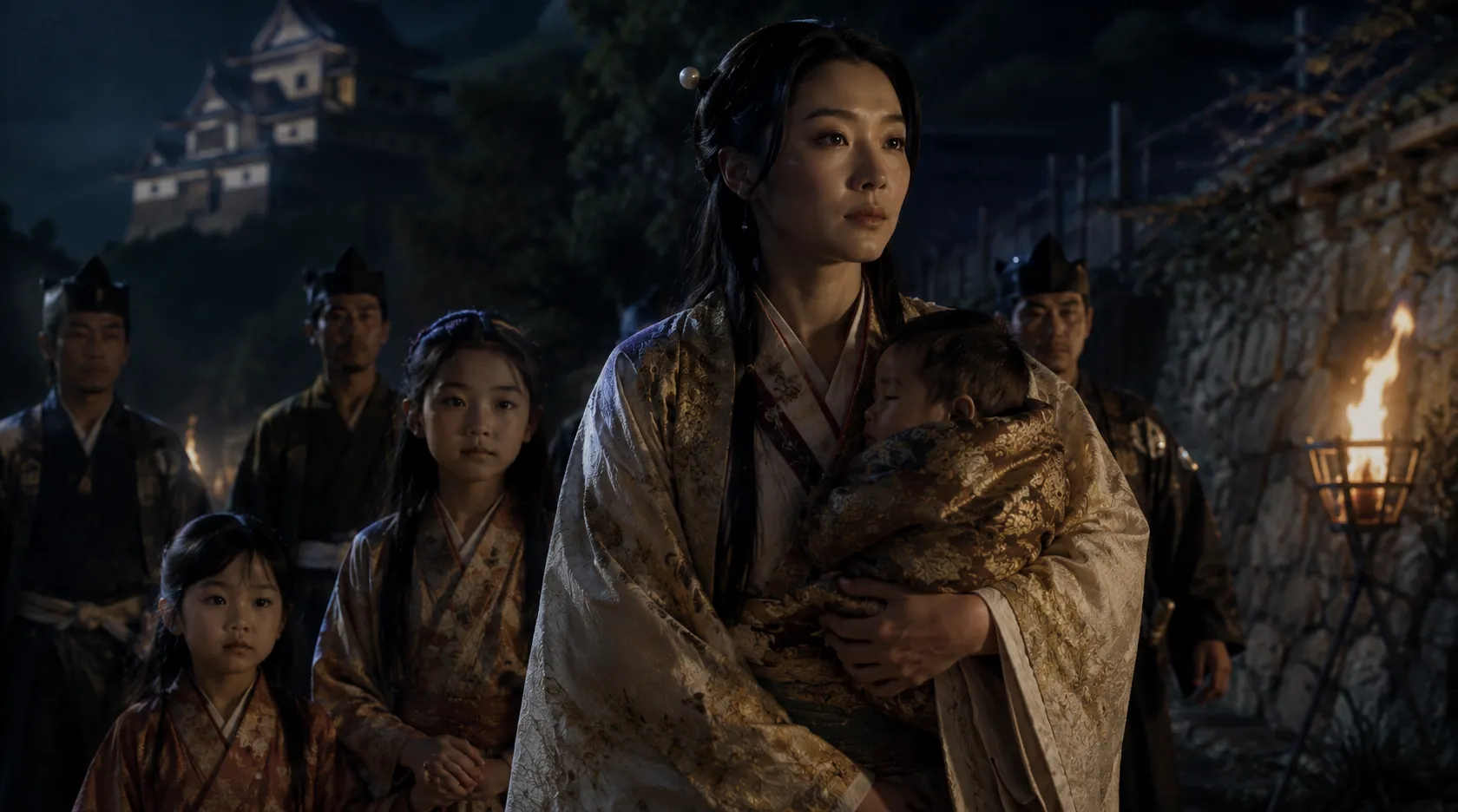
Oichi was the sister of Oda Nobunaga. Her marriages linked rival houses, and the destruction of the Asai at Odani devastated her family. After Nobunaga's death she married Shibata Katsuie. Their defeat in 1583 ended her life, but her daughters survived, including Chacha, the future Yodo-dono.
Here, at the fortress that resisted Nobunaga for years, we see the world Chacha grew up in. Marriage was diplomacy, kinship was a weapon, and survival meant reading the ambitions of powerful men.
The remains of the Ishiyama Hongan-ji era, beside the landscape later transformed by Hideyoshi.
On the day
Trace Oichi's tragic storyFrom the fall of Odani to the defeat at Kitanosho.
Stand before Hideyoshi's shrineFrom warrior-monk stronghold to Hideyoshi's power.
Chacha survived it all. What did she do with that survival?
Stop 4
Osaka Castle
Chacha: cause of the Toyotomi downfall, or one of its last defenders?
1583–1615: the rise and fall of Yodo-dono.
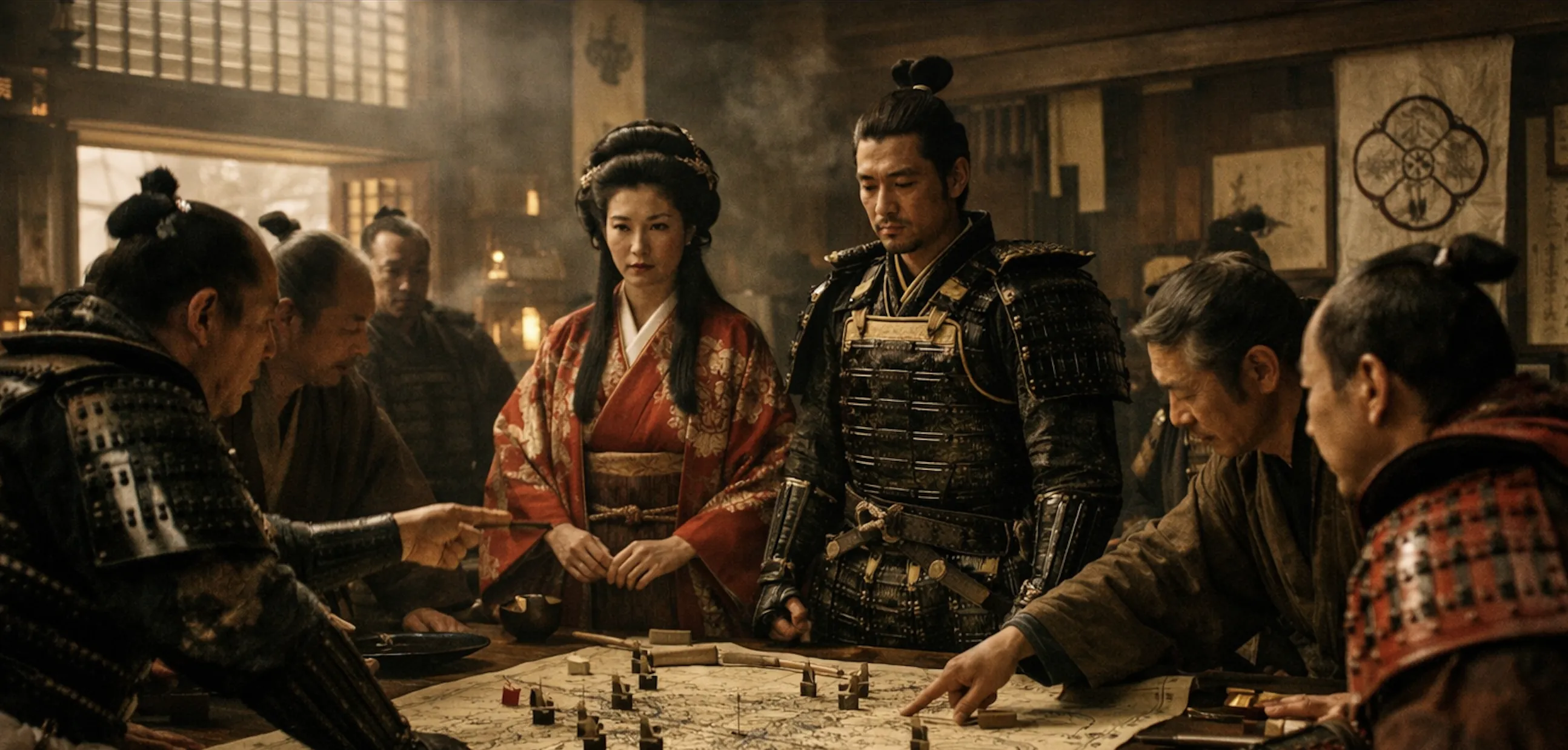
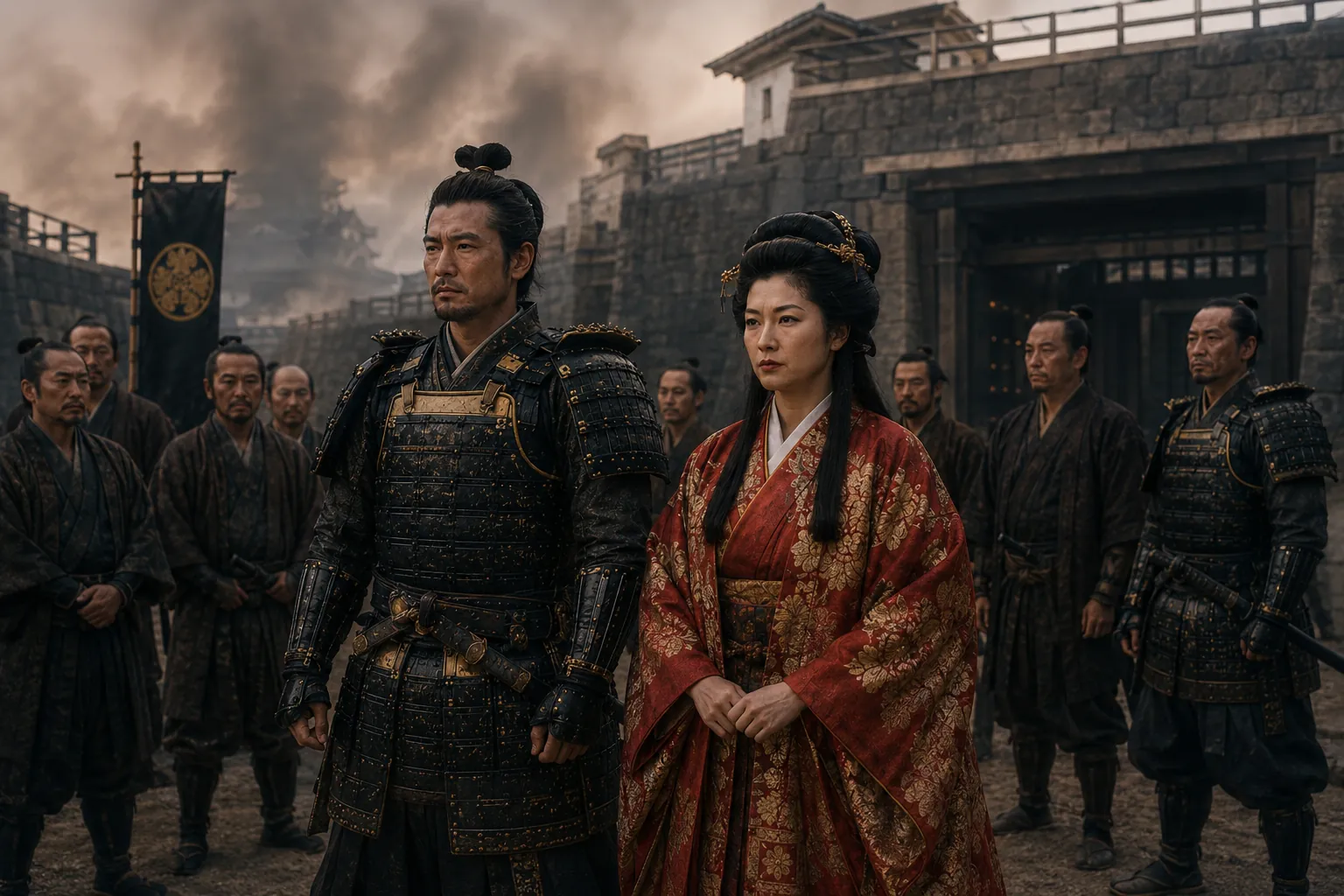
Chacha survived the destruction of her birth family, became Hideyoshi's consort, and gave birth to his heir, Hideyori. After Hideyoshi's death, the Tokugawa challenge grew. By the winter of 1614 and the summer of 1615, Osaka Castle was the stage for the Toyotomi's last stand.
She was no bystander. As Hideyori's mother, she stood at the centre of the dynasty's survival. But how much control did she really have? What choices were left as Tokugawa power grew? And why has her reputation so often become the explanation for the defeat?
We finish where the stories meet the landscape and the surviving evidence.
Yodo-dono, Hideyori, and the people around them. Was the fall of Osaka the result of poor decisions, overwhelming Tokugawa power, or a combination of both?
On the day
Stand at the concubine's last standThe final struggle of a dynasty, and the competing explanations for its fall.
Come for the castle. Leave understanding the women who helped shape the country around it.
This is not a standard castle tour. It is a journey through the women who helped shape Japan.
Walk with a historian who lives beside it. Small groups. 2.5 Hours • English • ¥9,500/person
Book Instantly
Choose an available departure and receive immediate confirmation.
Why does this Osaka Castle tour focus on women's stories?
Because we cannot understand Japanese history by studying only its male rulers, generals, and warlords. Women exercised political, religious, dynastic, and cultural power in many different ways. Some ruled as sovereigns; others influenced the survival of powerful houses or became central figures in struggles over succession. This tour explores those roles across two thousand years, from Himiko and the early traditions of female authority to the empresses of the imperial court and Yodo-dono's place in the fall of the Toyotomi. Rather than treating women as a separate footnote to Japanese history, we use their stories to investigate how Japan itself developed.
Was ancient Japan a matriarchy, and how did female power change over time?
It would be too simple to describe ancient Japan as a matriarchy. The evidence instead reveals different forms of female religious and political authority at particular moments in history. Himiko, as described in Chinese records, exercised considerable authority, while later imperial traditions preserved the image of powerful female figures such as Amaterasu and Jingū. Women also occupied the imperial throne in historically documented periods. Over time, court institutions, succession practices, and later military governments shaped the opportunities available to women in different ways. This tour examines how female authority operated within those systems rather than assuming that Japan moved through one simple transition from a matriarchy to a male-dominated society.
Who was Yodo-dono, and why is her legacy controversial?
Yodo-dono, also known as Chacha, was the mother of Toyotomi Hideyori and a central figure in Osaka Castle during the final struggle between the Toyotomi and Tokugawa houses. Her position gave her a major stake in the survival of the dynasty established by Hideyoshi. After the Toyotomi defeat, accounts of the conflict helped shape how later generations understood its leading figures. Yodo-dono has often been portrayed as emotional, stubborn, or politically incompetent. But these characterizations do not, by themselves, explain the military and political pressures confronting the Toyotomi. This tour examines her role in context and asks what the surviving evidence can actually tell us about her decisions.
What role did women play in the fall of Osaka Castle?
Women were not bystanders to the fall of Osaka Castle — they were dynastic stakes in the conflict. Yodo-dono, mother of Hideyori's heir, and her daughter Oichi, whose marriages tied the Oda and Asai houses to the era's wars, both shaped the political landscape the Tokugawa finally destroyed in 1615. This tour, led by Edward Iftody, Osaka Castle's Resident Historian, puts those choices — and the pressure behind them — at the centre of the story.
How does the Japanese tea ceremony connect to political legitimacy and power?
Tea culture in the late medieval and early modern periods was more than an aesthetic pursuit. Tea gatherings, prized utensils, and the patronage of tea masters could help communicate status, cultivate alliances, and demonstrate cultural authority. Under powerful leaders such as Oda Nobunaga and Toyotomi Hideyoshi, tea culture became closely connected to elite political life. Although the tea ceremony was not exclusively a women's sphere, its wider cultural and political setting helps illuminate the world in which elite women lived, negotiated, and exercised influence.
Which women shaped Japan's history, and why are their stories less well known?
From the queen Himiko, recorded in Chinese chronicles, to the empresses of the imperial court and Yodo-dono at the fall of the Toyotomi, women repeatedly held or influenced real power in Japan. Their stories are less familiar because popular history has long centred samurai and male rulers. This walk restores them to the main narrative, using evidence rather than legend.
How does Goddess, Queen, Empress, Concubine differ from a standard Osaka Castle tour?
Many visitors focus on the reconstructed castle keep and the familiar story of the great male warlords. This 2.5-hour walking tour takes a different approach. Led personally by Edward Iftody, Osaka Castle's resident historian, it explores the archaeological landscape of the Uemachi ridge, the Naniwa Palace site, the remains associated with Ishiyama Hongan-ji, and Osaka Castle. The central theme is the role of women in Japanese history. Through five principal figures, we investigate political authority, religious influence, dynastic survival, and the way historical reputations are formed. It is designed for visitors who want to go beyond the postcard and explore the deeper history of Osaka.
Why do guests consider this one of the best Osaka Castle tours for women?
This tour is designed for visitors interested in women's history, female leadership, and the role of women in shaping Japan. It follows figures ranging from the ancient queen Himiko and the empresses of the imperial court to Oichi and Yodo-dono. Rather than treating women as supporting characters in a story about male rulers, the walk makes their political and historical roles the main subject. It is led personally by Edward Iftody, Osaka Castle's resident historian, and limited to a maximum of six guests.
Is Goddess, Queen, Empress, Concubine suitable for children?
Yes. Families with children and teenagers are welcome. This is a 2.5-hour history walk through Osaka Castle Park and its surrounding archaeological landscape, so it is best suited to children who are comfortable walking and interested in Japanese history. Youth aged 12–17 join at ¥5,000, and children aged 0–12 walk free with a paying adult. For more guidance, see the Osaka Castle with kids page.
Is lunch included on this tour?
No. This is a focused 2.5-hour walking tour without a lunch break. The time is devoted to exploring the historical landscape and discussing the stories behind the sites. Your booking does include a unique keepsake: the Exclusive Digital Archive, a personalised post-tour summary with historical reconstructions and candid photography.
Are entrance tickets included?
No. Entrance tickets are not included. The walk focuses on the grounds of Osaka Castle Park, the Naniwa Palace site, and the historical landscape associated with Ishiyama Hongan-ji. The outdoor route does not require an Osaka Castle keep ticket. If you wish to enter the keep afterward, that ticket is purchased separately.
What is the weather policy?
We walk in ordinary rain, and umbrellas are provided. Severe-weather alerts are handled case by case — Edward contacts you directly to arrange an alternative — and you can cancel or reschedule for a full refund up to 24 hours before the start.
Where does the tour start?
We meet at 2-3-6 Tanimachi, Chuo-ku — about 90 seconds from Tanimachi 4-chome Station Exit 1A. Edward Iftody, Osaka Castle's Resident Historian, leads the 2.5-hour walk at a relaxed pace, mostly on flat ground with steps avoidable.
Can I request a private tour?
Scheduled walks are small-group tours led in English and capped at six guests. You can request a private tour for a group of four or more — contact Edward directly — and groups larger than six can be arranged with special pricing.
Research by Edward Iftody, Osaka-based historian and resident historian at Osaka Castle.
This reconstruction draws on contemporary European accounts, Japanese archaeological research, historical geography, and the surviving physical landscape.
Prefer a shorter journey?
Looking for a lighter step through history?
If you have a tighter schedule but still want to bypass the textbook scripts, join me for one of my classic, highly-focused historical walks through Osaka.
 Explore ancient Hōenzaka The ridge, port and warehouses behind early power.