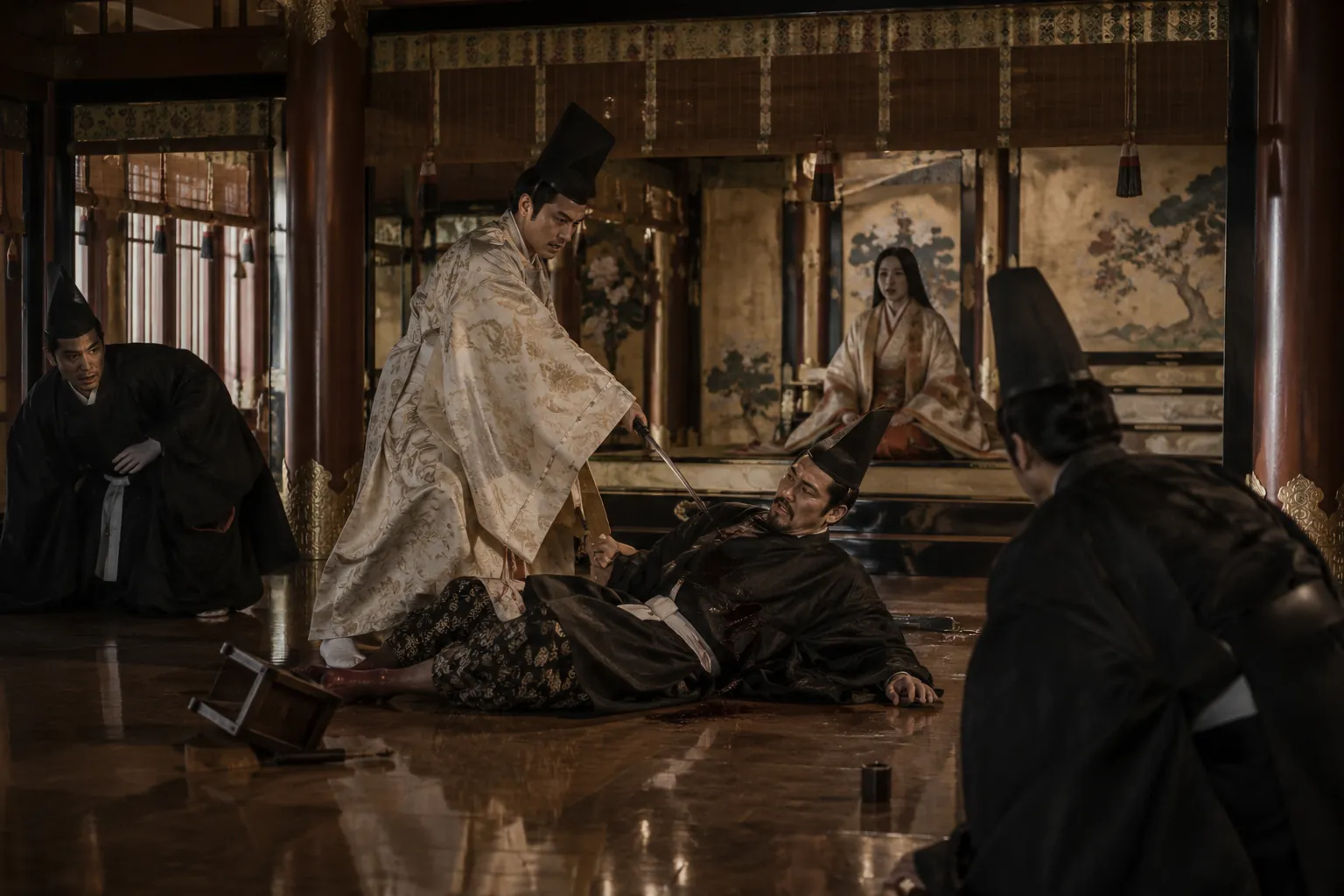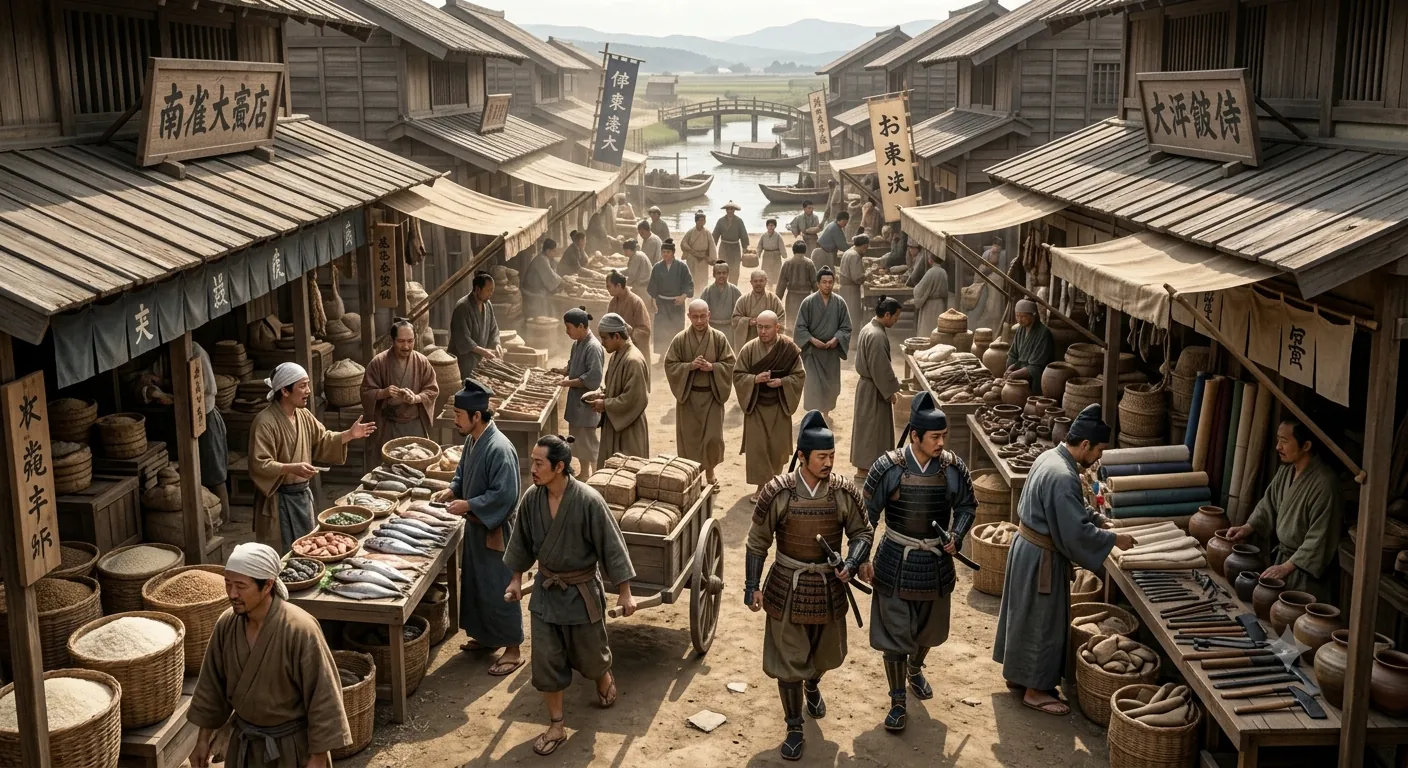
The Soga, against a background of diplomacy with the kingdoms of the Korean peninsula and ties to immigrant-lineage clans, were deeply involved in the acceptance of Buddhism and the introduction of continental objects, systems, and ideas.
Prince Shōtoku, a prince connected to the Soga, played an important role in the political conflicts surrounding the acceptance of Buddhism. His support for Buddhism was not only religious but political: it was a way to align Japan with the broader East Asian world system.
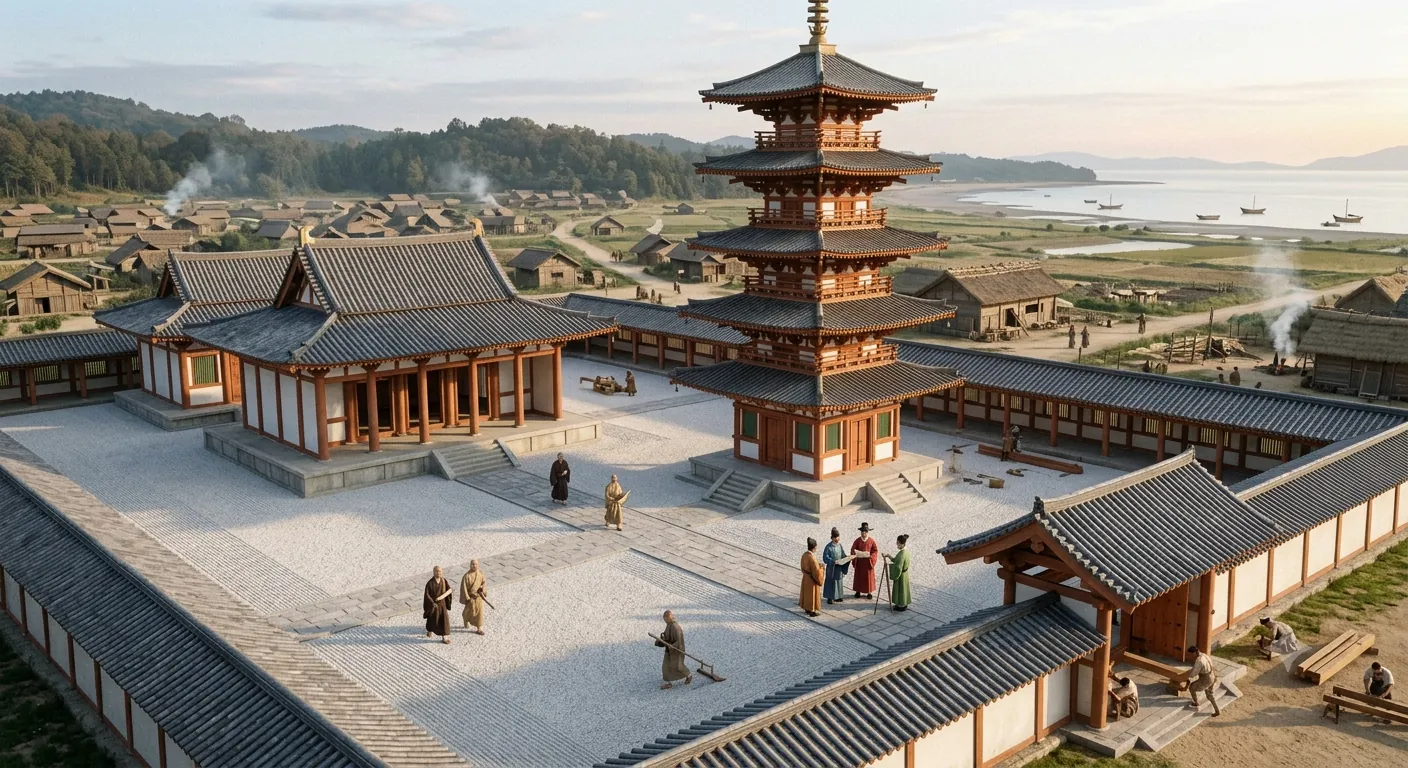
Building a large temple on the Uemachi Plateau near Naniwa-tsū also reflects how important a place Naniwa was for exchange with the continent. Shitenno-ji developed as a place where Buddhism, royal power, diplomacy, and transport all crossed paths.
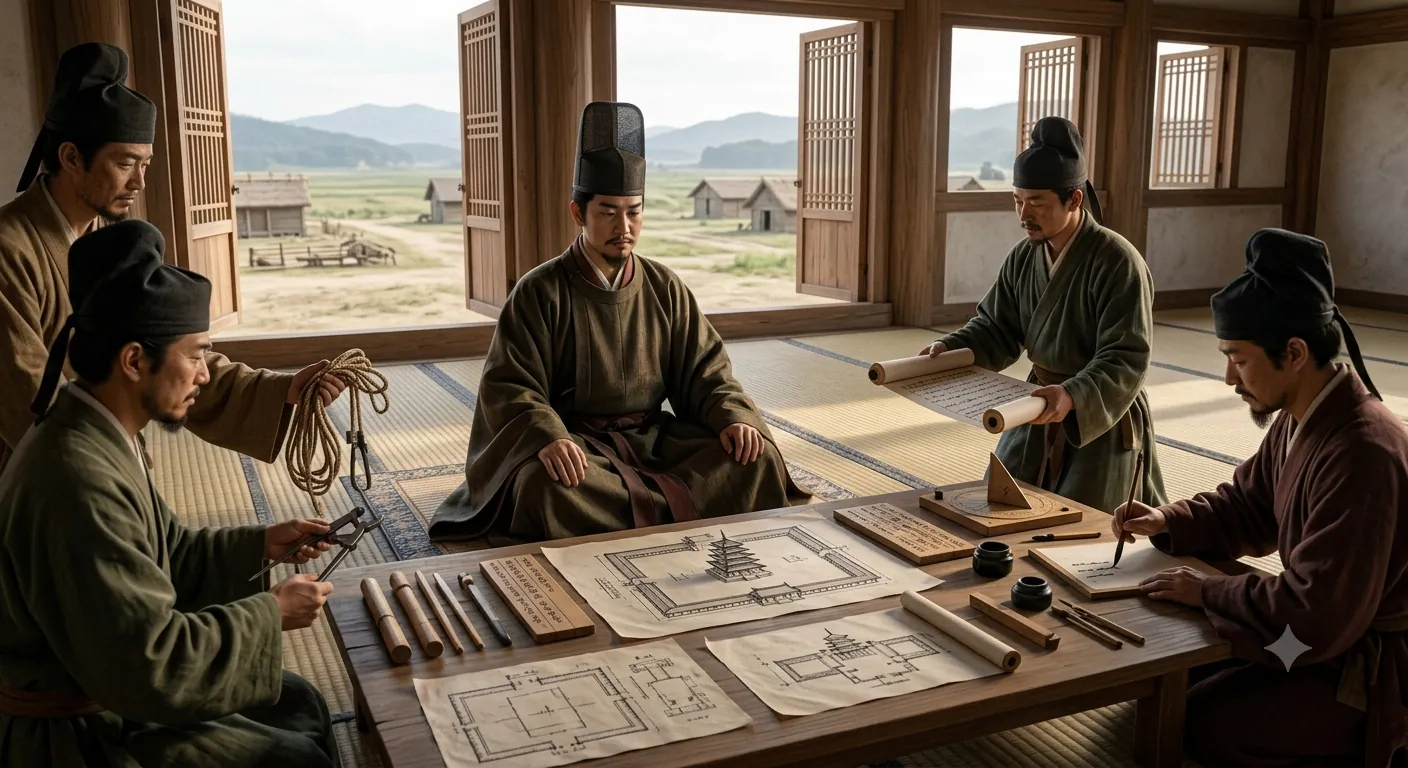
Prince Shotoku planning Shitenno-ji.