Osaka History Investigations
English beyond the classroom

A three-workshop programme for schools: students investigate Osaka Castle's history in English, debate the evidence, and present their conclusions. Designed by a historian and experienced educator who lives beside the castle.

Three workshops · 10–45 students · English-medium (Japanese support available) · From ¥50,000 per class

イフトウデイ・エドワードの研究・執筆
As seen in The Japan TimesEdward Iftody — Japan's imperial succession and the invention of traditionRead the article →

What Students Practise

Six habits of mind that transfer out of the castle and straight back into the classroom.

Think Critically

Before a claim is accepted, students ask what it assumes, what it leaves out, and what would have to be true for it to hold.

Analysis comes before judgement — the difference between reacting to a story and interrogating it.

Think Under Uncertainty

Students receive an incomplete record — part landscape, part archaeology, part written source — and have to decide what it can and cannot prove.

Real evidence rarely announces itself. Learning to say 'the sources don't tell us' is as much a skill as reaching a conclusion.

Disagree Productively

Small groups argue their reading of the evidence against other groups defending genuinely different conclusions.

Defending a position against a rival forces students to anticipate objections and sharpen their reasoning — disagreement stops being conflict and becomes a method.

Persuade With Reasons

Each team must justify its decision with evidence others can check, not with assertion or confidence.

A claim without a reason cannot be evaluated by anyone else. This is where argument becomes reasoning.

Present Ideas Clearly

Teams deliver a developed presentation of their decision and answer challenges from the class in English.

Explaining a conclusion aloud, with reasons, is how students discover what they actually understand.

Compare With the Record

After Edward reveals what actually happened on the tour, students measure their own reasoning against the historical record and say what they would defend and what they would change.

Revision under new information is the part of thinking most schooling skips. It is also the part adults are paid for.

Good decisions aren't always about finding the perfect answer. They're about weighing evidence, competing priorities, and uncertain consequences — then explaining why you chose as you did. Every part of this runs in English: key vocabulary is pre-taught, and Japanese support is on hand when students need it.

The Opportunity

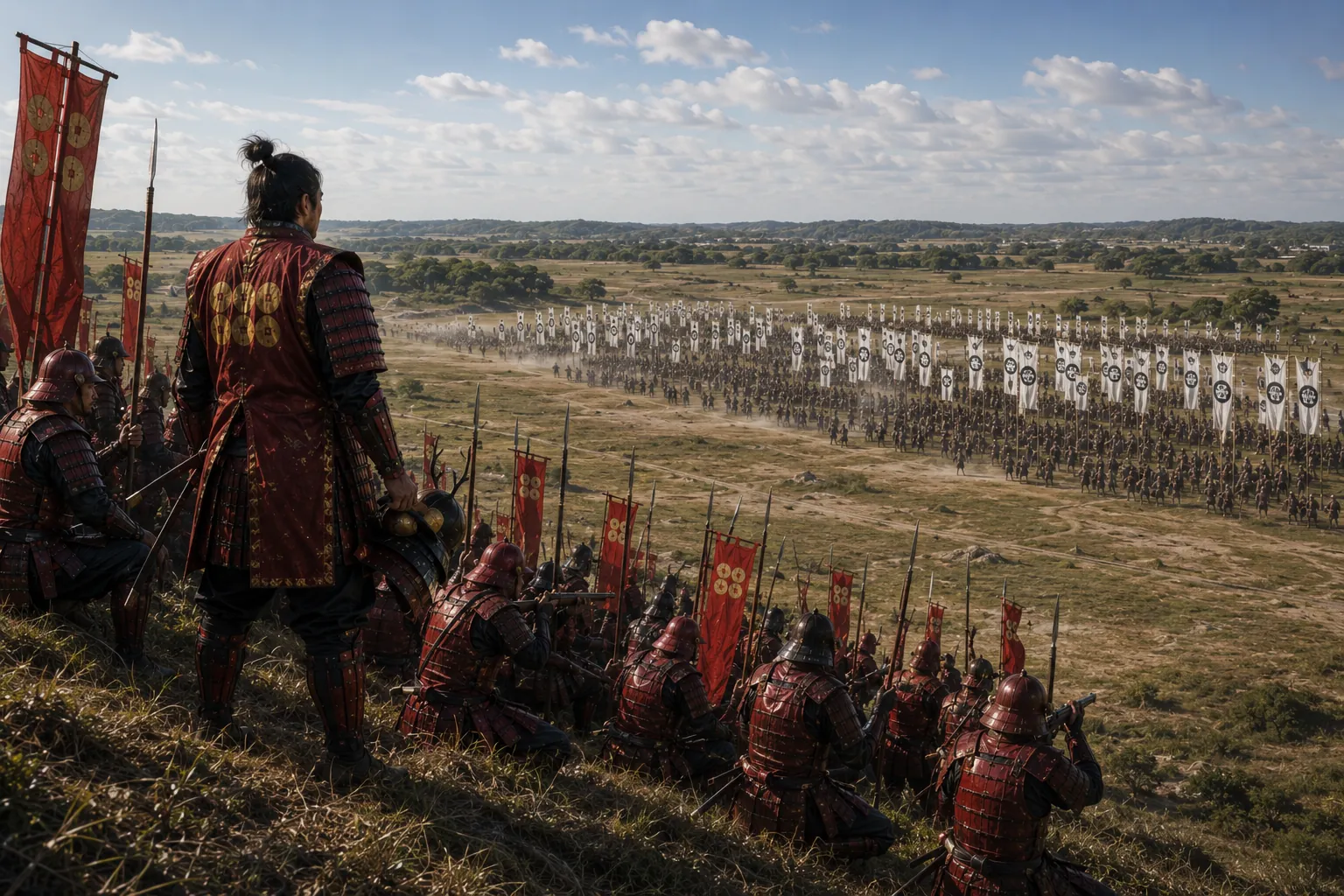
Imagine standing where Hideyoshi built Osaka Castle and asking your students:

Why did Hideyoshi choose to build such a large and powerful fortress here?

Instead of simply receiving the answer, students examine the landscape, consider the evidence, debate the possibilities, and defend their own interpretation.

That is the difference between seeing history and investigating it.

Why structured investigations?

Because students stop being spectators and start being investigators. A structured investigation gives students a problem, a mystery, or a contradiction to solve — much like the questions archaeologists and historians ask when reconstructing the past. The focus shifts from memorizing dates to interpreting evidence, weighing possibilities, and constructing an explanation.

Why Osaka Castle specifically?

Because around Osaka Castle, students can walk through more than a thousand years of political history — from early state formation and palaces to religious powers and early-modern castle architecture. They encounter the 4th–5th-century Hōenzaka Warehouse District, 645 Naniwa Palace, 1496–1580 Ishiyama Hongan-ji, Hideyoshi’s 1583 castle, and the 1620 Tokugawa reconstruction — exploring Japanese state formation and political change through the real landscape.

How is this different from a normal history tour?

A normal history tour centres on hearing explanations about sites and events. In this programme, students frame their own questions, examine the landscape and the sources, compare competing possibilities, and make a judgement. They don’t just learn history — they experience how historians reconstruct the past.

Why does this make history more memorable?

Because students get to touch real stone walls, stand where armies fought, see where palaces once stood, and reconstruct events themselves. It’s hands-on, place-based, interactive, and story-driven — the opposite of memorizing timelines. From Jōmon Osaka to the end of the Sengoku period, each investigation connects historical evidence and the physical landscape to your students’ curriculum and learning objectives.

What do students take away?

Students don’t simply leave knowing more historical facts. They have practiced asking historical questions, evaluating evidence, comparing interpretations, and defending their own conclusions — skills they can carry back into the classroom.

Three Workshops. One Investigation.

English-phrase practice at school, the investigation and decision at Osaka Castle, then presentations and a quiz back at school.

Workshop 1

Prepare

At school · 90–150 minutes

Three strands, each drilled as English phrases plus in-workshop practice: meeting facilitation, critical thinking and analysis, and presentation key phrases.

Workshop 2

Investigate and Decide

Osaka Castle · 90–150 minutes

Three to five archaeological sites. Groups read the landscape and the sources, argue competing interpretations, and commit to a decision — the historical outcome is revealed and students are encouraged to react and give feedback.

Workshop 3

Reflect and Present

At school · 90–150 minutes

In small groups, students prepare a presentation of the key findings they learned during Workshop 2. The workshop finishes with a game show-style teams quiz on material studied in all workshops.

What Students Actually Do

Interactive history lessons conducted where history happened.

From Jōmon Osaka to the end of the Sengoku period, each investigation connects historical evidence and the physical landscape to your students’ curriculum and learning objectives.

  • Study the history of Osaka from the Jōmon era through the Sengoku period, using archaeological sites, historical landscapes, and primary sources.
  • Receive historical context and evidence from a historian and experienced educator.
  • Investigate historical questions in small groups and formulate their own arguments.
  • Compare competing interpretations and defend their conclusions.
  • Connect what they discover in the field to their school curriculum and classroom learning.
  • Continue learning before and after the visit through online materials that can also be printed for classroom use.

Not a field trip — an encounter with how history is done.

Digital Investigation Companion

Your investigation doesn't end at Osaka Castle.

Every investigation includes access to a Digital Investigation Companion — a web-based educational resource designed for use before, during, and after the field visit.

Teachers receive learning objectives, curriculum connections, historical background, vocabulary, and discussion prompts.

Students receive investigation guides, primary sources, evidence to examine, and post-visit activities.

The companion is designed to continue in the classroom.

Photography of students investigating requires advance school consent.

About Edward Iftody

Edward Iftody is a historian, educator, and course developer who has taught in Japan since 2009. Based one block from Osaka Castle, he specializes in Japanese political history and historical geography.

His investigations are designed from the beginning as educational experiences — not tours adapted for students. He combines historical research, teaching experience, and course development to turn Osaka's historical landscape into structured investigations. He understands both sides of the desk — what a teacher needs to justify to an administrator, what makes a field trip stressful, and how to turn historical content into an actual lesson.

Historian & researcherEducator & course developerEnglish teacher since 2009Osaka-based specialistPolitical history & historical geography

Pricing

One class. One price. Everything included.

Programme fees are all-in — preparation, materials, and classroom follow-up included. No per-student calculation.

Three-Workshop Programmes

Three stages: a pre-castle workshop, the Osaka Castle tour, and a post-visit workshop with a gameshow quiz.

Edward attends all three workshops and is included in these totals. A second facilitator is added in Workshops 1 and 3 for 30 students or more, and a third for 45 students or more.

Learning materials are licensed for the named cohort and programme; not for redistribution or reuse by other providers.

Teachers and supervising school staff participate free of charge.

Need something tailored to your course?

Every field investigation is connected to your course, students, and learning objectives. If you have a particular historical theme, site, or wider study program in mind, we can develop a field experience around it.

  • The Tennoji Valley, Sanada-maru, Shitenno-ji, or Chausuyama as part of a study of Osaka’s military and religious landscape.
  • Sakai’s great kofun while exploring the relationship between the early political centre at Naniwa and the emergence of powerful regional elites.
  • Osaka, Nara, Kyoto, or Koyasan as connected sites in a broader investigation of capitals, political power, religion, and historical memory.

You might even have a particular question or itinerary in mind that doesn’t fit one of our standard programmes. Tell me what your students are studying and where you want to take them, and we’ll explore what can be built around it.

Everything your students need before and after the field investigation is available online. Activities can be completed digitally or printed directly from the website for classroom use.

How It Works

1

Tell me what you're teaching.

Course, unit, student level, class size, learning objectives.

2

Choose your programme.

Standard, Extended, or Full — three live workshops of 90–150 minutes (two at school, one on site) plus pre-visit preparation, one all-in price per class.

3

We design the historical question together.

Your curriculum and students shape the investigation.

4

Three stages, end to end.

Pre-castle workshop → Osaka Castle tour with the investigation and the reveal → post-visit workshop with presentations and a gameshow quiz.

5

Continue in the classroom.

The Digital Investigation Companion and teacher pack keep the work going.

Possible Investigation Stops

Five possible investigation stops within 800 meters of the castle. Click any marker to explore.

The Layers Beneath the Castle

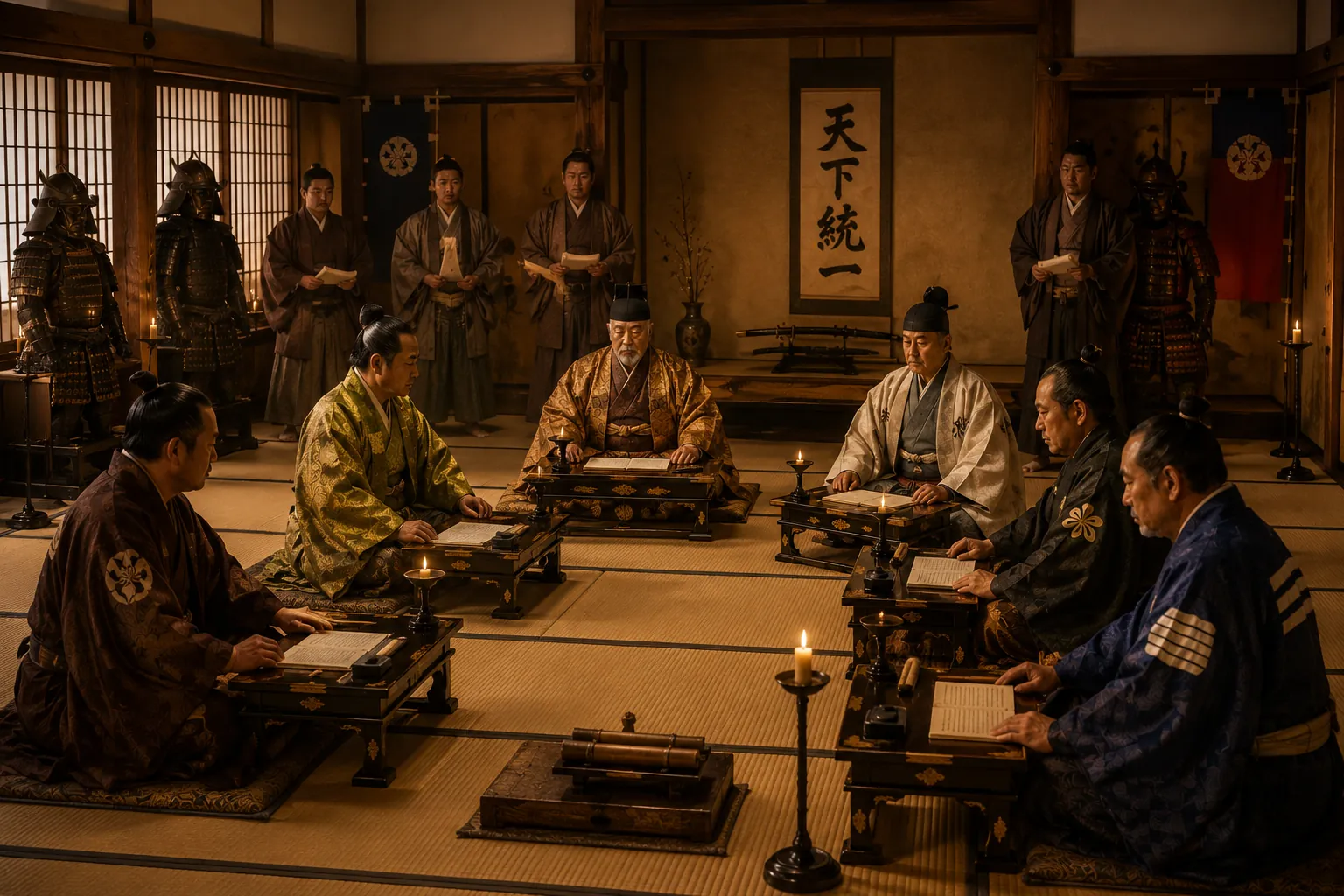
Around one castle lie the granaries, the palace, the religious centre, and the castle itself — over a thousand years of power stacked on a single plateau. Each layer is a field investigation in its own right.

4th–5th century

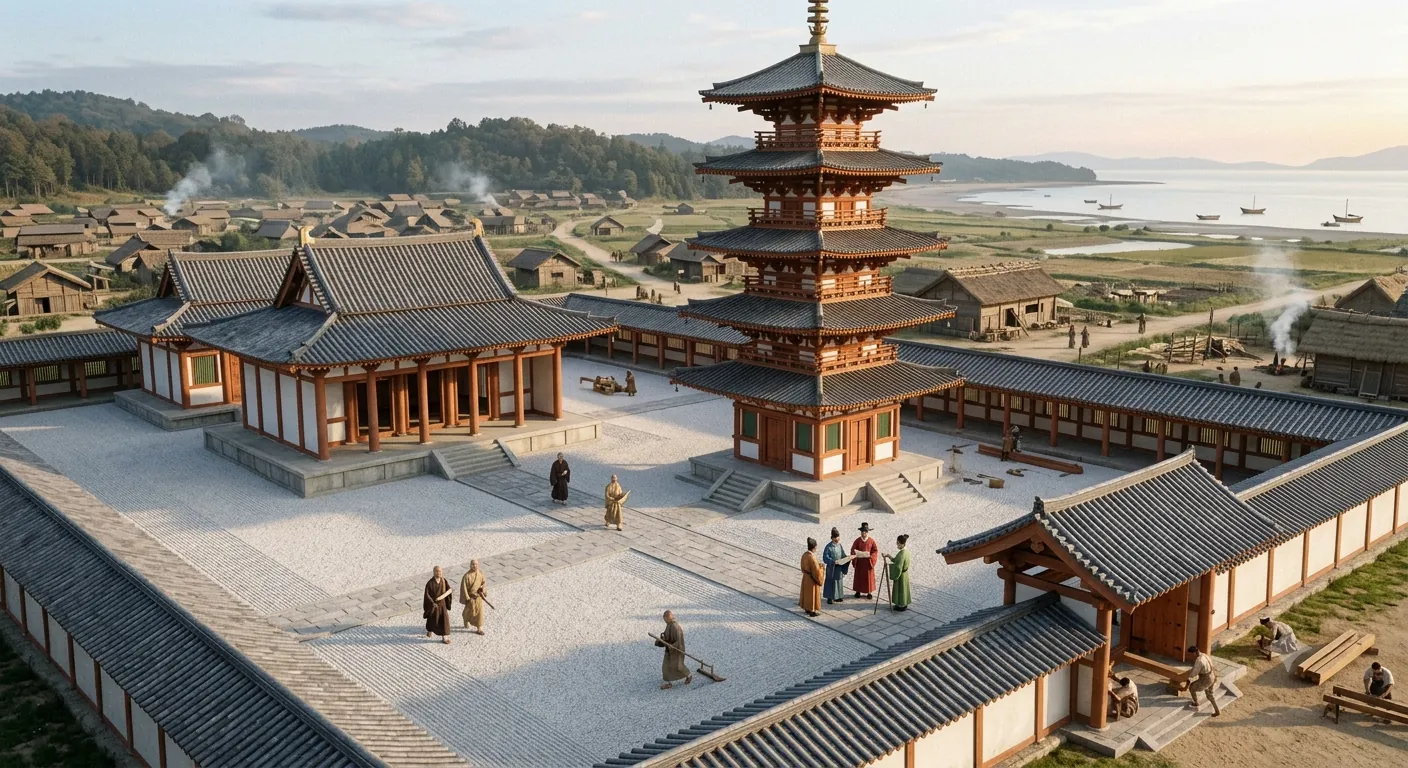
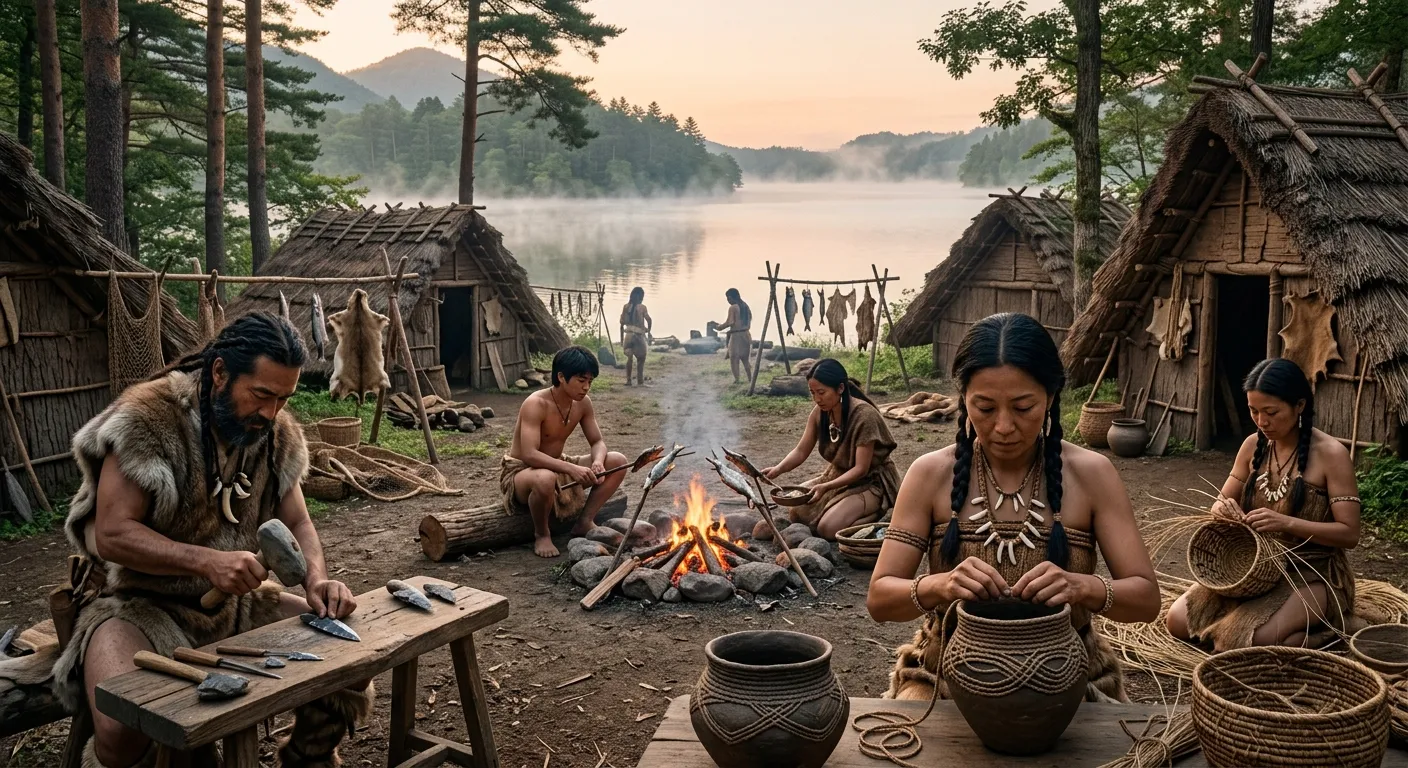
The Hoenzaka Warehouse District

The Hoenzaka Warehouse District — a record of early state management of goods

What did it mean for the first Japanese state to build granaries on this ridge?

Evidence: Row upon row of raised-floor granaries excavated at Hoenzaka — proof that an early state was storing, redistributing, and controlling grain long before any Osaka castle existed.

Why here: Students stand at the physical beginning of Osaka's political history — the early state's goods-management posts on the Uemachi Plateau, on the same ground the palace, the religious centre, and the castle would later occupy.
645–794 CE

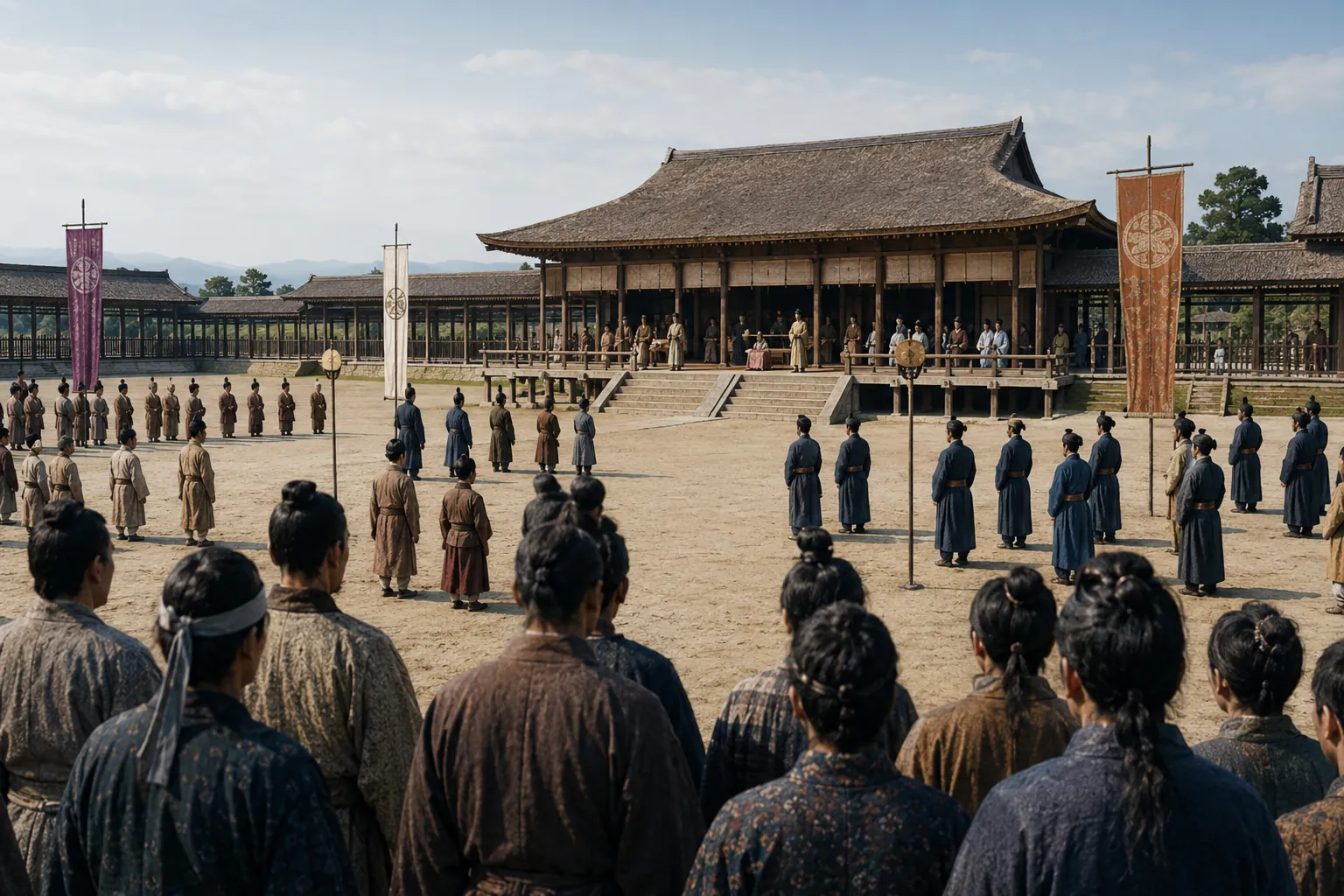
Naniwa Palace

Naniwa Palace — the imperial capital below Osaka Castle

Why did successive emperors keep rebuilding the capital on this exact spot?

Evidence: The excavated foundations of the palaces of Emperor Kōtoku and later rulers, preserved in situ beneath the Osaka History Museum — combined with contemporary chronicles and wooden writing tablets recovered from the site.

Why here: The palace stood on the Uemachi Plateau centuries before Hideyoshi chose the same ridge for his castle — making Osaka Castle literally a political layer above Japan's first imperial capital.

1496–1580

The Ishiyama Hongan-ji

The Ishiyama Hongan-ji — the warrior-monk fortress that held Nobunaga at bay for a decade

Was the Ishiyama Hongan-ji War about religion, power, or control of Osaka's rivers?

Evidence: The remains and commemorative markers of the great fortified temple-city swallowed by Osaka Castle, alongside the contemporary accounts that explain why the decade-long war was so hard to win.

Why here: Osaka Castle now stands on the ground where a self-governing religious city once defied Oda Nobunaga — the same rivers, the same plateau, a complete change of power.

1583–1615

Toyotomi Hideyoshi & Osaka Castle

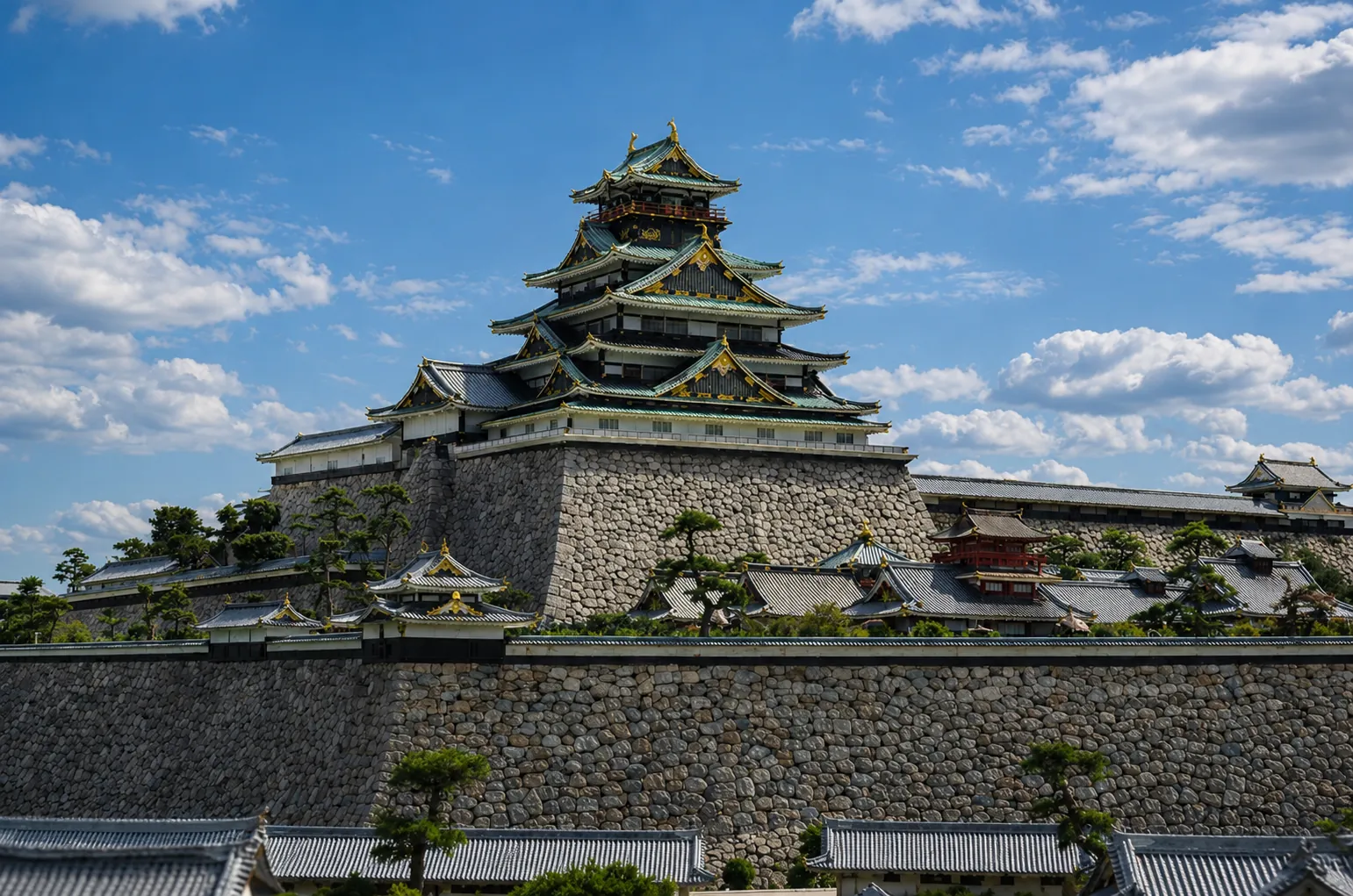
Hideyoshi's Osaka Castle — a fortress built on a thousand years of power

Did Hideyoshi build Osaka Castle for military necessity or political symbolism?

Evidence: The surviving Toyotomi-era stonework and excavated foundations, compared with the Tokugawa-era mounds that buried them — plus contemporary sources describing the scale and meaning of the castle.

Why here: The castle is the culmination of every layer below it: the granaries, the palace, and the fortress all gave Hideyoshi a reason to build on this plateau — a stage for his ambition, and a prize the Tokugawa would later set out to destroy and control.

What could your students investigate?

These are examples, not fixed tours. Every investigation is adapted to your course, students, and learning objectives.

Junior HighSocial Studies — History

Hideyoshi & the Unification of Japan

Why Osaka was chosen as the centre of Toyotomi power

Junior HighSocial Studies — History

Warrior Monks, Peasants & the Siege of Osaka

Why did Nobunaga spend 10 years attacking a religious fortress?

Junior HighSocial Studies — History

Ancient Naniwa: Three Capitals, One Location

Why did three different emperors keep choosing the same spot?

Senior HighHistory Integrated / Japanese History Inquiry

Tokugawa Legitimacy & the Rebuilding of Osaka

Why the Tokugawa rebuilt the castle of the family they had defeated

Senior HighComprehensive Inquiry Time

Geography & Political Power

How does geography shape political history?

UniversityPolitical Science / Japanese Studies

Propaganda, Legitimacy & Historical Memory

How rulers use architecture to construct political legitimacy

Senior High / IBArchaeology / Ancient History

Ancient Naniwa: Reconstructing a Vanished City

Can you reconstruct a city from the landscape?

UniversityArchaeology / Ancient History

Reconstructing Ancient Naniwa

What can archaeology tell us when the documentary record is incomplete?

UniversityHistorical Geography / Political Science

The Landscape as Historical Evidence

What can physical geography reveal that written sources conceal?

Explore the Evidence

Prehistoric–Modern

Deep Time Timeline — The Uemachi Plateau

A deep-time exploration of the Uemachi Plateau — geology, archaeology, and history across millions of years.

Ancient

Before the Castle: When Osaka was a Prehistoric Lagoon

The Jomon-Yayoi encounter in prehistoric Osaka — a lost world of aquatic hunter-gatherers and incoming farmers.

Ancient

The Yayoi Age in Japan — Parallel Histories

Deep-time timeline of the Yayoi period, featuring parallel histories of China and Korea.

Ancient

Empress Jingū: Sifting Fact From Folklore

How 8th-century court compilers re-engineered Empress Jingū's timeline to justify female imperial authority.

Ancient

The Ōjin Succession — Three Versions of the Same Story

Three competing accounts of Emperor Ōjin's succession crisis reveal how legitimacy was constructed.

Ancient

Empress Shotoku, Dokyo & Naniwa Dynamics

Scholarly timeline of Empress Shotoku, the monk Dokyo, and how they reshaped imperial succession and the Naniwa capital.

Ancient

Shitenno-ji: 1,400 Years of Power, Faith, and Survival

The complete history of Shitenno-ji from its founding by Prince Shotoku in 593 CE.

Ancient–Heian

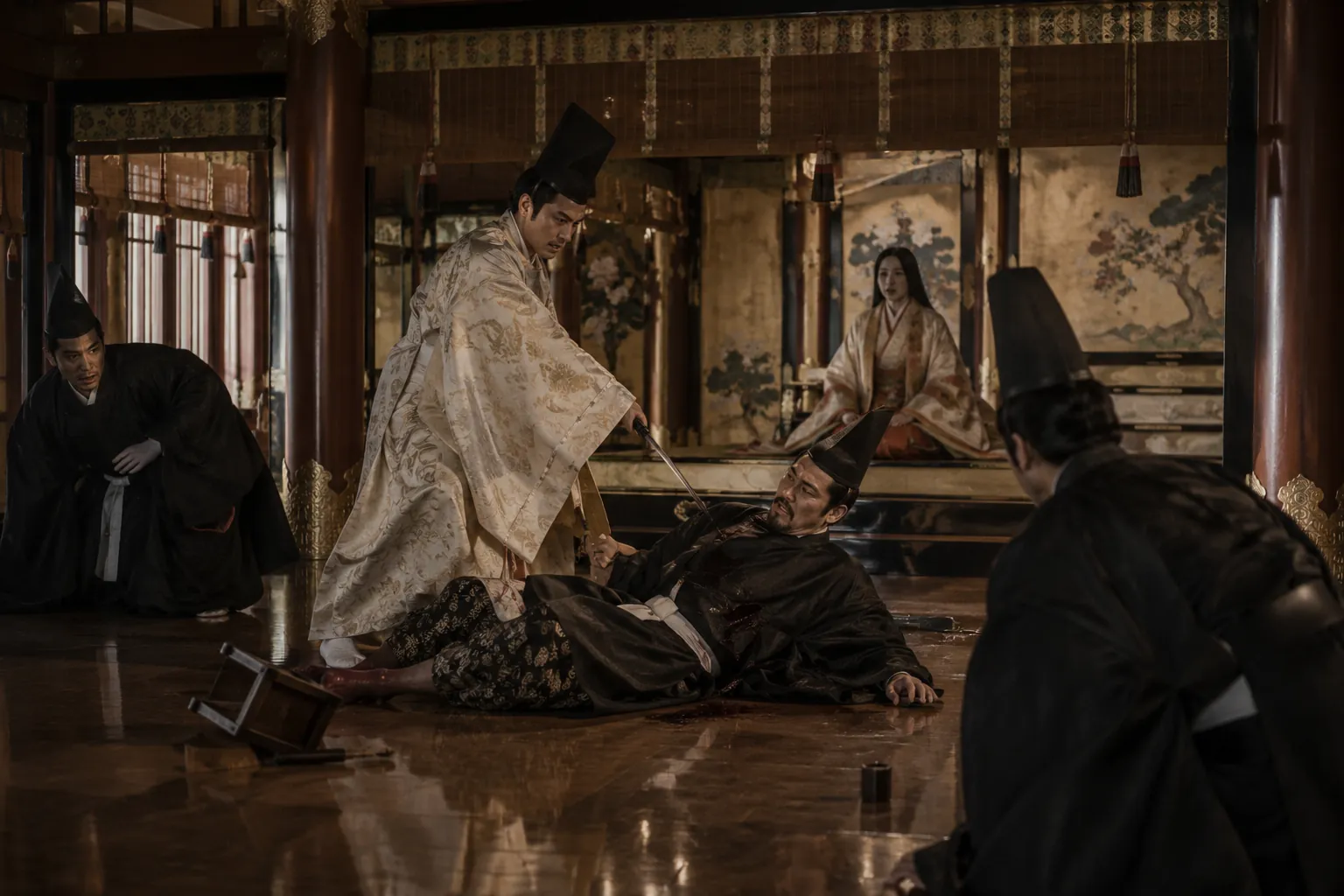
Soga, Fujiwara & The Imperial Line

The rise of the Soga clan, the Isshi Incident, and centuries of Fujiwara dominance over the imperial line.

Heian

The Fujiwara Regency — Shadow Politics of the Imperial Throne

How the Fujiwara clan dominated the throne for five centuries through regency offices and marriage alliances.

Heian–Modern

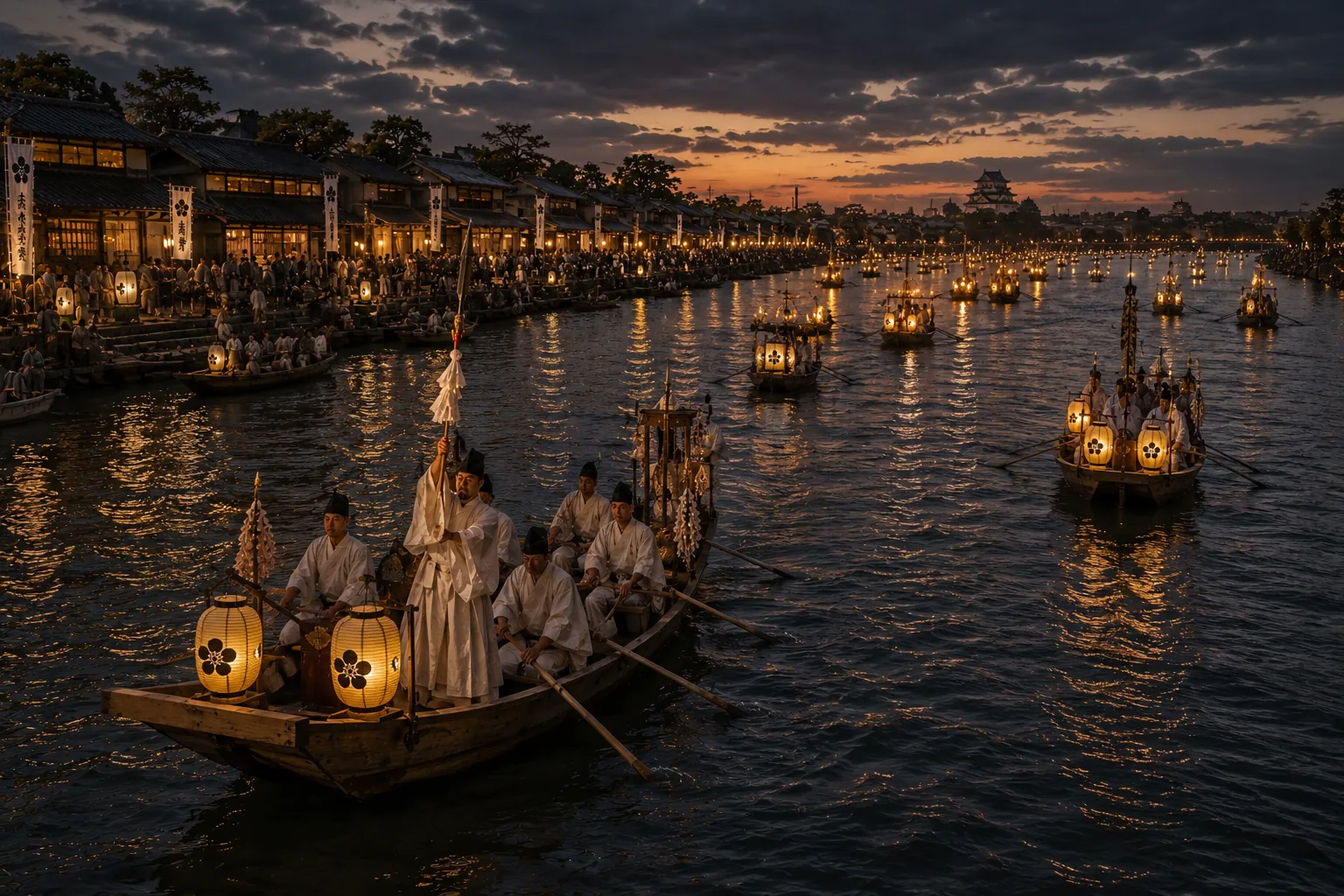
Tenjin Matsuri — Osaka's Greatest Water Festival

The complete history of Tenjin Matsuri from Sugawara no Michizane's exile to one of Japan's Three Great Festivals.

Kamakura

Taira, Minamoto & the First Shogunate

The imperial origins of the Taira and Minamoto clans, the Genpei War, and the birth of Japan's first shogunate.

Sengoku

The Oda-Azai Betrayal — A Sengoku Timeline

The collapse of the Oda-Azai alliance, from marriage politics to the destruction of the Azai clan.

Sengoku

The Ishiyama Honganji War (1570–1580)

Why Oda Nobunaga spent a decade besieging Osaka's warrior-monk fortress.

Sengoku

The Taikō's Path — A Toyotomi Hideyoshi Timeline

Toyotomi Hideyoshi's rise from peasant foot-soldier to Japan's unifier and builder of Osaka Castle.

Azuchi–Momoyama

From Partners to Political Problem: Hideyoshi & Sen no Rikyū, 1582–1591

Toyotomi Hideyoshi and Sen no Rikyū, 1582–1591 — command, recognition, chanoyu, and the Japanese scholarship that still disputes the causes of the rupture.

Sengoku–Tokugawa

Three Unifiers — Osaka Castle Walks with Edward

Oda Nobunaga, Toyotomi Hideyoshi, and Tokugawa Ieyasu — three men, one castle, sixty years.

Sengoku–Tokugawa

Osaka Castle: Toyotomi Hideyoshi, the Siege & the Erasure

The hidden story of Osaka Castle — Toyotomi Hideyoshi's vision, the two sieges, and how the Tokugawa buried his legacy.

Sengoku–Tokugawa

Toyotomi Hideyori: Heir to Osaka Castle's Fall

The life of Toyotomi Hideyori from birth to the siege of Osaka and the Tokugawa's official story.

Sengoku–Edo

The Crimson Path — A Sanada Nobushige Timeline

The complete life of Sanada Nobushige, from his father's political maneuvering through the Siege of Osaka.

Tokugawa

The Sleeping Dragon — A Tokugawa Ieyasu Timeline

Tokugawa Ieyasu's patience, betrayal, and the sieges of Osaka that established the shogunate.

Request a Field Investigation

Tell me what your students are studying. I'll design a field investigation around your curriculum.

What are you teaching?

Logistics

Contact Information

Not sure what to ask? See examples of investigations I've created for other courses. See a sample lesson →